




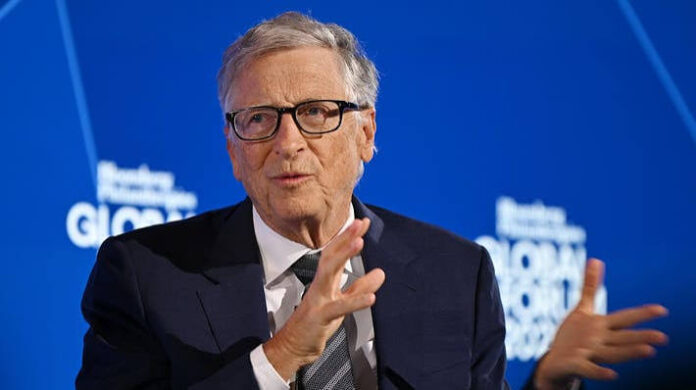
Microsoft co-founder Bill Gates has warned that artificial intelligence has become powerful enough to contribute to events capable of causing up to one billion deaths if exploited by people with harmful intentions.
Gates made the warning in an interview with NBC’s Meet the Press, excerpts of which were released ahead of the programme’s broadcast. He said the combination of increasingly powerful AI systems and malicious actors could create a level of danger unlike anything previously seen from a technological tool.
Brandspur News reports that Gates is also calling for governments, politicians and law enforcement agencies to take a direct role in establishing safeguards and monitoring requirements for AI, arguing that leaving technology companies to police themselves would not be sufficient.
The warning comes as governments and technology companies face growing pressure to address the risks associated with increasingly capable AI systems. Concerns range from cyberattacks and fraud to the possibility of AI being used to assist the development of dangerous biological agents or disrupt critical infrastructure.
Gates has previously highlighted the possibility of AI-enabled attacks against hospitals, financial institutions, electricity networks and government systems. His latest comments broaden that concern to the potential for malicious use of AI to produce casualties on an unprecedented scale.
One area attracting particular attention is the potential interaction between AI and nuclear weapons systems. Research cited in discussions around the issue indicates that current safeguards surrounding nuclear command and control systems prevent AI from independently triggering nuclear weapons, although the risk could change if advanced AI were given greater access to such systems.
The billion-death figure should therefore be understood as a warning about the potential scale of harm rather than a prediction that such an event will occur. Gates has not said that AI will inevitably cause a catastrophe of that magnitude.
His comments form part of a wider debate over how quickly AI should advance and who should be responsible for controlling its most dangerous applications. Some technology leaders and AI employees have separately raised concerns that the race to develop increasingly advanced systems could outpace existing safety measures.
For businesses and ordinary users, the debate has implications beyond futuristic scenarios. AI is already being incorporated into financial services, healthcare, communications, government systems and other areas where a major failure or deliberate attack could affect large numbers of people.
Gates has consequently argued for mandatory safeguards and government oversight as AI capabilities continue to develop, putting the responsibility for managing the technology’s risks beyond the technology industry alone.
