




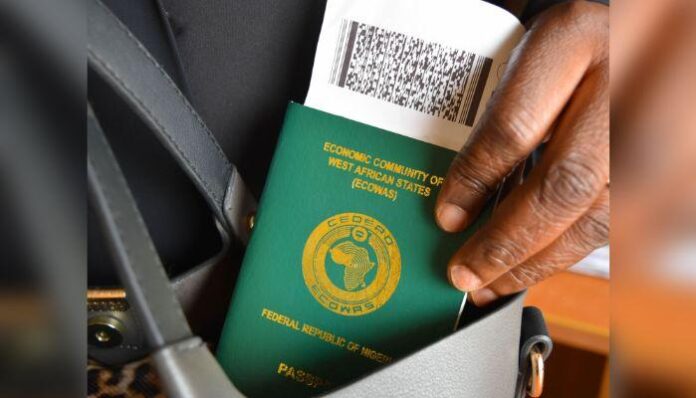
pNigerians spend an estimated N75bn annually on visa applications and related expenses, with unsuccessful applications accounting for billions of naira in non-refundable fees, according to a new analysis obtained from the Ministry of Foreign Affairs.
The financial burden is particularly evident in applications to European countries, where Nigerians lost an estimated €11.5m, approximately N19bn, to rejected Schengen visa applications in 2025. The analysis also estimated that about 250,000 applications from Nigerians were unsuccessful within the year.
The findings expose the financial risks facing Nigerians seeking education, employment, tourism and other opportunities abroad, as applicants often commit substantial sums before knowing whether they will receive travel authorisation, Brandspur Brand News reports.
Beyond embassy charges, unsuccessful applicants may lose money spent on visa application centre services, medical insurance, hotel reservations, flight bookings and other supporting documents. Depending on the destination and application requirements, the total financial loss from a rejected application can range between N350,000 and N1.2m.
Canada recorded one of the highest refusal rates among the destinations examined. Its study permit applications from Nigerians had an estimated 75 per cent rejection rate between January and April 2026, meaning roughly three out of every four applicants were unsuccessful.
The report linked the high rejection rate to concerns about whether international students would leave Canada after completing their studies, a requirement under Section 216(1)(b) of the country’s Immigration and Refugee Protection Regulations.
Within the Schengen Area, Belgium had the highest reported refusal rate for Nigerian applicants at 60.3 per cent, followed by Spain at 52.7 per cent and France at 47.4 per cent.
Overall, the Schengen refusal rate for Nigerians increased from 45.9 per cent in 2024 to 46.9 per cent in 2025.
The United Kingdom also recorded considerable rejection figures. Its overall visa refusal rate for Nigerian applicants stood at 33.1 per cent in 2025, rising to 35.4 per cent in the first quarter of 2026. Visitor visa applications had an estimated refusal rate of 38.6 per cent.
For the United States, the analysis cited an estimated refusal rate of about 64 per cent for African applicants seeking F-1 student visas, compared with a global average of 35 per cent. Concerns about applicants’ intentions to return to their home countries were identified as a major consideration in such decisions.
Visa charges themselves have also become a significant part of the financial pressure.
Japan increased its visa fees for Nigerian applicants from July 1, 2026, raising the single-entry charge from ¥3,000 to ¥15,000 and the multiple-entry fee from ¥6,000 to ¥30,000.
The revised charges translate to approximately N126,000 and N252,000 respectively, based on the exchange rates used in the analysis. Despite the increase, Japan’s reported refusal rate for Nigerian applicants remains relatively low, estimated at between 12 and 15 per cent.
The United Kingdom’s 10-year visitor visa was listed at £1,128, approximately N2.09m, while its six-month visitor visa costs £127, or about N203,000.
Applicants seeking a United States B1/B2 visitor visa pay $185, approximately N299,700, while Canada’s visitor visa and biometrics charges amount to CAD185, estimated at N205,000.
For Schengen applications, the combined visa and application centre charges were estimated at €125, equivalent to approximately N144,000.
India was identified as the most expensive destination in the comparison, with a reported visa charge of $588, approximately N819,200. However, eligible applicants can access its electronic visa options, which cost between $25 and $80, depending on the category.
The analysis also highlighted differences in entry requirements across destinations. Nigerians travelling to Indonesia generally require sponsorship and approval under the relevant visa process, while Malaysia offers an electronic visa option estimated at RM126, equivalent to between N40,000 and N45,000.
Malaysia’s estimated processing time is two to three days, although applicants must satisfy the relevant documentation and entry requirements.
The report identified visa-free destinations and countries offering visa-on-arrival arrangements as possible alternatives for Nigerians seeking to reduce the risk of losing money on unsuccessful applications.
Several West African countries, including Ghana, Benin Republic, Togo, Senegal, The Gambia, Liberia, Côte d’Ivoire and Sierra Leone, were listed among destinations accessible to Nigerian passport holders under regional travel arrangements.
Other destinations mentioned include Rwanda, Barbados, Dominica, Fiji, Mauritius and Vanuatu, subject to their respective entry conditions.
However, countries offering electronic travel authorisations may still require advance payments. Seychelles charges approximately $12 for its electronic travel authorisation, while Kenya’s costs $32. Zambia’s electronic visa was estimated at $25.
The report urged prospective travellers to pay attention to entry requirements and consider the financial implications of their applications before committing money to travel arrangements.
For Nigerians, the figures underline how a rejected visa application can mean losing more than the embassy fee, particularly when accommodation, insurance and other travel expenses have already been paid.
