


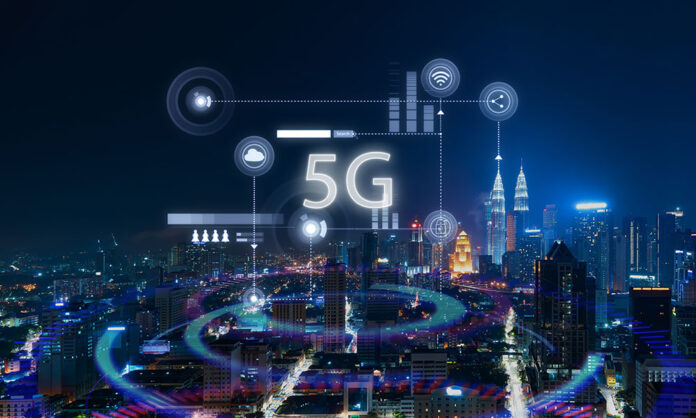
Nigeria’s 5G market share has exceeded 5 per cent for the first time since the Nigerian Communications Commission (NCC) began tracking the technology’s adoption in May 2023, as the country gradually moves away from older third-generation (3G) mobile networks.
The latest industry figures show that 5G accounted for 5.05 per cent of Nigeria’s telecom network market in September 2026, up from 4.92 per cent in August. Meanwhile, 3G’s share dropped to 4.16 per cent from 4.27 per cent over the same period.
Brandspur Brand News reports that the development marks a shift in Nigeria’s mobile connectivity landscape, although the relatively slow expansion of 5G suggests that widespread adoption of the technology remains some distance away.
The transition has been gradual. Nigeria’s 5G market share increased from 3.77 per cent in December 2025 to 5.05 per cent in September 2026, representing a gain of 1.28 percentage points in nine months.
At the current pace, the technology could reach a 6 per cent market share around April 2027, provided its monthly growth rate remains consistent.
Despite the modest increase, telecommunications operators are expanding their investments in infrastructure to improve access to faster mobile internet services.
Airtel Nigeria, for instance, disclosed that it had deployed more than 1,000 5G telecom towers in 2026 as part of its network expansion and investment programme. The company’s Chief Executive Officer, Dinesh Balsingh, made the disclosure during its Open Network launch.
The availability of more affordable 5G smartphones, particularly mid-range devices, is also supporting adoption, while operators continue expanding coverage in major urban centres, including Lagos, Abuja and Port Harcourt.
The technology is also finding applications beyond conventional smartphone connectivity, with 5G outdoor units and broadband routers increasingly being used for fixed wireless access services.
While 5G gains ground, 3G continues to lose subscribers’ network share. Its September figure of 4.16 per cent represents a further decline from the 5.32 per cent recorded in April 2026.
The shift became particularly noticeable in August, when 5G’s 4.92 per cent share surpassed 3G’s 4.27 per cent for the first time. September’s figures widened that difference.
Nigeria’s internet subscriber base also expanded during the period, reaching 160.9 million in September from 158.5 million in August, excluding internet service providers.
Mobile network operators accounted for 160.4 million internet subscriptions, with MTN Nigeria maintaining the largest share at 86.5 million users.
Airtel followed with 57.2 million internet subscribers, while Globacom added approximately 151,000 users to reach 15.9 million. T2mobile, formerly 9mobile, remained unchanged at 810,010 subscribers for the third consecutive month.
However, increased internet subscriptions did not translate into higher overall data consumption in September. Total usage declined slightly to 1.731 million terabytes from 1.756 million terabytes in August.
Despite the reduction, September recorded the second-highest monthly data consumption in the available figures, reflecting the substantial demand for internet services among Nigerian users.
The combined market share of 4G and 5G stood at 59.42 per cent, indicating the growing dominance of higher-generation networks in the country’s mobile connectivity market.
The expansion of video streaming, social media and other data-intensive services has also increased the importance of reliable broadband connections. Platforms such as YouTube, TikTok, Netflix and Instagram require substantial data, particularly when users stream high-resolution content or watch automatically playing videos.
For consumers, the continued expansion of 5G could eventually mean faster downloads, improved connectivity and better performance for applications requiring real-time data transmission. However, affordable devices, wider network coverage and sustained infrastructure investment will remain important to determining how quickly Nigerians embrace the technology.
