



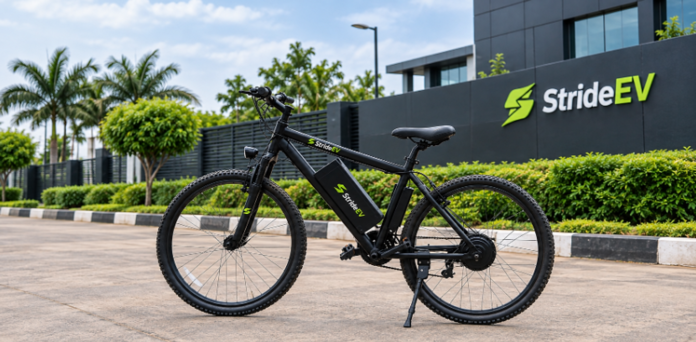
StrideEV has partnered with Nigerian financial technology company VeendHQ to introduce asset financing for delivery riders, targeting the high upfront cost of acquiring electric motorcycles and bicycles in Nigeria.
The partnership is expected to give riders access to financing options that allow them to spread the cost of acquiring electric bikes rather than paying the full amount upfront.
StrideEV, founded by Osonoderin Wilson and based in Lagos, specialises in electric bicycles powered by swappable batteries. Its partnership with VeendHQ, a Techstars 2023 alumnus, brings together electric mobility and embedded financing to address one of the barriers preventing delivery riders from switching to electric transportation.
Read also: MAX Raises Series B3 Funding to $29 Million as It Expands Electric Motorcycle Operations
The Brandspur Brand News Desk reports that the arrangement could provide an alternative for dispatch riders who earn income daily but may struggle to secure conventional bank loans or accumulate enough savings to purchase their own bikes.
How StrideEV battery swapping works
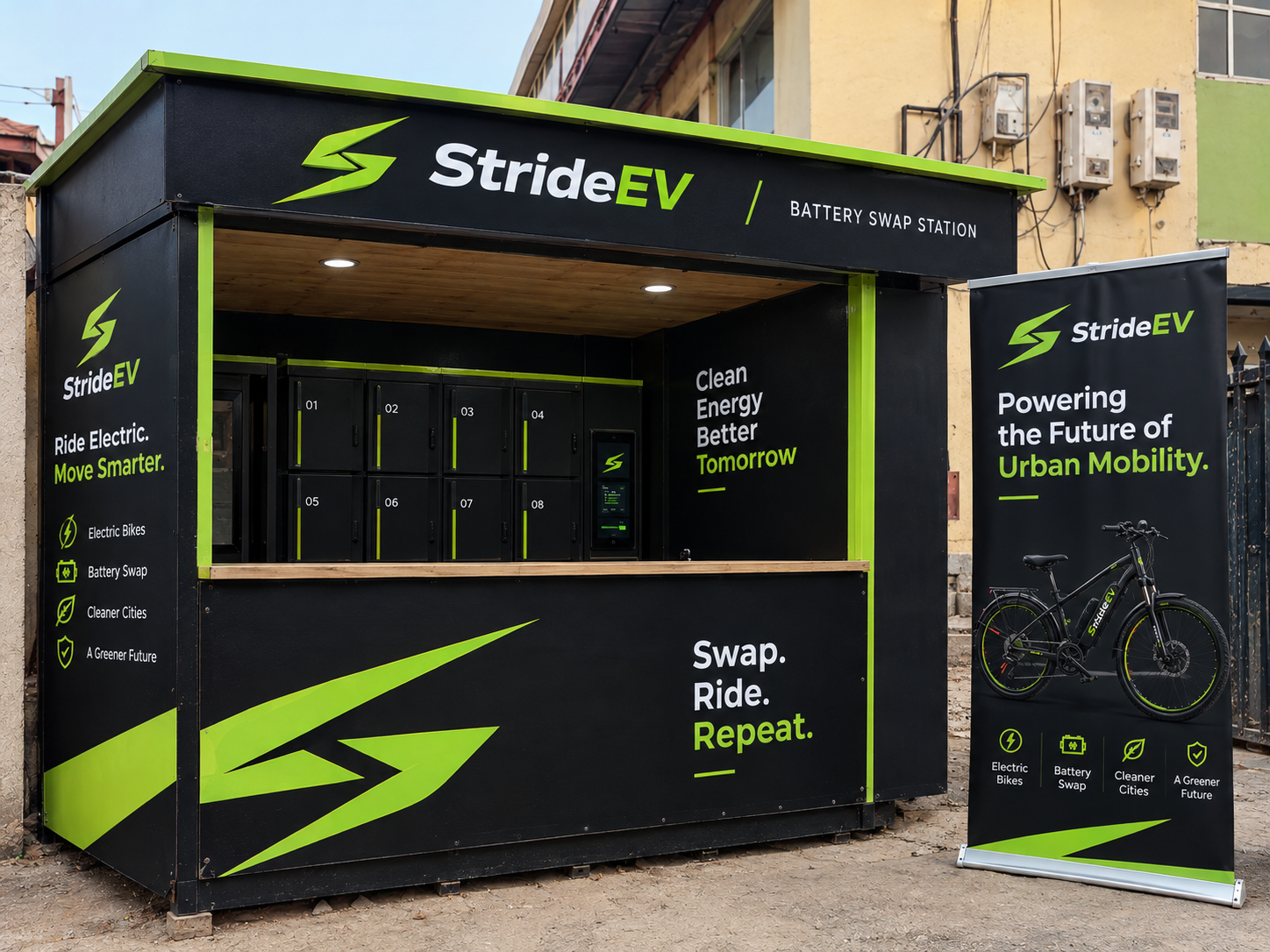
StrideEV’s electric bicycles have a listed range of 55 kilometres per battery and a maximum speed of 25 kilometres per hour. The company also says riders can exchange depleted batteries for fully charged ones in less than three minutes.
Its battery-swapping network operates through partner locations, including shops, car washes and stores, allowing riders to continue their journeys without waiting for conventional charging.
The company targets delivery fleets, commuters and dispatch riders. It has reported more than 100 registered riders and 12,480 battery swaps, indicating existing activity around its electric mobility service.
VeendHQ provides embedded financial services that enable lenders to offer credit through other businesses and digital platforms. The company raised $330,000 in pre-seed funding in 2022 and subsequently joined the Techstars accelerator programme in 2023.
Under the partnership, the financing model is intended to make electric bikes accessible to riders who cannot afford the full purchase price immediately.
For delivery workers, the arrangement could reduce the initial financial burden of acquiring equipment needed to earn a living. It also gives StrideEV an opportunity to reach customers who might otherwise be excluded by upfront purchase costs.
For VeendHQ, the partnership extends its embedded-finance approach into electric mobility, connecting credit to a physical asset used for income generation.
The development brings together two challenges facing Nigeria’s delivery sector: access to affordable working equipment and the financing options available to independent riders.
However, details of the financing terms, including interest rates, repayment periods, eligibility requirements and the number of bikes available under the arrangement, have not been disclosed.
