




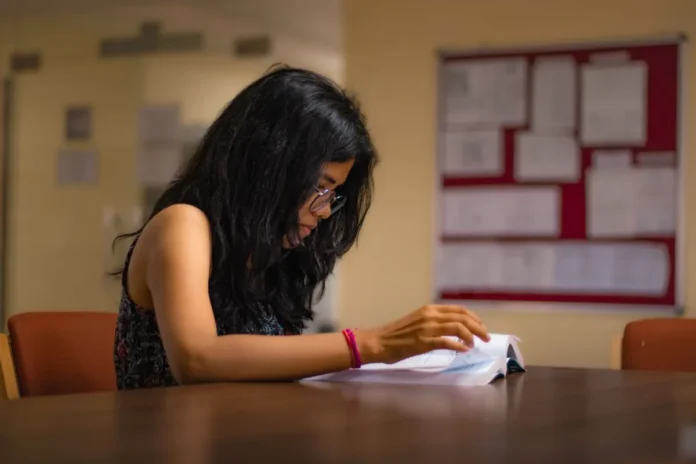
Balancing school and study, along with homework, revision and life outside the classroom, challenges students almost everywhere. What changes from country to country is how countries organise that balance.
In some education systems, students spend long hours in structured after-school classes. In others, more responsibility is placed on independent study at home. Some countries build extra academic support into the school day, while others rely more heavily on tutoring, study centres or online learning.
These differences are shaped by school schedules, exam systems, family expectations and access to additional support. Looking at how students manage their time in different countries can reveal useful ideas about organisation, focus and sustainable study habits.
Read also: Nigeria’s Japa Wave And The Rising Cost Of International Education
School Hours Are Only Part of the Picture
The amount of time students spend at school does not tell the whole story.
Two students may finish classes at roughly the same time but have completely different evenings. One might attend an after-school academy, another may complete homework independently, while someone else could have sport, work or family responsibilities before they begin studying.
OECD data shows that learning outside regular classroom hours varies considerably between education systems. Students may spend additional time on homework, private lessons, online study or other academic activities depending on their country and individual circumstances.
This means “study time” is not a single universal routine. It is shaped by the wider education culture around the student.
Japan Often Builds Study Into the After-School Routine
Japan provides a strong example of structured learning beyond the normal school day.
Many students attend juku, private after-school education institutions that can provide subject support, additional practice or preparation for entrance examinations.
The OECD’s analysis of Japan’s education system discusses the continued role of juku, particularly in urban areas.
For students who attend them, balancing school and study can mean moving directly from regular classes into another structured learning environment.
The useful lesson for students elsewhere is not that every evening needs to be filled with extra lessons. It is that having a predictable study routine can reduce procrastination.
When study happens at roughly the same time on certain days, students do not have to make a new decision every evening about whether they feel motivated enough to begin.
South Korea Shows What Happens When Study Extends Late Into the Day
South Korea is well known for a highly competitive academic environment and a large private education sector.
Many students attend hagwons, private academies offering additional instruction in subjects such as Mathematics, English and Science. These sessions can extend the academic day significantly.
The OECD has documented the scale of supplementary education in South Korea, where private education has become an important part of student life for many families.
This system demonstrates the value of preparation and discipline, but it also highlights the difficulty of balancing academic demands with rest and personal time.
Students elsewhere can learn from the organisation without assuming that longer hours automatically produce better learning. Once concentration drops, simply staying at a desk longer may have limited value.
Finland Offers a Different Approach to Balance
Finland is often associated with a different educational philosophy.
Its school system has traditionally placed strong emphasis on teacher professionalism, student wellbeing and support within public education rather than relying heavily on intensive private supplementary schooling.
The OECD’s education profile for Finland provides an overview of the country’s school system and broader educational structure.
For students, one of the useful lessons is that academic progress does not have to mean turning every free hour into study time.
Rest, hobbies, exercise and social activity can all be part of a sustainable routine. The challenge is not to avoid studying, but to organise it well enough that it does not take over everything else.
A shorter, focused study session can sometimes be more effective than a much longer session completed while tired.
Homework Habits Differ More Than Students Might Expect
Homework can also play very different roles across education systems.
In some countries, students may receive substantial amounts of structured homework. In others, school-based learning carries more of the academic workload.
The OECD’s PISA 2022 findings show significant differences between countries in homework-related behaviours, including how consistently students check their work before submitting it.
These differences are useful because they show that effective study is not simply about completing more tasks.
How students engage with homework matters too.
A student who reviews mistakes, checks their reasoning, and identifies areas they do not understand may gain more from an assignment than someone who completes it as quickly as possible.
Australia Uses a Mix of Independent Study and Extra Support
Australia provides a useful example of a more flexible model.
Students may study independently at home, use school-based academic support, join learning programs or seek additional help outside the classroom. The approach varies depending on the student’s year level, school and academic needs.
This is different from countries where large after-school academies form a more established part of everyday student culture.
Within that broader international context, some students work with private tutors in Australia when they need individual support with a particular subject, help preparing for assessments, or more targeted feedback than they can receive during normal classroom time.
The broader lesson applies internationally: extra academic support can be useful when it solves a specific problem.
A student who understands most of a subject but struggles with one topic may need targeted help, while another may simply need a better independent study routine.
Students in the United States Often Balance More Than Academics
In the United States, school life can involve a wide range of activities beyond classroom learning.
Students may combine academic work with sport, clubs, volunteering, part-time employment, or extracurricular programs. This can create a different kind of time-management challenge.
The school day may finish in the afternoon, but a student involved in athletics or another activity might not begin homework until much later.
That can make planning especially important.
Rather than expecting every evening to look the same, students may need to schedule heavier academic work around days when they have fewer commitments.
This type of flexibility can be useful anywhere. A realistic study plan should reflect the student’s actual week, not an ideal schedule that ignores everything outside school.
Exam Systems Change How Students Use Their Time
How students balance school and study also depends on the importance of major examinations.
In systems where entrance exams strongly influence access to universities or selective schools, students may devote more time to practice papers, revision classes and exam technique.
This is one reason additional education plays such a major role in countries such as Japan and South Korea.
Students preparing for less centralised assessment systems may spread their workload more evenly across assignments, coursework and smaller tests.
Neither approach completely removes academic pressure. It simply distributes it differently.
The useful lesson is to understand where the major pressure points are in your own education system and plan backwards from them.
Effective Students Separate Study Time From Free Time
One of the most useful habits across different education cultures is creating clearer boundaries between focused work and genuine downtime.
Studying while constantly checking messages can make a two-hour session far less productive than it appears.
Likewise, trying to relax while feeling guilty about unfinished work makes free time less restorative.
Students can improve this by giving each activity a clearer purpose.
During study time, remove obvious distractions and work towards a specific goal. During breaks, step away from academic work properly.
The exact schedule will vary between countries and students, but the principle travels well.
Focused study and focused rest are both more useful than trying to do both at the same time.
Technology Has Changed How Students Balance Learning
Digital learning has made study much more flexible.
Students can now watch recorded lessons, complete practice questions online, join study groups remotely or access tutoring without travelling to a physical centre.
This can make academic support easier to fit around school and other commitments.
At the same time, the same devices used for learning also provide some of the biggest distractions.
A laptop can contain a textbook, an online lesson, social media, entertainment and messages all at once.
The challenge is therefore not simply gaining access to educational technology. It is learning how to use it intentionally.
Students who decide in advance what they need to accomplish are less likely to spend an hour moving between unrelated tabs and calling it study.
Part-Time Work Adds Another Layer of Time Management
In some countries, older secondary-school students commonly combine school with part-time employment.
This can reduce the number of hours available for revision but also forces students to become more deliberate about planning.
A student working several evenings a week may need to use free periods, weekends or shorter morning sessions more strategically.
This does not necessarily mean they are academically disadvantaged. It means their study schedule needs to reflect reality.
The same principle applies to sport, caring responsibilities or long commutes.
Effective time management is not about pretending those responsibilities do not exist. It is about building study around them.
Students Can Learn From Different Approaches Without Copying Them
International comparisons become less useful when they turn into a competition over which students work hardest.
A Japanese student’s schedule may make sense within Japan’s education system. A Finnish student’s routine exists within a very different structure. A student in the United States may be balancing commitments that are less common somewhere else.
Copying the entire routine would miss the context.
Instead, students can borrow individual habits.
From structured study cultures, they can learn consistency. From systems with a stronger focus on balance, they can recognise the importance of rest. From highly exam-focused environments, they can learn the value of preparing under realistic conditions. From flexible systems, they can learn to choose academic support according to individual needs.
The useful question is not, “How many hours do students in another country study?”
It is, “Which parts of their approach could make my own routine more effective?”
Balancing School And Study Is About Sustainability, Not Doing Less
Balancing school and study does not mean avoiding hard work.
It means creating a routine that can be maintained over time.
Students need enough study to understand their subjects and prepare for assessments, but they also need sleep, exercise, social interaction and time away from schoolwork.
A routine that works brilliantly for three days and then becomes impossible to maintain is not much of a routine.
The strongest approach is usually one that matches the student’s education system, workload and personal responsibilities.
Different countries organise school and study in very different ways, but one lesson appears repeatedly: productive learning depends less on filling every available hour and more on using the available time with purpose.
Liza Linvill is an education and learning writer focused on study habits and academic performance.