




Nigerian small businesses are increasingly turning to app-based courier services to manage customer orders, with 86 per cent of monthly orders placed by small and medium-sized business owners now going through apps such as inDrive.Couriers, according to a new study released by the mobility and delivery platform.
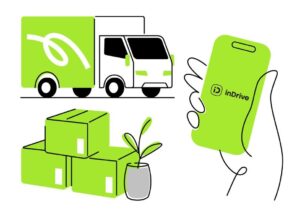
The findings point to the growing role of digital delivery services in the operations of fashion retailers, cosmetics sellers, pharmacies and cafés, many of which rely on independent couriers to get products to customers without maintaining their own delivery fleets.
The report, published by inDrive, also highlights the importance business owners attach to tracking their orders. Half of the respondents said real-time monitoring and control of deliveries were important, reflecting the need to know where parcels are and respond promptly when customers request updates. Brandspur Brand News understands that the company is positioning its courier service as an option for businesses seeking greater control over delivery costs and operations.
Through inDrive.Couriers, businesses can request a motorcycle or car for a delivery, specify the collection and drop-off locations, and propose how much they are willing to pay. Available couriers can accept the offer or submit a counteroffer, allowing the business owner to consider the proposed price alongside the courier’s rating before confirming the job.
Read Also: inDrive Introduces Free ₦50,000 Parcel Coverage For Nigerian Small Businesses
The process is handled through the inDrive app, with the company putting the average pickup time in Nigeria at between 10 and 15 minutes. The service operates around the clock, seven days a week, and allows businesses to request multiple couriers when order volumes increase.
The ability to negotiate fares could appeal to businesses operating on narrow profit margins, particularly sellers who have to account for delivery expenses on every transaction. Unlike arrangements that require a business to maintain a dedicated rider or enter into a fixed transport agreement, the platform allows owners to request a courier when a delivery is needed.
The service also accommodates different parcel sizes. Motorcycles can carry packages weighing up to 10 kilogrammes, while cars can handle parcels of up to 20 kilogrammes. A courier can deliver to as many as three addresses on one trip, giving businesses an option to combine orders going to different customers.
For small operators, delivery management can become increasingly difficult as sales grow. A business owner who initially handles a few daily orders may eventually have to coordinate several riders, respond to customer enquiries and monitor parcels while also managing stock, payments and other responsibilities.
Digital tracking is intended to reduce some of that administrative pressure. Business owners can follow a parcel’s movement on a map from collection to delivery and select couriers based on their ratings. The company says it checks courier documents and subjects applicants to manual approval before allowing them to use the service.
Another feature introduced in Nigeria is free parcel coverage. Under the arrangement, a business sender is automatically eligible for reimbursement of up to ₦50,000 per order if a delivery is lost or damaged, at no additional cost.
The protection addresses a risk that can affect the relationship between a seller and a customer. Even when a business hands a parcel to an independent courier, the customer is likely to hold the seller responsible if an order fails to arrive or is damaged in transit. The availability of tracking, courier checks and parcel coverage may therefore matter to businesses seeking to protect customer confidence as well as the goods being transported.
Beyond Nigeria, inDrive says as many as one million businesses use its courier service at least once a month across 47 countries. The company also cited estimates placing the global same-day delivery market at between $15 billion and $26.4 billion by 2027, with annual growth of about 20 per cent.
The Nigerian findings suggest that app-based delivery is becoming part of the way some small businesses organise their daily operations. However, the 86 per cent figure relates to orders placed through apps such as inDrive.Couriers, rather than establishing that the same proportion of businesses use inDrive specifically.
For sellers competing on price, convenience and customer experience, the challenge is not simply getting products out of their shops. It is ensuring that delivery remains manageable as orders increase, without allowing logistics costs and coordination to consume the time and resources needed to run the business.