




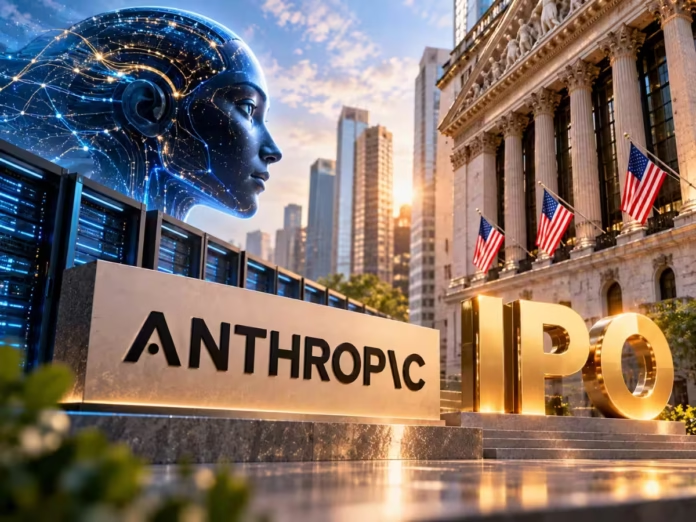
Anthropic, the company behind the Claude artificial intelligence chatbot, has raised $81.3 billion through its initial public offering (IPO), setting a new record for the largest stock-market offering in history and securing a fully diluted valuation of approximately $1.5 trillion.
The company priced its shares at $83 each on Wednesday, November 18, exceeding its earlier target range of $70 to $78. The final offer involved 980 million shares, an increase of about 19 per cent on the 825 million initially planned, following strong demand from investors.
The offering has overtaken the previous record set by SpaceX, which raised $75 billion in its June listing. Anthropic’s public share sale, alongside a separate $26 billion private placement at the IPO price, brings the total size of the deal to $107.3 billion.
For the Brandspur Banking News Desk, the scale of the transaction highlights how rapidly artificial intelligence has moved from a specialised technology sector into a major focus of global capital markets. Anthropic’s entry into public trading also gives investors a new opportunity to assess the financial prospects of a company developing some of the technology driving the current AI expansion.
The listing is particularly significant because Anthropic is the first major developer of frontier AI models to enter the public market. Its shares are scheduled to begin trading on the Nasdaq on Thursday, November 19, under the ticker symbol ANT.
The valuation, however, needs to be understood in context. The $1.5 trillion figure is based on a fully diluted calculation, which includes securities such as stock options and restricted shares. On a non-diluted basis, the company’s valuation is approximately $1.1 trillion.
Read Also: Shoprite Expands Sixty60 App To Include Airtime, Data And Digital Voucher Purchases
Anthropic’s public debut comes at a time when investors are increasingly weighing the commercial potential of artificial intelligence against the substantial cost of building and operating the technology. Demand for AI services has fuelled expansion across the industry, but the financial requirements for computing capacity, infrastructure and product development remain considerable.
The company’s reported financial position illustrates that tension. Reuters reported that Anthropic’s annualised revenue run rate reached $81 billion by October 31, reflecting rapid growth in demand for its products. However, it also recorded an operating loss of $567 million in the third quarter of 2026 as computing expenses continued to rise.
The company spent nearly $9 billion on infrastructure during the first half of the year and has committed close to $900 billion towards future computing capacity. Those commitments underline the scale of investment required to maintain and expand its AI operations.
The market debut will therefore provide investors with more than an opportunity to buy shares in the maker of Claude. It will also put the company’s growth strategy, spending commitments and ability to turn rising demand into sustainable profits under greater public scrutiny.
For technology businesses and investors in Nigeria, the transaction offers a notable indication of the financial scale now associated with the global AI industry. It does not, by itself, establish any immediate change in Nigeria’s technology or investment markets, but it demonstrates the level of capital being directed towards companies developing advanced AI systems.
Anthropic’s performance on the Nasdaq will be closely watched as the company begins life as a publicly traded business. Its record fundraising has established a remarkable starting point, but investors will ultimately have to judge whether its commercial growth can justify the resources required to compete in an increasingly expensive and contested industry.