





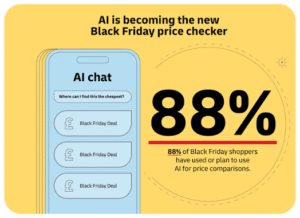
DHL Group’s latest e-commerce report has found that nearly nine in ten Black Friday shoppers have used or intend to use artificial intelligence to compare prices and identify deals, signalling a major shift in how consumers discover products and make purchasing decisions.
The 2026 E-Commerce Trends Report, published by DHL eCommerce on Thursday, November 19, draws on responses from 29,000 online shoppers and 5,800 e-commerce businesses across 29 countries. It shows that AI-powered shopping tools are becoming increasingly influential, while delivery costs, returns policies and customer trust remain critical to whether online purchases are completed.
The findings suggest that retailers face a changing competitive environment in which securing customers may depend as much on how easily shoppers can find and compare products as on the discounts offered. Brandspur Brand News notes that the growing use of AI could also change how businesses attract online buyers during major promotional periods such as Black Friday and Cyber Monday.
According to the report, 88 per cent of surveyed Black Friday shoppers have either used AI to compare prices or plan to do so. Nearly half have already used AI-powered chat tools or virtual assistants to browse products or make purchases.
The figures also point to a difference in buying behaviour between shoppers who use AI and those who rely on conventional methods of finding discounts. Half of AI-assisted shoppers made purchases during Black Friday, compared with 42 per cent of traditional deal seekers.
AI users were also more likely to indicate that they would increase their spending in future, suggesting that the technology could become an increasingly important part of online shopping. More than a third of surveyed e-commerce businesses have already introduced options that allow customers to browse or purchase products through AI-powered chat services and virtual assistants.
DHL eCommerce chief executive, Pablo Ciano, said technology could help consumers identify attractive prices and compare available products, but businesses would still need to earn customer confidence through reliable service and a positive shopping experience.
The report also identifies younger consumers as an important force behind the future of Black Friday spending. Nearly half of Generation Z and millennial shoppers said they buy during the annual sales event, compared with about three in ten baby boomers.
Younger shoppers also appear more willing to increase their participation. Four in ten Gen Z consumers expect to spend more during Black Friday over the next five years, a proportion three times higher than that recorded among baby boomers.
Their motivations differ as well. Younger consumers are more likely to use the sales period to purchase items for themselves, while older shoppers are more inclined to buy earlier to spread the cost of their purchases.
Despite the growing interest in promotional events, the report highlights a gap between retailers’ marketing efforts and actual consumer purchases. More than eight in ten surveyed e-commerce businesses organise Black Friday or Cyber Monday promotions, yet only around four in ten online shoppers make purchases during the events.
Two-thirds of businesses nevertheless expect their Black Friday sales to rise. Retailers are also competing across several online channels, with most shoppers planning to buy through marketplaces and mobile applications, while seven in ten intend to make purchases through social media.
However, attracting shoppers to a website or getting them to add products to their baskets does not guarantee a completed transaction. DHL’s findings show that delivery arrangements remain a major point at which retailers can lose potential customers.
One in three Black Friday shoppers identified the stage where shipping options are presented as the point at which they are most likely to abandon an order. Nine in ten said fast, free delivery and straightforward returns were priorities, while more than half wanted same-day or faster delivery services.
Trust also plays a significant role. The survey found that 77 per cent of shoppers would abandon a purchase if they did not have confidence in the delivery or returns provider.
For Nigerian online retailers, the findings offer useful insight into the pressures shaping the global e-commerce market, although the survey does not provide a separate breakdown of Nigerian consumer responses. Businesses competing for online customers may need to consider the entire buying process, from product discovery and price comparison to payment, delivery and returns.
The report ultimately shows that competitive pricing alone may not be enough to secure online sales. As shoppers increasingly turn to AI to find bargains, retailers must also make the purchasing experience convenient and dependable if they want customers to complete orders and return for future purchases.