




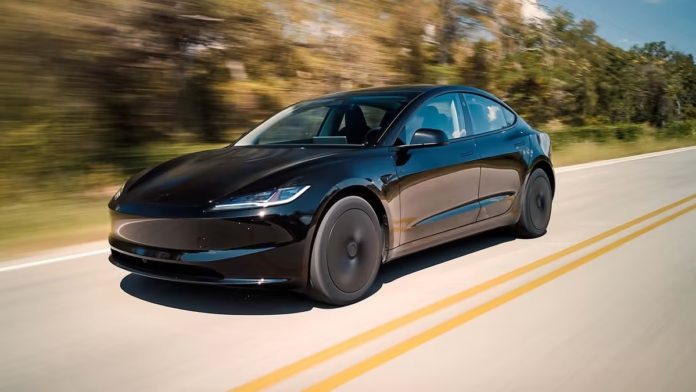
Tesla vehicles are drawing attention for combining advanced driver-assistance technology with the potential for lower running and maintenance costs compared with conventional petrol-powered cars.
The electric vehicles come with features such as Autopilot and Full Self-Driving (FSD) (Supervised), which can assist with steering, acceleration and braking. Tesla says FSD (Supervised) can also perform tasks such as changing lanes, following navigation routes, negotiating turns and responding to surrounding vehicles and objects under the driver’s supervision.
Brandspur Auto News reports that despite the increasingly sophisticated technology, Tesla’s driving systems should not be mistaken for fully autonomous vehicles. FSD (Supervised) still requires an attentive driver who is ready to take control at any time.
For motorists, one of the major attractions of an electric Tesla is the possibility of reducing some routine vehicle expenses. Unlike petrol-powered cars, Tesla’s electric powertrain does not require engine oil changes or spark-plug replacements. Regenerative braking can also reduce the amount of work done by conventional brake components.
The cars also offer over-the-air software updates, allowing Tesla to introduce software improvements and new functions without requiring every update to be carried out manually at a service centre.
Read also: https://brandspurng.com/2022/01/14/tesla-co-founder-says-ev-sales-are-about-to-take-off/
Performance is another selling point. Electric motors can deliver strong acceleration almost immediately, giving Tesla vehicles quick response when pulling away or overtaking.
Tesla also provides remote vehicle functions through its mobile app, allowing owners to perform tasks such as monitoring the vehicle and controlling certain cabin functions remotely.
The battery’s position low in the vehicle contributes to a low centre of gravity, while the absence of a conventional engine creates additional storage space in some models, including a front trunk.
Charging infrastructure is another consideration for potential buyers. Tesla’s Supercharger network is designed to support long-distance travel, although the availability of chargers and specific vehicle features varies from one market to another.
For Nigerian motorists considering a Tesla, the potential savings on fuel and routine maintenance need to be weighed against the purchase price, charging arrangements, electricity costs, availability of suitable charging infrastructure and access to vehicle support.
Most importantly, motorists should understand the limits of Tesla’s driver-assistance technology. The convenience of automated steering, braking and navigation does not remove the driver’s responsibility to remain alert and ready to intervene.
