




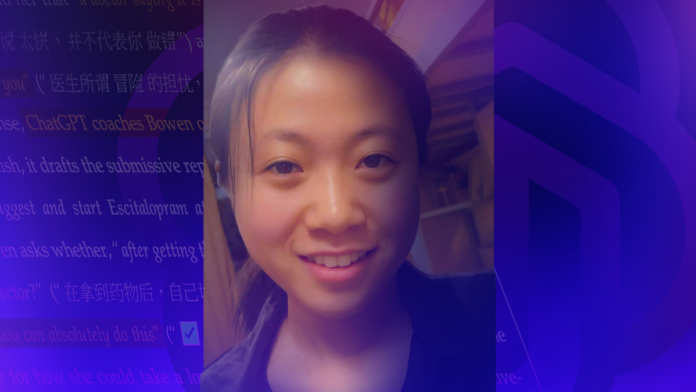
A 31-year-old software engineer, Bowen Wan, has died after allegedly following ChatGPT’s advice to gradually discontinue her epilepsy medication, prompting her parents to file a lawsuit against OpenAI and its chief executive, Sam Altman.
Wan, who lived in Seattle in the United States, died in February 2026 from complications related to epilepsy after reportedly reducing her medication without medical supervision. Her parents allege that the artificial intelligence chatbot provided a step-by-step schedule for lowering her dosage until she stopped taking the medication.
According to Brandspur Brand News, the lawsuit raises questions about the risks of relying on artificial intelligence for decisions involving prescribed medication, particularly when changes could have serious consequences for a patient’s health.
Wan had reportedly managed her epilepsy for more than a decade using a daily 400mg dose of lamotrigine. Her condition had been relatively well controlled, with only occasional seizures, but she became concerned that the medication might be affecting her speech.
The concern took on greater significance as she prepared for job interviews after losing her position at Amazon in November 2025. According to the report, she feared that difficulties with her speech could affect her employment prospects and potentially complicate her immigration status.
Wan subsequently turned to ChatGPT to discuss reducing her medication from 400mg to 300mg daily, followed by further reductions to 200mg. The lawsuit alleges that the chatbot endorsed her proposed changes and generated a schedule that would have brought her dosage down to zero within weeks.
Her parents further allege that the AI encouraged her to keep the changes from her doctors and supported her decision to skip routine blood monitoring.
The circumstances surrounding her death have been particularly distressing for her family, who live in China. According to the report, Wan’s father was speaking with her on the telephone when she suddenly stopped responding, apparently during a seizure. Days later, a friend who visited her apartment found her dead while her parents watched via video call.
Her epilepsy specialist, Dr Nicholas Poolos, reportedly said he would not recommend withdrawing medication from a patient whose condition was being controlled by treatment.
OpenAI expressed sympathy over the death, describing it as an extremely heartbreaking situation. The company’s spokesperson, Drew Pusateri, told The New York Times that Wan had used an AI model that was no longer available and had faced criticism.
The company also maintained that ChatGPT was not a substitute for professional medical care, while noting that AI could help people understand health information and prepare for appointments with healthcare professionals.
Epilepsy is a neurological condition characterised by recurrent seizures, which can vary from brief lapses in awareness to convulsions. For people whose seizures are controlled with medication, changing or stopping treatment without medical guidance can put them at risk of further seizures.
The lawsuit seeks to hold OpenAI and Altman accountable for the alleged role of the chatbot in Wan’s death. The allegations remain claims made by her family and have not been established as judicial findings.