





A Nigerian entrepreneur, Raphew Folarin, is building a digital health records platform to help people preserve their medical histories and access important health information without relying on paper files or searching through old messages.
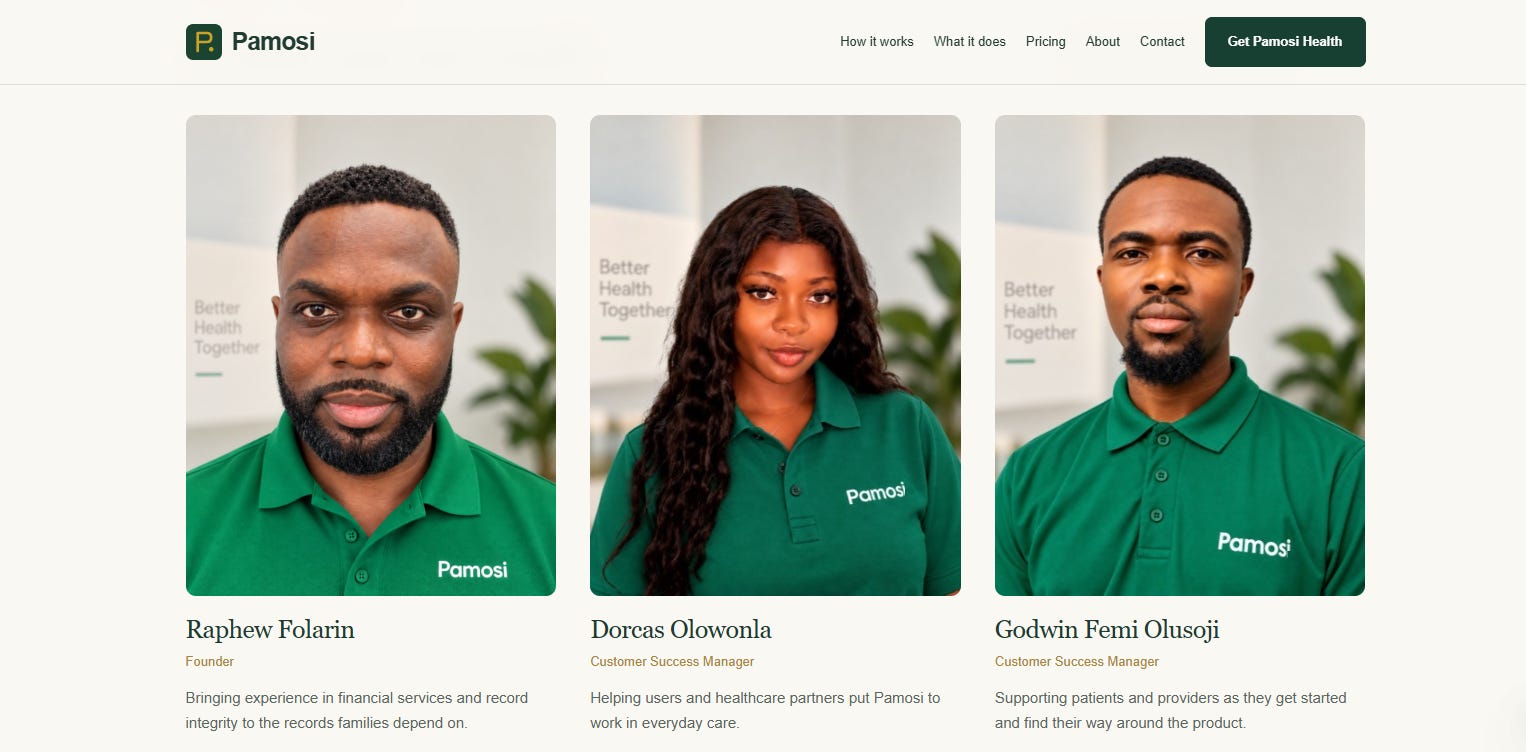
His startup, Pamosi, allows users to organise prescriptions, laboratory results, vaccination records and other medical documents in one place, using either WhatsApp or a mobile application.
The platform is approaching 500 users, according to Folarin, who hopes to address the difficulties patients face when medical information becomes scattered across hospitals, laboratories, messaging applications and physical documents.
Brandspur Brand News reports that the idea behind Pamosi came from Folarin’s personal experience after relocating from Nigeria to Canada as a child.
Following the move, he lost access to his previous medical history. Years later, when he needed important health information, retrieving those records became difficult. The experience exposed a problem that would eventually influence his decision to build a platform focused on giving individuals greater control over their medical information.
Rather than limiting the service to a digital filing cabinet, Folarin has incorporated additional features intended to help users manage different aspects of their healthcare.
Pamosi supports family health records, pregnancy tracking, medication reminders, immunisation records and monitoring for chronic conditions. These features are designed to help individuals keep relevant health information organised over time, particularly when managing healthcare needs across different family members.
Users can submit their medical documents through WhatsApp or the company’s mobile application. The records are then organised within the platform, reducing the need to depend on separate paper files and conversations to retrieve previous medical information.
Another feature is the ability for users to control who can access their records. This is particularly relevant when patients need to share medical information with healthcare professionals or other authorised individuals.
Folarin has also addressed concerns about using WhatsApp as an entry point for submitting sensitive medical documents.

Responding to questions about the arrangement on LinkedIn, he explained that WhatsApp serves as an accessible channel through which users can send their records, while the information is stored within Pamosi’s platform. He said privacy and accessibility are central to the company’s approach.
The use of WhatsApp has attracted interest, as well as questions about patient confidentiality and data protection. A healthcare professional who commented on the announcement welcomed the initiative but asked how the company safeguards medical information submitted through the messaging service.
The founder’s response highlighted the distinction between using WhatsApp to receive documents and storing patients’ records on the platform. However, detailed technical information about its encryption arrangements, security architecture and compliance procedures was not provided in the announcement.
Beyond individual users, Folarin is extending the business into healthcare facilities through a product called Pamosi Clinic.
The electronic medical records system is intended to connect patients’ existing health histories with clinics, making relevant information easier for healthcare providers to retrieve during consultations.
The proposed integration addresses a common challenge in healthcare: patients may have received treatment at different facilities, but information about their previous consultations, prescriptions and investigations may not be readily available when they visit another provider.
By linking individual health records with medical facilities, Pamosi aims to make it easier for patients to carry their health histories between different points of care.
The expansion into clinical records also signals the company’s intention to serve both individuals and healthcare providers rather than operate solely as a consumer-facing medical document storage service.
Read Also: BloodCounts! will develop frontier AI models for routine blood tests to improve healthcare
For patients, maintaining an accessible record of previous treatments and investigations could make it easier to provide doctors with relevant medical information, particularly when changing healthcare providers or seeking treatment away from their usual location.
However, the platform’s ability to achieve this wider objective will depend partly on adoption by healthcare facilities and patients, as well as confidence in how sensitive medical information is handled.
With its user base approaching 500, Pamosi remains at an early stage of development. Folarin’s longer-term ambition is to make medical histories accessible to their owners wherever they go, while connecting those records to the healthcare providers responsible for treating them.
The company is positioning the patient’s medical history as information that should remain accessible to the individual, rather than being confined to the hospital or facility where treatment was first received.