




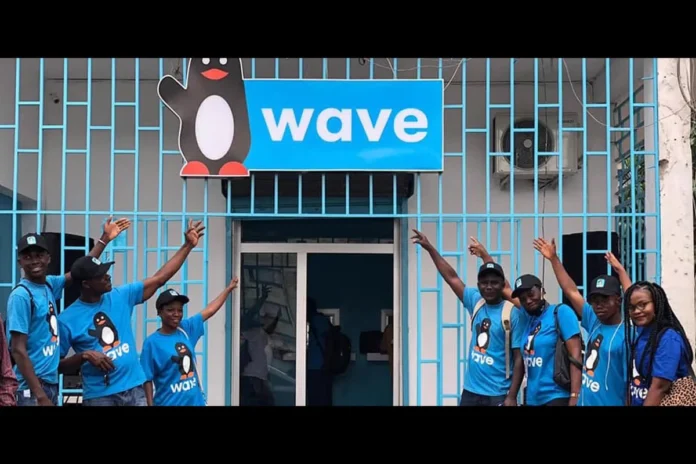
Senegalese fintech company Wave has secured an electronic money institution (EMI) licence in the Democratic Republic of Congo (DRC), opening the door for the African unicorn to offer payment services in a market dominated by major telecommunications operators.
The approval from the Central Bank of the Congo allows Wave to send and receive payments within the country, making it the fifth licensed electronic money operator in the market and ending an 11-year gap since the last licence was issued in September 2015.
The development, reported by Brandspur Banking News Desk, marks a significant expansion for Wave as it takes its low-cost mobile money model into one of Africa’s established digital payments markets.
Wave will compete against four existing operators: Airtel Money, Orange Money, Vodacash, which operates M-PESA, and Afrimobile Money. These providers have built substantial positions through their mobile networks and established customer bases, making entry into the market particularly challenging for new operators.
Data from 2025 shows the scale of competition. Vodacash/M-PESA controlled 40.1 per cent of the DRC’s mobile money market, while Orange Money held 34.4 per cent. Airtel Money accounted for 23.8 per cent, with Afrimobile Money controlling the remaining 1.7 per cent.
The figures underline the concentration of market power among telecommunications-linked financial service providers and the challenge facing Wave as it begins operations.
Wave’s entry could introduce greater price competition, particularly around money transfers and cash withdrawals. The company operates a pricing model that charges a flat one per cent on transfers, while deposits and withdrawals are free.
Existing providers in the DRC generally charge around one per cent for sending money. However, withdrawal fees follow a tiered structure, with charges reaching as high as nine per cent on smaller transactions before declining to between one and two per cent for larger amounts.
The difference could become important for low-income customers and small businesses that frequently depend on mobile money to receive payments, transfer funds and manage daily transactions.
For traders and households in communities with limited access to conventional banking services, lower transaction costs could leave more money available for other essential expenses.
The Central Bank of the Congo is also expected to benefit from increased competition, particularly if Wave’s presence encourages existing operators to review their pricing structures and improve service accessibility.
Jérémie Lukusa, Wave’s managing director in the DRC, said the company would now need to translate the regulatory approval into practical improvements for customers across the country.
Wave’s expansion into the Central African market builds on its experience in Senegal, where it entered the mobile money industry in 2016 despite competition from established telecommunications operators.
The company reportedly controls between 50 and 70 per cent of Senegal’s mobile money market, demonstrating its ability to gain significant market share in an industry previously dominated by established players.
Its strategy has centred on relatively low transaction charges, an approach that helped distinguish its services from those of traditional mobile money providers.
The DRC approval is part of a broader expansion strategy that has seen Wave secure additional regulatory opportunities across Africa.
In Cameroon, the company has also obtained an electronic money institution licence, allowing it to issue, manage and distribute electronic money rather than relying solely on partnerships with existing banks.
Wave is simultaneously expanding the reach of its services in West Africa. On November 6, 2026, it announced that its operations in Senegal and Côte d’Ivoire had connected to the Central Bank of West African States’ (BCEAO) instant payment system.
The integration allows Wave customers in the two countries to send and receive money through accounts held with other financial institutions connected to the system, extending payment options beyond transfers between Wave users.
These developments reflect the company’s ambition to become a broader financial services provider rather than remain limited to its original mobile money offering.
For the African fintech industry, Wave’s latest approval highlights the growing importance of regulatory licences in expanding across national markets. Although technology and competitive pricing can attract customers, operating within different financial systems requires regulatory approval and compliance with local requirements.
Its success in the DRC will ultimately depend on how effectively it competes with established operators, builds customer confidence and delivers affordable services across the country.
The entry also creates another competitive test for Africa’s mobile money industry, where pricing, accessibility and the ability to reach underserved customers increasingly determine which providers attract and retain users.
