



Nigerians seeking permanent residency, employment and educational opportunities in Canada face fresh uncertainty after the International Credential Assessment Service of Canada (ICAS) stopped accepting academic qualifications from four Nigerian universities for credential evaluation.
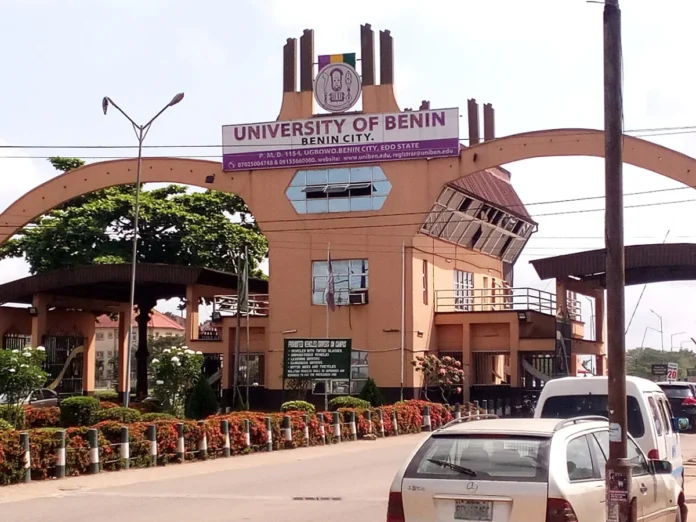
The affected institutions are Imo State University (IMSU), the Federal University of Technology, Owerri (FUTO), Enugu State University of Science and Technology (ESUT) and the University of Benin (UNIBEN).
The development has triggered anxiety among Nigerian graduates and immigration applicants, particularly those who have already submitted their academic documents or relied on qualifications from the affected institutions. Brandspur Brand News understands that the announcement has also generated discussions about the possible consequences for applicants whose immigration plans depend on the recognition of their Nigerian degrees.
Read also: JAMB Plans First UTME Centre In Canada For 2027
What ICAS Actually Said
ICAS disclosed the restriction on its official website under its documentation requirements for Nigerian applicants. The organisation stated that it was not currently accepting applications involving studies completed at the four universities and that submitted documents from the institutions would not be included in its assessment reports.
The organisation, however, did not explain why it introduced the restriction or indicate how long the decision would remain in force.
The development has also brought renewed attention to World Education Services (WES), another Canadian-designated organisation responsible for evaluating foreign academic qualifications. Although concerns have emerged about the possibility of wider restrictions, there is currently no verified public announcement establishing that WES has introduced a blanket ban on qualifications from the four institutions.
Nevertheless, applicants have raised concerns about difficulties encountered during individual credential evaluation processes, with some sharing their experiences on social media. One Nigerian expressed concern that graduates who had no involvement in any alleged academic irregularities could suffer delays and additional difficulties because of decisions affecting their universities.
Why An ECA Matters For Permanent Residency
For many prospective immigrants, an Educational Credential Assessment (ECA) is an important part of the application process. It establishes whether a qualification obtained outside Canada is authentic and equivalent to a Canadian educational credential.
According to Immigration, Refugees and Citizenship Canada (IRCC), applicants under certain immigration programmes must obtain an ECA from an approved organisation to demonstrate the Canadian equivalence of their foreign qualifications. The assessment can also determine the number of education-related points an applicant receives under Canada’s Express Entry system.
IRCC currently recognises five general credential assessment organisations: ICAS, WES, Comparative Education Service at the University of Toronto, International Qualifications Assessment Service (IQAS) and International Credential Evaluation Service (ICES) at the British Columbia Institute of Technology.
This means the ICAS restriction does not automatically prevent graduates of the affected universities from pursuing Canadian immigration through other assessment organisations. However, whether another organisation will accept and evaluate a particular qualification depends on its own requirements and verification procedures.
Separating Fact From Social Media Claims
The controversy has also raised questions about claims that Canada has started revoking permanent residency approvals belonging to Nigerians because of suspected irregularities involving university qualifications.
While some applicants have reported visa-related difficulties and alleged revocations on social media, there is no verified announcement from IRCC establishing a mass cancellation of Nigerian permanent residency approvals linked to the ICAS decision. Similarly, ICAS has not announced that previously issued assessment reports have been withdrawn or that all graduates of the four institutions have been declared ineligible for Canadian immigration.
The distinction is important because a restriction imposed by an independent credential assessment organisation does not automatically invalidate academic certificates issued by Nigerian universities. It also does not, by itself, cancel an individual’s immigration status in Canada.
What Affected Graduates Should Do Now
Applicants whose qualifications are being assessed may face delays, additional verification requirements and uncertainty over their applications. For graduates preparing to relocate, the consequences could extend beyond paperwork, potentially affecting travel arrangements, employment opportunities and substantial financial commitments.
The four universities have also come under renewed scrutiny as the development raises broader questions about the international verification of Nigerian academic records. For now, ICAS has not provided a timeline for reviewing its decision, while the extent of any restrictions involving other credential assessment organisations remains unclear.
Nigerian graduates affected by the announcement will need to check the assessment requirements of their chosen organisations before making further immigration plans.
