


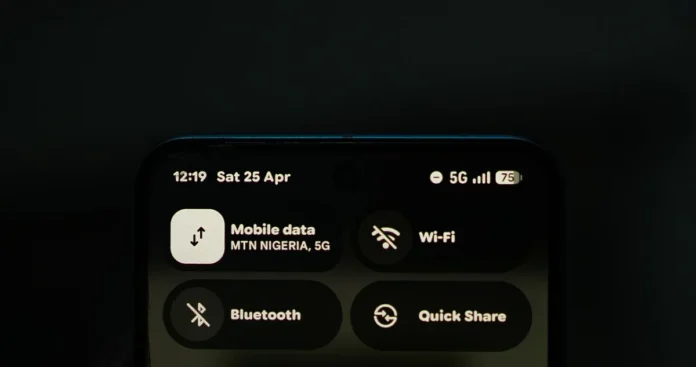
Nigeria’s 5G adoption has crossed the five per cent mark, but the slow climb suggests that the way MTN, Airtel and Glo sell the technology is not persuading enough subscribers to upgrade, with high smartphone prices, patchy coverage and data-cost worries blunting the industry’s speed-first pitch.
Data from the Nigerian Communications Commission (NCC) show that 5G accounted for 5.05 per cent of mobile connections in September 2026, up from 3.77 per cent in December 2025. That is a gain of just 1.28 percentage points in nine months, despite years of advertising built around faster internet.
Brandspur Brand News understands that operators now face a harder marketing task: convincing consumers that 5G offers benefits worth paying for, at a time when many households are already struggling with the cost of smartphones, airtime and data. The NCC’s figures show 4G still dominates with 54.37 per cent of connections, while 2G holds 36.42 per cent and 3G 4.16 per cent, a reminder of how large the market still to be converted is.
Read also: 5G Usage Rises To 48% In Lagos, Abuja As Network Satisfaction Falls
Why The 5G Speed Pitch Is Falling Flat
Speed is easy to advertise but hard for many Nigerians to value. A subscriber cannot benefit from 5G without a compatible smartphone or router, and upgrading is difficult to justify for consumers whose 4G devices already meet their everyday needs.
Coverage undermines the message further. Owning a 5G phone does not guarantee a 5G connection throughout the day. In August 2026, an NCC and Ookla assessment found that 51.3 per cent of MTN’s 5G-capable device activity in Lagos and 52.2 per cent in Abuja took place on 5G. Airtel recorded 37.7 per cent in Lagos and 37.5 per cent in Abuja, while Glo recorded just 0.1 per cent in both cities. Even in the two biggest commercial centres, having a 5G device and actually being on 5G are not the same thing.
Data costs complicate the pitch too. Faster connections make video streaming and other heavy activities easier, but subscribers on limited bundles may worry more about how quickly their data disappears than how fast a page loads. For them, “faster” can sound like “more expensive”.
Three Brands, Three 5G Problems
Each operator faces a different version of the challenge. MTN has built much of its positioning around network leadership and speed, and its Ookla numbers give it the strongest basis for that claim, but its message still has to win over price-sensitive customers.
Airtel has promoted 5G through its SmartConnect offering and messaging centred on digital possibilities; its task is to close the gap between that promise and the share of time users actually spend on 5G. Glo, which has competed largely on data value and mass-market promotions, has little 5G experience to market yet, so its credibility will depend on network rollout before advertising.
How Telcos Could Sell 5G Better
The figures point to several shifts in strategy. The first is to sell 5G routers as shared home and office internet. Instead of asking every member of a household to buy a new smartphone, operators could position a single fixed wireless access connection as a way for families, student hostels and small businesses to share broadband costs.
The second is to tackle the device barrier directly. Partnerships with smartphone makers and financing providers would let customers spread the cost of compatible devices rather than pay upfront.
The third is honest coverage marketing. Operators could make it easy for prospective customers to check whether 5G works reliably on their street before they buy a router or switch plans, and focus advertising on areas where service is genuinely available instead of broad promises subscribers cannot verify.
Finally, the message itself needs to change from raw speed to everyday outcomes: reliable video calls for remote workers, smoother online classes, dependable business transactions and consistent connectivity during busy periods are easier for consumers to relate to than download-speed claims.
The Bottom Line For Nigerian Telcos
For Nigeria’s telecom operators, the opportunity is significant, but wider 5G adoption will take more than another advertising campaign. Consumers must be able to afford the devices, access the network where they live and work, and understand what they gain. With regulators also pushing operators to use their spectrum or lose it, pressure to turn 5G investment into paying customers is only likely to grow. Until then, 5G may keep attracting early adopters without delivering the mass-market shift operators are counting on.
