Islamic finance could be the answer to Africa’s growth problems

Access to finance and infrastructure funding can help Africa’s economic development journey. Islamic finance can increase access to finance and can help bridge the infrastructure gap in Africa.

The G20’s German Presidency introduced a new initiative for sustainable economic development in Africa known as the G20 African Partnership. The partnership offers various tools and strategies for Africa’s development and the rapid growth of Islamic finance in Africa offers a great opportunity to support it.

What is the G20 Africa Partnership?

Looking at sustainable economic development in Africa in a holistic way, the partnership seeks to bring together diverse stakeholders on one platform, including G20 countries, multilateral development finance institutions, private investors and international organisations, all with an aim “to support private investment, sustainable infrastructure and employment in African countries”. In June 2017, the G20 welcomed 10 African countries to join the Compact with Africa – a country-specific investment framework as part of the partnership to advance various existing regional and global initiatives focused on Africa.

Islamic Finance today

The G20 Antalya Summit supported Islamic finance “to facilitate better intermediation for SMEs and infrastructure investment”, referring to it as asset-based finance. B20’s Infrastructure and Financing Growth Taskforce Policy Paper 2017 considers Islamic finance to be one of the key tools that can help boost sustainable economic development in Africa. It is already a US$2tn industry and most global financial institutions are part of this niche market. With its unique asset-oriented structure, Islamic finance is quite relevant to the financing of large infrastructure projects.

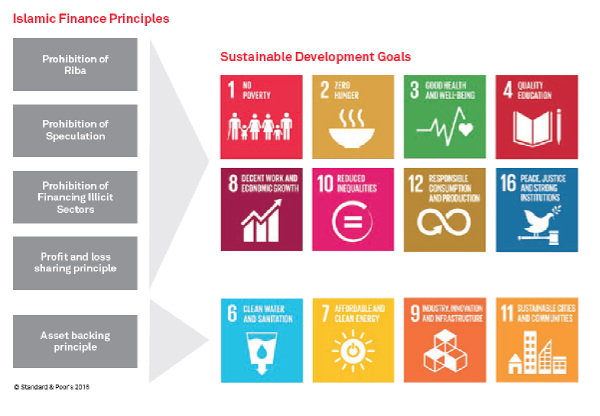
Islamic finance transactions do not include interest but instead, use risk sharing to justify earning of profit. Other main considerations include avoiding businesses that could be deemed as harmful, such as tobacco, liquor, pornography, and those that deal with excessive uncertainty, such as gambling. Islamic finance investments also avoid highly leveraged businesses as payment of interest is one of the main financial activities for such businesses.

Christine Lagarde, managing director of the International Monetary Fund, has said that: “Islamic finance’s underpinning principles of promoting participation, equity, property rights and ethics are all universal values.”

She said she regards inclusivity and stability as the main reasons behind the appeal of Islamic finance and noted its potential to support an underserved population, SMEs, start-ups and infrastructure investments. Lagarde has also highlighted the risk-sharing and asset-backed features of Islamic finance that help to reduce leverage and contribute to greater stability.
Access to finance in Africa

Access to finance and financial services leads to economic growth and the lack of it is one of the main challenges faced by Africa. For instance, 350 million Africans do not have a bank account. An IMF Working Paper notes that in sub-Saharan Africa, only one in four adults has a formal bank account. In other developing countries, twice as many people do. The paper further notes that in sub-Saharan Africa households, micro-enterprises, and small and medium enterprises lack access to credit, which “is a major obstacle in promoting growth and employment”.

There are other factors that limit access to finance in Africa. The World Bank estimates that 30% in sub-Saharan Africa do not use formal financial services owing to religious reasons. This proportion is 32% in the Middle East and North Africa.

Islamic finance in Africa

Islamic finance represents a different financial tool that not only caters to those Africans who would not deal with a regular financial institution or bank for religious reasons, but also those who prefer ethical and socially responsible banking products.

Africa is home to more than 250 million Muslims and Islamic finance is present in more than 21 African countries. Kenya, Morocco, Niger, Nigeria, Senegal, South Africa, Sudan and Uganda have recently established legal frameworks for Islamic finance. There are more than 50 Islamic finance institutions across Africa.

Islamic finance has grown rapidly across Africa. Two Islamic banks commenced operations in South Africa in 1989. Barclays launched the first Islamic banking product in Kenya in 2005. By 2010 Kenya had updated its laws to accommodate Islamic investments. Islamic banking in Tanzania started in 2010.

More recently, capital markets transactions have been on the rise. In 2014, after Senegal raised $200m, South Africa raised $500m by issuing its first sovereign Sukuk (or Islamic bond). The global Sukuk Report of July 2017 by International Islamic Financial Market reports 246 issuances valuing more than $21bn. These issuances have come from Gambia, Ivory Coast, Nigeria, Senegal, South Africa, Sudan and Togo.

How could Islamic Finance help?

The African Development Bank reports several infrastructure projects that have been funded through Islamic finance. Other policy materials suggest that Islamic finance could not only help with financing large infrastructure projects across Africa, but also help to strengthen the SME and microfinance sector. The fast-paced growth of Islamic finance across Africa already suggests that Islamic finance is helping to improve access to finance throughout the continent. The liquidity in the Islamic finance market is constantly looking for bankable project pipelines and the G20 Africa Partnership provides a perfect opportunity to connect this demand and supply.

With its growth in Africa and beyond, Islamic finance seems to fit well with several other initiatives for African development, such as the G20 Initiative on Supporting Industrialisation in Africa, the 2030 Agenda for Sustainable Development, the African Union’s Agenda 2063, the Addis Tax Initiative and the Programme for Infrastructure Development in Africa.

The objectives of the G20 Africa Partnership and Islamic finance are aligned naturally, and an express strategy for integrating Islamic finance as one of the tools for developing Africa would seem to be the right next step.

Adnan Ahmed Yousif is the president and chief executive at Al Baraka Banking Group. Ali Adnan Ibrahim is the global head of sustainability and social responsibility at Al Baraka Banking Group. This article was originally published by the World Economic Forum.

Nigeria wins World Bank’s Youth Development Initiative

0

FOR the second successive year, Nigeria has won the Ideas for Action initiative, a youth competition on financing for development, which is yearly organised by the World Bank Group in collaboration with the Zicklin Center for Business Ethics Research.

Nigeria’s winning proposal, “Kitovu”, came out tops from among 743 proposals from 118 countries, while Uganda’s proposal of “Gifted Hands” and India’s proposal of “Agratam” were adjudged first and second runner ups in this year’s competition.

The World Bank’s Senior Vice President (The 2030 Development Agenda), Mahmoud Mohieldin, announced the results of the 2017 Ideas for Action initiative on Tuesday in Washington, during the annual meetings of World Bank and the International Monetary Fund.

Mohieldin disclosed that the winners were selected through a vigorous three-stage selection process evaluating the creativity, significance, feasibility, and clarity of the proposals.

“The 2017 Ideas for Action competition encourages young people from around the world to develop and share their ideas for innovative approaches, through the smart use of technology, as well as financing solutions, to solve development challenges.

Nigeria’s winning proposal, Kitovu, is an innovative platform and system that matches fertilizer type and quantity, improved quality seeds, and other inputs to the right soil.

The proposal envisions a web- and mobile-based decentralised fertilizer and seedling warehousing system that matches the right inputs to different farm locations owned by small-holder farmers in distant locations so as to lower the cost of cultivation while ensuring increased yields.

Mr Nwachinemere Emeka Obewe, who initiated the winning proposal, explained that the platform sought to create market access for smallholder farmers in distant locations by using a mix of web, mobile and SMS platforms to link farmers to processors, produce buyers, transporters, and other ecosystem stakeholders to tackle post-harvest losses and enable produce traceability while increasing farmer income.

At age 36, this Nigerian already has a lifetime of business successes and scars to show

0

Howwemadeitinafrica: Aigbe Omoregie has had a passion for business since a young age. He was only 13 when he began selling eggs from his uncle’s poultry farm close to Benin City, the capital of Edo State in southern Nigeria.

He started out shifting about 10 crates of eggs a week to various outlets, but eventually grew that number up to 1,000, with seven people working for him. The business lasted all through his secondary school years.

“Before I got admission into Auchi Polytechnic (situated in Edo State), I told my parents I was just going to school to earn a degree because I wasn’t going to use it to search for jobs. I knew I was going to be an entrepreneur,” says Omoregie, who is now 36 years old and the managing director of Intercontinental Paint Limited, a Lagos-based paint manufacturing company.

During his first year in college, Omoregie sold used clothes, bags and shoes to students; the following year he added typewriters and desktop computers to his product range. From these ventures he was able to raise enough capital to buy a printing and photocopy machine, which he used to print and bind projects for final-year students.

On a visit back home to Benin City, one of Omoregie’s in-laws sought help selling his Mercedes-Benz vehicle. “He asked me to sell the car for 150,000 Nigerian naira. I paid him 120,000 naira upfront from my business capital, which was about 180,000 naira, and told him I will balance the remaining 30,000 naira. I used 20,000 naira to buy new tyres for the vehicle and took it to school. When I got to school, somebody fell in love with the vehicle and paid me 360,000 naira cash,” he recalls.

That was how Omoregie, who was still a student, entered the vehicle-sales industry in 2003, importing used cars into Nigeria. However, by the following year the business began to suffer as a result of a ban on second-hand vehicles. Customs officers sometimes seized his cars.

An expensive mistake

The challenges in the automotive industry prompted Omoregie to diversify into establishing an internet café on campus. He invested 7.5m naira into the venture, of which he borrowed 2m naira. But the business failed while he was in his final year at college.

“That was around 2005-2006. I lost that money and it was hell for me. I had 2m naira debt to pay and I couldn’t imagine going through such a situation in my life as at that moment. I was afraid I was going to be a [college] drop out,” he says.

Omoregie successfully completed his studies in 2006, but was angry with himself for losing the money.

“Using the internet was not that common,” he says, adding that the lack of power supply and high maintenance costs also contributed to the demise of the business. The bulk of the initial investment went into building the structure that housed the café.

“The major lesson I learnt from this experience was not of regret but of moving ahead – getting up from where I have fallen and moving on. I just told myself, ‘You need to do something different this time around and in a better way’. So I encouraged myself.”

Starting in the paint industry

After graduation, Omoregie travelled to Switzerland with the intention of remaining there to start afresh. “I didn’t even stay up to three months before I realised the environment wasn’t for me.”

Upon returning to Nigeria, Omoregie squatted with some friends in Lagos and spent about six months reading motivational and business books, while plotting his next move. With the wounds of the failed internet café venture still fresh, he was hesitant to just stumble into any business.

Eventually he received some divine direction. “The very first day I started a fasting and prayer programme, I got the inspiration to start a paint business. But I didn’t know anything about chemicals or how to make paints,” he recounts.

“That same day, I brought my fasting to an end. I had my bath and went into the streets to make enquiry about where I can learn how to make paint. The third day, I met a lady who told me about a freelance paint-making factory. She took me to the factory to meet a man who told me I can have my paint in the market, so long as I have the capital. He asked me how much do I have, and I told him 18,000 naira.”

Within one week, Omoregie had produced three drums of white paint, with his company’s name printed on the buckets. That marked the birth of Intercontinental Paint Limited in 2006.

The next challenge? Selling the paint. Something Omoregie had no idea how to do.

“I took the paint home and put it in my sitting room. I made sure it’s close to my TV so that whenever I am watching the TV, I am seeing the paint,” he explains. “Also during this period, I was calling different people that I knew, asking them to check if any of their contacts needed paint. A lot of people were laughing at me… But I didn’t listen to them.”

The stock spent six months in Omoregie’s sitting room without any prospective buyers. But then his fortunes changed when he received an order for close to 2m naira of paint.

“When I was given the quotation, I was sweating. My legs were shaking. At this time, the company was not even registered.”

Omoregie went back to the factory, and asked the man who helped him earlier to manufacture the paint he required. He closely studied the manufacturing process.

“We loaded the truck with 300 drums of paints and took it to Benin [City] overnight. Ever since, the company has not remained the same. It has been from one level of success and expansion to another. Yes, I started with low-quality paint, but today the only quality they compare our product with in the market is Dulux, which has been around for more than 100 years.”

Eventually, Omoregie officially registered Intercontinental Paints in 2010. The company’s own factory on the outskirts of Lagos produces about 20,000 litres of paint per day.

“We are miles away from where we started,” he says. “To date, we have not taken a loan from anybody or the bank. We have also been able to create job opportunities for a lot of people.”

In addition to the paint company, Omoregie also owns a construction business and is the founder of The Young CEO initiative, a platform he created to mentor young business people.

Business lessons

Omoregie says one of the greatest challenges he has faced in business is a lack of mentorship. “A lot of businessmen and women that were ahead of me, didn’t want to share their entrepreneurial story. They kept their secret to themselves and that has been one of the major problems in this country today. We don’t know how to pass knowledge across and mentor people.”

And while there are some unique challenges associated with doing business in Nigeria, Omoregie is not letting these get to him.

“Yes, there are difficulties… but I think the only difference between here and the Western world is that we don’t have reliable power and we have a weak currency. If the government can work on these issues, the economy will flourish.”

Throughout his entrepreneurial journey, Omoregie has gained insights that remain valuable to him going forward.

“One of the business lessons is that your word must be your bond – never promise what you are not going to do or what you don’t mean. I also learnt that integrity is all that you need to climb to the highest level in life. When your integrity is intact, people will commit their life and resources into your hands. Once you have built integrity, the money you are looking for will come.”

He encourages young entrepreneurs to pursue their dreams. “Fight until you are in charge of that which has been threatening you. Fight until you master that which you don’t know. Keep working, hard work pays. What you don’t know, don’t be ashamed to ask questions. Where you have not been, don’t be ashamed to ask people to take you there. Don’t think the day you start your business is the day you will start flying first class. It is a process. When you have put in your best, the best will come to you.”


Culled from: https://www.howwemadeitinafrica.com/age-36-nigerian-already-lifetime-business-successes-scars-show/59926/

Bon Hotels acquires additional 4 properties, dominates Nigerian hotel space

Following on their commitment to Nigeria and the development of its hotels and tourism segment, Bon Hotels has acquired an additional four properties to its portfolio, bringing the total to sixteen hotels under its management agreement within only 18 months – making the company the largest hotel operator in Nigeria, Bizcommunity Nigeria reports.
Due to the recent economic upswing and the official end of the recession, the group continues to extend its footprint in the region, showing remarkable growth in a short space of time, anticipating another two hotels to be signed before the year is out, and twenty in total by early next year.

Powerhouse of tourism and hospitality

The four hotels recently acquired will be four-star graded and of an international standard: Bon Hotel Tripod Owerri, will provide a 70-room hotel catering to the corporate and leisure markets which are due to open early next year, Bon Hotel Sunshine Enugu, a four-star, 120-room hotel primed for the business traveller will open its doors to the public in January 2018. Bon Hotel Newland Abuja is in Wuse 2 and Bon Hotel Airport Enugu are still under construction and due to open in 8 to 12 months.

The executive director of operations at Bon Hotels International West Africa (BHIWA), Paul Umoh who was recently appointed to the board, says he has pledged to uphold the tradition that has made Bon Hotels the leading hotel group in Nigeria and is committed to further driving this expansion of the brand throughout West Africa.

Speaking at a press event held in Lagos earlier this month, Umoh said, “Nigeria has the potential to become a powerhouse of tourism and hospitality on the continent. In Africa, you need to add value well before you start to extract value.” He added that too many international operators lose sight of this in Africa, and try to focus on the extraction of value, rather than adding value to jobs, tourism and training, and being in the country for the long term.

Umoh says that he is excited that the shift to local operators has been well received, and will continue to focus on the development of skills and talent in West Africa, operating to truly international standards.

Bizcommunity

Pay-TV market reaches 23.7m African subscribers

Dataxis’ latest research shows the steady expansion of the pay TV-market in Africa. Following data publication for the second quarter of 2017, the total number of pay-TV subscribers reached approximately 23.7 million. This represents a quarter-on-quarter growth of +2%, and a year-on-year growth of +18%, compared to the second quarter of 2016.

Among the subscribers, 70% receive television through satellite. DTH is confirmed as the main mode for TV reception across the African continent, followed by DTT access with 24% of the market share. On the other hand, DTT is still being implemented and developed in several important African countries and Dataxis predicts that this will allow DTT operators to gain new customers in the years to come.

Finally, the market remains highly concentrated, with Naspers dominating both in terms of subscribers and revenues. However, the arrival of Kwesé, a subsidiary of Econet Media, is expected to increase competition in the African market.


Bizcommunity

Business-leisure market in Africa grows

African conferencing facilities are becoming more than just venues for local gatherings and are now attracting major international events. The continent’s breathtaking natural beauty, rapidly developing infrastructure and vibrant multi-cultural people offer an increasingly attractive destination for some of the biggest global strategic events.

With the global economy expected to grow by just 2.7% in 2017 and the African economy by 2.9%, live events have maintained their relevance in a time of cost-cutting. This is despite the potential challenge from teleconferencing technology, which is delivering a much higher image and sound quality than ever before. While the global village is relying more and more on technology to connect people, nothing beats a live event where people can interact with each other for longer periods of time and in genuine ways.Long-term relationships and contacts can be built without the worry of losing internet connection or electricity, and nothing could ever replace the subtle nuances of face-to-face contact that are lost even through the most advanced digital contact. Along with a vibrant grass-roots economy, the continent’s unique cultural and tourism experiences mean the Meetings, Incentives, Conferences and Exhibitions (MICE) industry in Africa is starting to boom, despite budget cuts.

In fact, while companies and government departments might cut marketing, advertising and promotion costs, budgets are being diverted to conferences and exhibitions, as the measurable return on investment is more substantial and impactful. Increasingly, conference organisers are looking for fresh locations that leave attendees inspired and energised – especially where team building, sales, strategy and creativity are critical elements to the event process.

‘Bleisure’ opportunities grow

Global conference organisers also want to host their events at the best locations, where their delegates won’t be distracted by the hustle and bustle of big city life. The growing trend towards ‘bleisure’ hospitality, where companies seek to combine ‘business’ and ‘leisure’ elements, is serving to create memorable, informative experiences in stress-free environments.

Developers are picking up on this trend and leading leisure properties are being renovated to include worldclass conference centres to cater for business and industry events, along with entertainment. In this way, visitors to African destinations are offered the benefit of sophisticated corporate facilities along with the natural beauty and excitement of the African continent.

There’s no better time than now for owners of traditionally leisure-focused assets to boost their conferencing capabilities. While upgrade costs might be daunting, the long-term benefits are immeasurable. Owners benefit from referrals and marketing their properties while the surrounding economy is stimulated through job creation and new supply chains.

Botswana

The Grand Palm in Botswana and the Umodzi Park in Malawi are two exciting properties that are attracting people who might otherwise have not even visited the continent.

In 2016, The Grand Palm Resort, located in Gaborone, erected a new multi-purpose marquee to add versatility to the resort, especially for large scale events. Since then it was picked as host to the widely televised World’s Strongest Man contest, performances by musician Monique Bingham and the Royal Moscow Ballet, among others.

In 2017, The Grand Palm’s four-star Walmont hotel began upgrades to create a world-class aesthetic quality, including a complete revamp of its Okavango and Moremi conference rooms. With new interior design and a full refurbishment of the main conference hall and breakaway rooms, the conference centre received a modern facelift that rivals leading venues abroad. With the casino also being completely overhauled, delegates will experience the same standard of excellence across the entire resort.

Malawi

In Malawi, construction on Umodzi Park commenced in 2009 and was completed in 2012 as a mixed-use facility. It is the ideal business getaway, featuring the 130-room President Walmont Hotel, the only five-star hotel in Malawi. Adjacent to this is the Bingu Wa Mutharika International Convention Centre, which has 15 different venues and the capacity to host 1,500 people in its main auditorium.

The convention centre was picked to host events such as the 2017 Miss Malawi pageant and the successful African Land Forces Summit, which received delegates from 44 countries in May, including the US, France, UK, Brazil and leaders from across Africa.

Written by: Elzaan van Rhyn is group and convention manager at Peermont.

Dangote: Nigeria is learning how to produce the entire value chain

0
Claridges in London, editor in chief Lionel Barber conducted a candid public conversation with successful business leader, Aliko Dangote, at the Financial Times’ 4th annual Africa Summit.
Mastering detailed production statistics and highly-compelling demographics on promising sectors of the African economy, Dangote outlined the key to his success: self-sufficiency and backward integration, a manufacturing strategy that extracts value from entire processes.
“We are not going to import anything any longer,” he said. “In Nigeria, we are learning how to produce the entire value chain.”

From importer to exporter

Once a heavy importer of fertiliser, Nigeria is now gearing up to produce three million tonnes of locally manufactured fertiliser, transforming the nation into one of the largest fertiliser exporters in Africa.

In 2007, Nigeria was the second largest importer of cement after the US, Dangote reminded the audience of business elites. “Today, we have not only satisfied domestic needs, we have become a leading exporter of six to seven million tonnes of cement,” he added.

Diversifying into agriculture, Dangote has eyes on the dairy industry motivated by the fact that “98% of all milk consumed in Nigeria is imported.” Same for rice. Dangote Group has invested heavily in rice production by investing in local farmers and then offering to buy back the one million tonnes at open market prices that they are growing. “Soon we will be able to feed not only Nigeria but the entire 320 million large West African market.”

Thinking big, playing long-term

Dangote’s business acumen was on rare exhibition as Barber himself seemed impressed with the business mogul’s quick familiarity with the nuts and bolts of his businesses. “Are we going to continue to import everything?” Dangote asked. “Freight rates are now cheap but they will go up soon. A population of over 200 million cannot continue to import basic needs on a daily basis,” he answered himself.

By 2100 Dangote stated Africa will represent 49% of the world’s population, up from 30% today. “If you don’t think big we won’t grow at all,” he said. “In Africa, you have to play long-term.”

Aside from Nigeria, which African nations do you think are good growth opportunities? Barber asked Dangote. “Aside from Nigeria?” the business leader repeated and smiled. “I’d have to pick Nigeria. I am a big fan of Nigeria. We are only using 8% of our land.”

Bizcommunity

Windows Phone dead: Microsoft finally gives up on unloved operating

0

‘Volume of users is too low for most companies to invest’

Microsoft has finally given up on Windows Phone.

The company’s mobile platform has been floundering for several years, and the announcement will take very few people by surprise.

It came via Joe Belfiore, who confirmed the decision came down to a shortage of apps.

“Of course we’ll continue to support the platform.. bug fixes, security updates, etc. But building new features/[hardware] aren’t the focus,” he wrote over the weekend.

“We have tried VERY HARD to [incentivise] app devs. Paid money.. wrote apps 4 them.. but volume of users is too low for most companies to invest.”

A crippling shortage of popular apps has always been Windows Phone’s biggest problem, and Microsoft never managed to address it.

The software’s user interface was vastly different to those of Android and iOS, and widely praised, as were many of the handsets Nokia built for the platform.

However, they could never make up for the app problem.

Mr Belfiore also admitted to switching from Windows Phone to a rival mobile platform. Bill Gates recently did the same thing, choosing Android over the iPhone.

That said, Windows Phone still has some fans, and Microsoft will continue rolling out security updates to keep them protected.


SOURCE: http://www.independent.co.uk/life-style/gadgets-and-tech/news/windows-phone-dead-microsoft-mobile-smartphone-joe-belfiore-a7991356.html

SPAR hosts first premium drinks festival

SPAR Nigeria says it will continue to create exciting times in the first-ever ongoing Wine, Spirits and Beer Festival  across four states in the country, Nationonline Nigeria reports.

The festival, which began last month, is aimed at celebrating premium international and local drink brands in the country. It will end later this month.

The festival, which is geared towards reaching out to consumers in a very interactive and engaging way, offers a unique opportunity for networking between brands and consumers.

For SPAR customers, entry into the festival is free but tied to purchase of some items from SPAR stores around the location.

The six-week-long festival will culminate in four musical concerts to be held in the SPAR premises across Lagos, Port Harcourt, Enugu and Calabar.

As part of activities to mark the festival, there will be instant gratifications, such as massive discounts, gifts and freebies on all purchases made across Hypermarkets nationwide.

Being the first of its kind, many brands will be on the ground to educate consumers about the various drinks and spirits, product offerings, unique properties of each product, drinking etiquettes, food pairing, responsible drinking, free product sampling and more.

Speaking on the significance of the festival, SPAR spokesperson o, Mr. John Goldsmith, expressed appreciation to the hypermarket’s “loyal” shoppers for the trust vested in store.

“When people from different background and works of life consistently come through our doors nationwide and have their shopping needs met, it drives us to do our best in giving them undisputable value for their monies spent,’’ he said.

Goldsmith further noted that the Hypermarket hopes to make Wine, Spirits & Beer Festival a yearly event in the country.

“In the coming year, we would like to make it more appealing and engaging for the brands as well as for the consumers,” he stated.

Also, SPAR’s partnership with leading brands in the wine, spirits and beer industry for the Musical concerts will see a convergence of some of the big names in the Nigerian entertainment industry. The concert promises to be an unforgettable experience of free sampling, food and great entertainment.


Abadina College Alumni Rebuilds School

0

Abadina College, the premier public secondary school in the University of Ibadan, has been rebuilt by the Alumni Association of the school. This was done in other to create a conducive learning environment for the current generation of students in the school and also to celebrate the 40th anniversary of the school.

The school which has been in deplorable state in recent years have been refurbished significantly by various sets of alumni. Some of the projects that have been revamped include the renovation of a two-storey building; renovation of a block of 8 classrooms; installation of a solar powered borehole; renovation of the restrooms amongst other projects.

In his speech, the President of Abadina College Old Students’ Association (ACOSA), Mr. Chidi Peter Ahaneku said, ‘Abadina College is a school that has produces great citizens of Nigeria and we saw it as an obligation to rebuild the school for the coming generation. We know that there are a lot of schools that needs to be rebuilt by the government but we decided to reconstruct our own school.”

According to him, “We are glad that we are instituting a legacy that can be followed by other alumni bodies across the country. There are other projects in the pipeline too and we hope to be executing it per time till the school becomes a citadel that everyone can really be proud of identifying with. All these efforts is being done in consonance with the motto of the school that reads- learning and service- we have been trained by the school and we need to be of service to the upcoming generation.”

In her response, the current Principal of the Senior School, Mrs. M.A. Osuntogun said, “we are glad that the alumni association has played a vital role in rebuilding our school in other to mark the 40th anniversary of this citadel of learning. They have supported the government in improving the state of education in Oyo State. I will implore the alumni association to still look into the development of other infrastructures that will aid pedagogy in the school.”

The commissioning of the various projects will be a part of the one week celebration which will be rounded off on the 14th of October 2017 with a dinner ceremony to be held within the University of Ibadan.