Oscar Ekponimo is using technology to bring wasted food to the hungry…
When he was 11, Oscar Ekponimo was so hungry he would stare at the kitchen cupboards in his home in Calabar, Nigeria, wishing they would magically fill with food. His father had stopped working after a partial stroke, and his mother earned so little as a nurse that he and his siblings ate just one substantial meal every two days. “My mom used to remind us that the hunger was not forever,” he said. “That always kept me going.”
Now 30 and a skilled software engineer living in Abuja, Ekponimo is working to ensure others do not suffer as he did. He has developed an app called Chowberry, which connects grocery stores and supermarkets with NGOs and charities to put wasted or leftover food to use. As packaged food items near the end of their shelf life, the app initiates discounts that grow larger the longer the products remain unsold. Local aid groups and other selected nonprofits are alerted about these discounts and also when supermarkets are giving food away for free. Food that would otherwise have gone in the trash is instead distributed to orphanages and needy families.
Last year his team of four completed a three-month pilot involving 20 retailers and fed around 150 orphans and vulnerable children. “Our system helped [orphanages] cut down on their spending by more than 70%,” he says. Although every small retailer Ekponimo has approached in Nigeria has embraced Chowberry, he says, larger companies have been slow to adopt the technology, mainly because of red tape. “That’s been my biggest challenge.”
Despite such problems, Ekponimo can’t imagine a different life for himself. “I had several job offers from big [technology] companies over the past few years,” he says. “But Chowberry is what I am passionate about and find fulfilling. I want to see it grow and continue to benefit people’s lives.”
Arik Air, West and Central Africa’s largest carrier has announced a special promotional fare that will enable passengers buy a-one-way ticket to any destination in Nigeria from N16, 000.
The promotion, which runs from March 6 to 20 March, 2017 is to acknowledge and appreciate the loyalty of the airline’s highly esteemed customers that have stood with the airline for over a decade of operation. To enjoy this offer however, customers are advised to buy their ticket on or before March 20, 2017, while the last date for travel is March 31, 2017.
A statement from the airline added that tickets can be purchased at any Arik Air City Office, Airport Ticketing Office, online at www.arikair.com or the Arik Mobile App.
Commenting on the latest promotion, Arik Air’s Chief Executive Officer, Captain Roy Ilegbodu said: “This is an exciting time for both staff and loyal customers of Arik Air. The new management has ensured stability of operations over the last three weeks with improved on-time-performance.”
Captain Roy who further disclosed that Arik passengers would be greeted with many more amazing customer centric engagements in the months ahead disclosed that management is working hard to expand coverage. He said, “Arrangements have been concluded to return five of the grounded aircraft back to service shortly and this will enable us add more flights to our network. We therefore welcome back our loyal customers and promise them a great flying experience.”
In a related development, Arik Air has released a new schedule for its Kaduna operations following the planned closure of Nnamdi Azikiwe International Airport, Abuja from March 8, 2017, and the diversion of traffic to Kaduna Airport.
Arik Air will be operating three daily flights between Kaduna and Lagos and one daily flight between Kaduna and Accra, Ghana during this period. Other destinations to be serviced by the airline from Kaduna are Port Harcourt, Ilorin, Sokoto, Gombe, Yola and Enugu, which will have one daily flight each.
The new schedule will be operated for six weeks when the Abuja Airport is closed to traffic.
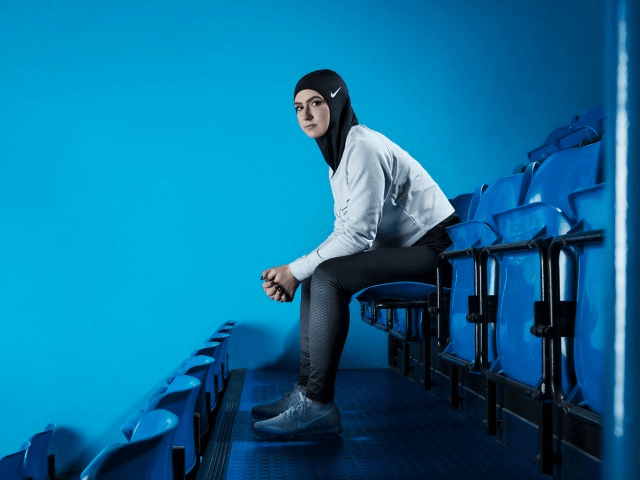
Seeing a gap in the market for the growing number of Muslim women who work out and compete in sports, Nike plans to launch a specially-designed hijab in 2018.
The “Nike Pro Hajib” was inspired, the company says, by Sarah Attar, a runner from Saudi Arabia who competed in the London Olympics 800-meter race while wearing a hijab, and by Amna Al Haddad, an Emerati weightlifter who competed in the Rio Olympics last summer.
“We worked with Amna and a variety of other athletes to see what they needed and wanted in a performance hijab,” a spokesperson told Al Arabiya English. “What we heard was that women were looking for a lightweight and breathable solution that would stay in place without concern of shifting.”
In addition to covering Muslim athletes, the garments feature an elongated back so that the tops do not become untucked during competition.
“People may think or tell you that you can’t do certain things, but I’m going to show them you absolutely can,” Zahra Lari, a figure skater from the United Arab Emirates who is part of Nike’s ad campaign, told Vogue Arabia. “I am covered, I am Muslim, I am from a desert country, and I’m doing a winter sport.”
It’s a timely combination of empowerment and merchandising as more Muslim women than ever pursue athletics. In addition, Nike wields a great deal of influence in sports, which is important at a time when not all sports allow women to compete in hijabs.
“There are a lot of … women and girls who are breaking barriers,” Nike+ Run Club Coach Manal Rostom told Vogue Arabia. “For me growing up, though, I never had these women to look up to. I had to break these barriers for myself.”
The reaction to the gear has been mixed, with some Muslim women questioning the placement of the omnipresent swoosh on the headgear.
Late last month, Nike released a controversial ad in the Middle East that asks “what will they say about you?”
One of those shown is a Muslim woman running in a hijab as an older woman and man look on. The ad was a viral sensation, with more than 2 million views. Lari is among those featured along with Tunisian fencer and Olympics medalist Ines Boubakri, Emirati Parkour trainer Amal Mourad, Saudi singer Balqees Fathi and Jordanian boxer Arifa Bseiso.
Today marks over 100 years of International Women’s day – the annual celebration of women for all their diversities and impact upon the world. Recent studies suggest women influence anywhere between 64-85% of buying decisions, but despite this there are many areas of where women are inadequately served and feel products, advertising and brand experiences are not designed to speak to them.
In this article, we explore what it means for brands to be ‘gender intelligent’ and why they should care.
Women are from Venus and men are from Mars, or so say the tired tropes. Yet, at a time where gender roles are in flux, brands should be designing to gender differences.
Femininity: its definition, role and perceived value within society is rapidly changing. In the wake of such change, the route to equality is being redefined. No longer is equality simply about obtaining the same status as a man (and likely having to fit into a world designed by and for men to do so), women can now aspire to a world designed to suit both genders. One where feminine needs and traits are valued as much as traditionally masculine ones.
Equal is the goal. The pathway does not need to be the same. Brands should take note: as the world evolves to design itself around the needs of both genders, it will take the worlds of advertising, product design and customer experience with it.
The design of our present world is biased towards men. In market research, we continue to hear women lament that they feel ignored by financial services products which don’t meet their needs, or that sales staff continue to patronise them in car dealerships.
Does this problem run deeper? In traditionally male-dominated categories, are women genuinely less interested or simply not catered to? Are brands missing out on revenue opportunities by not catering to women’s needs?
This bias isn’t just inconvenient, it can be downright deadly. Did you know that the design of seatbelts in cars is less safe for women than men because car makers primarily test with male crash test dummies?
However, this gap also creates an opportunity: Unilever’s recent work with Kantar Millward Brown showed that advertising featuring more progressive female characters led to a 12% increase in impact. Whilst CEO of the ANA, Bob Liodice, is quoted as saying:
Brands ignore this at their peril. A recent Pew research study of 30-44-year-old women showed that the more money women earn, the more spending they control. Women influence anywhere from 64%-85% of buying decisions and once male-dominated categories are fast becoming female-dominated ones. Women are accountable for an estimated $US20 trillion in spending globally.
This is compounded by the convergence of ‘traditional’ gender roles: the percentage of men who identify as the primary household grocery shopper and the primary child carer has doubled in the past 20 years.
As old concepts of masculine and feminine change, new opportunities arise. Yet many brands are scared to act fearful of public backlash or alienating their current audience. Still more fail to recognise the commercial opportunity, seeing only prospects for goodwill or moral gains.
Many are doing well, however. In June 2016, Unilever initiated a business-wide re-evaluation of how they depict women in their advertising and committed to presenting a more progressive vision of female identity in their communications. When such a big advertisers act, the industry listens.
Despite $3 billion in annual sales, Knorr’s advertising, like many other popular Unilever brands, featured some outdated female stereotypes. Unilever’s #Unstereotype initiative decided to shake that up. Knorr’s #LoveAtFirstTaste interactive film, sees UK singles on blind dates, being matched by their love of certain flavours. Why? Because Knorr found 3 in 4 people across 12 countries are attracted to people who like similar flavours.
So, what can we do about it?
The key lies in recognising, interrogating and leveraging the difference between the type of relationship men and women want with brands across all touchpoints.
1. Understand your biases
To better market to men and women, brands need to understand the unconscious biases which might be skewing their perspective.
A few years back, Sprint, a U.S. telecommunications firm, realised that although women makeup over half of their in-store traffic and influence 80% of purchases, their consumer interfaces continued to revolve around technology and devices, served with a heavy dose of industry-specific terminology. With the help of global innovation design firm Continuum, Sprint overhauled everything from their retail design to their customer service interactions to better address the needs of female customers. Communications were modified to include a more lifestyle-focused narrative and were adjusted to be more consumer-focused, avoiding jargon and instead focusing more on consumer benefits and relevance. The in-store environment was redesigned to acknowledge females and mirror back a respectful image to her. These changes were inspired by the slightly different needs of one gender but ended up making things better for everyone.
Only then will they be able to develop effective campaigns and design intuitive products and services which either speak well to everyone’s needs or that target one gender or the other intentionally from the outset, without the blindness of unconscious bias.
2. Design to the edges
There is a principle from a human-centred design called ‘designing to the edges’. Instead of products being designed for the average person or lowest common denominator, they are designed for the extremes, meaning they are flexible, versatile and suited to as many people as possible.
Women and men (in general), desire different things from brands and products. For example, men tend to be more object-oriented, whilst women prefer to connect with ‘people’, a trait that can be observed from infancy. Men tend to lend more weight to logic, control and explicit messaging and design, whilst women prefer solutions which offer meaning, connection and the implicit1.
Embedding an understanding of gender differences within your design process can help iron out these biases before they become ingrained. ‘Designing to the edges’ is not about gender neutrality. It is about taking inspiration from one gender in order to make things better for everyone.
The Hey! VINA app was created when founder, Olivia June Poole first moved to San Francisco and started using OKCupid to make friends. She and co-developer Jen Aprahamian created the friend-finding app which is like Tinder and Omegie but for same-sex friendships and matches women based on similar interests. With a greater need for connection, it’s no surprise that the app was developed by women for women. While Hey! VINA is new and still rolling out city to city, it seems likely that a Hey! VINA men’s version won’t be far behind – because no one should have to go for a beer alone.
3. Don’t assume it means ‘femvertising’
One of the biggest misnomers found in our market research was that appealing to women meant overt ‘femvertising’. Although campaigns such as Always’#likeagirl were successful, such overt purpose orientated messaging is not right for every brand and lazy ‘pink it and shrink it’ approaches to product design should be avoided.
On a gender spectrum where masculine and feminine perspectives sit on opposite ends, gender washing only serves to pull from one edge toward the middle, resulting in campaigns that are off-putting to both men and women.
Instead, think about appealing to genders authentically. Businesses that are able to confidently navigate the gender conversation in marketing, in part, to be able to do so because they have moved ‘beyond’ the issue. It is acknowledged, addressed and then becomes part of a larger conversation about people, including, gender, psychographics and needs. But we’re not there just yet.
Brands like Apple, IKEA and Uniqlo communicate to the genders effectively (‘to the edges’) by acknowledging differences, whilst avoiding stereotypes, ‘femvertising’ or being genderless.
Take inspiration from one gender to make things better for everyone
There are countless opportunities for brands who lead with “gender intelligent” design, which meets the genuine needs and sentiments of both men and women.
Today, businesses increasingly realise that they have the opportunity and, perhaps, the responsibility to have a positive impact on society. By re-examining how they serve the two biggest segments of consumers — men and women — brands can better understand areas for improvement and make a genuine change for the better, whilst positively impacting their bottom line.
(Amy Fridlund– Insights Curator, Brand and Communications APAC)
A consortium of some foreign and Nigerian banks on Wednesday took over Etisalat Nigeria after the telecommunications company failed to pay a loan totalling $1.72bn (about N541.8bn) it obtained in 2015.
The Nigerian banks are Guaranty Trust Bank, Access Bank and Zenith Bank.
A former executive director at GTB, who was privy to details concerning the loan facility, told The PUNCH that the action became necessary since the Nigerian Communications Commission could not broker a peaceful resolution between Etisalat Nigeria and the banks.
According to him, the loan involved a foreign-backed guaranty bond and was given to Etisalat to finance a major network rehabilitation and expansion of its operational base in Nigeria.
He said that after failing to service its debt since 2016, “the banks reported the company to the Central Bank of Nigeria and the NCC.”
The Ex-GTB executive director said Etisalat management was given the option of filing for bankruptcy but the telecoms firm refused to take the advice. This option, he said, would have required the banks just a management to oversee the telecoms firm’s operations.
He said, “While all these were happening, the management at Guaranty Trust Bank and the other banks concerned had thought that the Nigerian Communications Commission would have used its powers as a regulator to bail the telco out, or advise them accordinly, but it became obvious that the NCC wasn’t so interested. It was merely buying time for Etisalat.”
Meanwhile, workers at Etisalat blamed the inability of the company to fulfil its obligation to the banks on the current economic recession in Nigeria.
Speaking on the condition of anonymity, one of the workers said,”While the management continued to blame the challenge on the economic recession, the banks replied that the Asset Management Company of Nigeria regulations demanding immediate cut down on the rate of their non-performing loans give them no other option.”
She added, “We saw this coming and that is why most of our colleagues, in the last six months, kept resigning.”
Although the NCC is not happy with the takeover, a top source at the regulatory body said, “The commission was left with no option than to approve the takeover. The NCC on Tuesday, March 7, approved the takeover with effect from March 8.”
A few days back on the 27th of February, British American Tobacco (BAT), released their harm reduction report for 2016, discussing their strategy to developing a “range of less risky alternatives for adult consumers.”
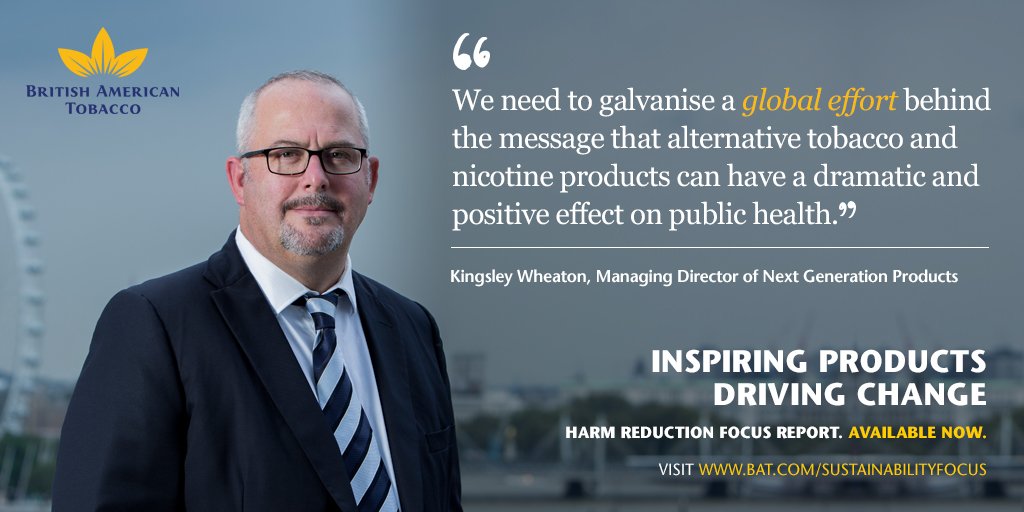
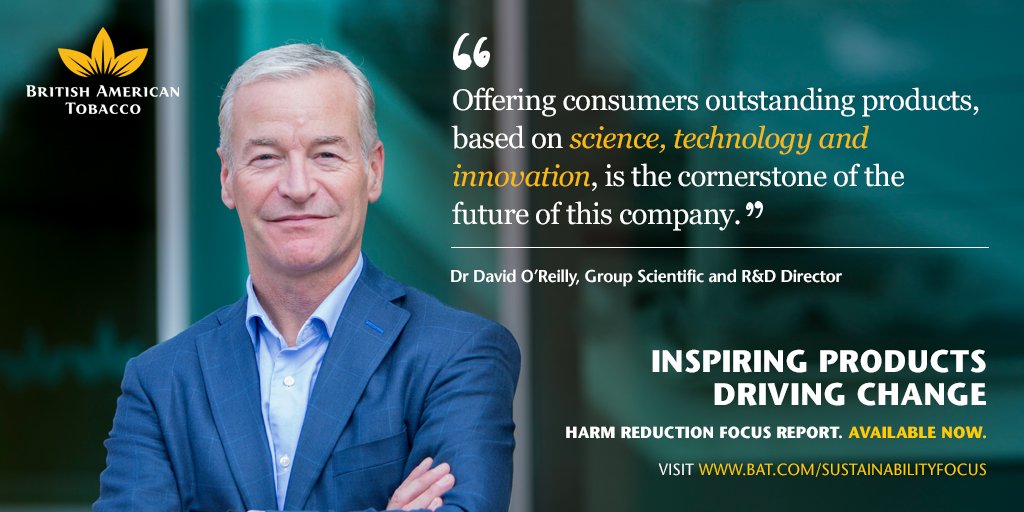
British American Tobacco’s commitment to developing inspiring products that can drive change and reduce the health impact of tobacco on the world is the focus of its latest report, available now.
This new report demonstrates British American Tobacco’s continued commitment to, and progress in providing consumers, with a choice of new, innovative products, based on sound science and game-changing technology, and how it is championing harm reduction and its potential to have a dramatic and positive effect on public health.
Nicandro Durante, Chief Executive of British American Tobacco, comments: “At BAT, we’re proud of over a century of delivering shareholder value. Rightly, however, the world now demands more of us.
“In 2012, we rearticulated our Group strategy and ambition, firmly placing consumers at the centre, and made a public commitment to satisfying consumers in tobacco and beyond. We were clear then, as we are now, that our business is based on championing informed consumer choice through offering a range of outstanding products across the risk continuum.
“I see this as having the potential to offer a triple win: a win for society in reducing the public health impact of smoking; a win for consumers in offering a choice of exciting, less risky products; and a win for our business and our shareholders in generating sustainable value.
“I’m confident that we have the capabilities to succeed in our ambition and ultimately to deliver our commitments to consumers, society and our shareholders.”
The report covers the significant progress the business has made in a number of key areas, including: product development and innovation, product stewardship, scientific evaluation and risk reduction, and collaborative development of product standards.
Report highlights include:
Our growing portfolio of new generation tobacco and nicotine products, including our Vype Vapour Products available in 10 markets worldwide and our new Tobacco Heating Product, glo, which was launched in Japan in December 2016.
An independent viewpoint from Jeff Stier, Senior Fellow at the National Center for Public Policy Research in Washington D.C.
Understanding the different products and risks, what the latest independent evidence tells us and the results of our own scientific studies.
Expert viewpoints from BAT’s senior leadership: Kingsley Wheaton, Managing Director of Next Generation Products, and Dr David O’Reilly, Group Scientific and R&D Director.
Our commitment to, and plans for, the future – we have a rolling five-year view on our innovations pipeline and further expansions into new markets to reach even more consumers.
Catch mind-blowing comedy & drama on Africa Magic Showcase as two new shows Flatmates and Jemeji premiere today, 6th March, 2017.
Flatmates is a sitcom that follows the antics and day to day lives of four young men living together in a flat.
The show features some of Nigeria’s leading comedians including Basketmouth, Buchi, Okey Bakassi, Wofai Dada, Yaw, and the former Mr. Nigeria Emmanuel Ikubese, amongst others.
Flatmates airs weekdays at 6.30pm on Africa Magic Showcase DStv channel 151 with rebroadcast at 9.30pm.
Watch Trailer below for Flatmates below
Jemeji, a telenovela, tells the story of a young medical doctor who returns home after studying abroad and is excited to be posted to a village to work.
What however seems like a dream come true soon becomes a nightmare without end as family and childhood secrets begin to unravel. Jemeji airs every Monday to Friday at 9:00pm on DStv 151
Make sure you stay connected to DStv Compact Plus at only N9,420 per month and enjoy non-stop, comedy and drama with Flatmates and Jemeji on Africa Magic Showcase channel 151 on DStv.
The programmes, which start on March 7 and run till March 21, will see all DStv, GOtv Plus and GOtv Value customers get the opportunity to have unlimited access to exciting channels offering a range of the latest quality content
Pay-TV company, MultiChoice, has introduced two new incentive programmes, DStv THANKS and GOtv WOW, to reward subscribers for their loyalty.
The programmes, which start on March 7 and run till March 21, will see all DStv, GOtv Plus and GOtv Value customers get the opportunity to have unlimited access to exciting channels offering a range of the latest quality content.
Also all customers on Premium, Compact, Compact Plus, Family and Access plus GOtv Plus and GOtv Value, who stay continuously connected for three months and more, will have uninterrupted access to the channels.
Exciting rewards that await loyal customers include monthly airtime bonuses and two brand new entertainment channels for GOtv as well as four additional entertainment channels, featuring the hottest telenovelas, movies and great local and international content on the DStv platform, at no extra cost.
The entertainment channels offered as rewards will offer a fantastic line up of ‘not-to-be missed’ new shows on Zee Bollymovies (DStv Channel 114) and GOtv Channel 12, Viasat Life on DStv Channel 177 and GOtv Channel 57, Nina TV on DStv Channel 143 and Trigger on DStv Channel 188.
Martin Mabutho, the General Manager, MultiChoice Nigeria, said: “We are delighted to launch DStv THANKS and GOtv WOW to say thank you to our valued customers. Our business is committed to putting customers at the heart of the business and one of the ways is to show our appreciation for their loyalty and unwavering support by offering them more value. We remain committed to exploring various ways to improve our value-added benefits and create platforms where we can show gratitude for our customers for being part of our family.”
Zee Bollymovies is a Bollywood movie channel offering a mix of classic and contemporary movies dubbed in English.
The channel will launch with movies such as Mohra, Kushi, Shaitan and Fitoor.
Viasat Life offers inspiring stories of ordinary people, who have made it big.
The channel will feature shows with Hollywood greats like Snoop Dog and Martha Stewards in Martha & Snoop’s Potluck Dinner Party, Dwayne ‘The Rock’ Johnson in Wake-Up Call and a variety of lifestyle shows like, House of Curves, The Three Day Nanny and My Floating Home.
Nina TV is a telenovela channel featuring African and Brazilian novelas of romance, passion, drama, suspense, action and vengeance.
Viewers can enjoy movies such Lalola, Brave Woman, Side By Side and Mali.
The Trigger channel is a male-skewed entertainment channel.
In addition to Zee Bollymovies and Viasat Life, GOtv customers will be rewarded with monthly airtime bonuses, provided they remain continuously connected to GOtv Plus and GOtv Value for a minimum of three months.
Fan Milk Nigeria Plc, a leading maker of frozen yoghurt and other dairy-based drinks has donated its products, as well as food items, toiletries and branded exercise books to the Modupe Cole Memorial Child Care and Treatment Home School in Lagos as part of its Corporate Social Responsibility and to celebrate this year’s Valentine’s Day.
The company restated its commitment to contributing positively to the society by giving back. The Human Resources Director, Fan Milk International, Maimouna Diarra, who joined the children of the orphanage to mark the Valentine Day celebration, said that the company would continue to support good and worthy causes in the society, particularly those that directly impact members of the community.
According to Diarra, Fan Milk will continue to make its impact felt in Nigeria in areas such as safety and education.
“This is our own way of helping to reach the underprivileged and alleviate the hardships and suffering in the land. It is important to spread love and cheer to not just friends and family, but to the community, especially the underprivileged who are usually forgotten and feel left out during such celebrations,” Diarra said.
Milk-based drinks maker Viju Industries Nigeria Limited has unveiled its new and improved drinks, packaged in 150ml, 300ml and 330ml PET bottles respectively.
According to the company’s management, the new improved milk drinks come in different range – 300ml is offered in chocolate, wheat and yoghurt flavours, while the fruits and flavour milk range are packaged in 150ml and 330ml PET bottles. The company adds that the new drink and package sizes will enable both children and adults have value for their money.
“Both the chocolate, wheat and yoghurts and milk drinks come in more affordable price that every home can afford,” said Viju Industries Marketing Manager, Suleiman Aliu.
“With its vitamin B12, B6 and B3, children are guaranteed with good health, quick growth, stronger teeth and sharper mind to assimilate lessons taught in schools. It also helps in the revitalization of weak cells in adult. Milk is life, so with the improved Viju milk drinks, vitamin A, B, C and D are sure ingredients added in the milk drinks that will help every consumer live a healthy life,” he added.
We use cookies on our website to give you the most relevant experience by remembering your preferences and repeat visits. By clicking “Accept”, you consent to the use of ALL the cookies.
This website uses cookies to improve your experience while you navigate through the website. Out of these, the cookies that are categorized as necessary are stored on your browser as they are essential for the working of basic functionalities of the website. We also use third-party cookies that help us analyze and understand how you use this website. These cookies will be stored in your browser only with your consent. You also have the option to opt-out of these cookies. But opting out of some of these cookies may affect your browsing experience.
Necessary cookies are absolutely essential for the website to function properly. This category only includes cookies that ensures basic functionalities and security features of the website. These cookies do not store any personal information.
Any cookies that may not be particularly necessary for the website to function and is used specifically to collect user personal data via analytics, ads, other embedded contents are termed as non-necessary cookies. It is mandatory to procure user consent prior to running these cookies on your website.






 The right advertising environment for women can improve ad effectiveness by as much as 30 percent