Peugeot manufacturer buys Opel $2.3bn

PSA Group, makers of Peugeot and Citroen cars has agreed to buy Opel from General Motors (GM) for 2.2 billion euros ($2.3 billion).

With the buy up of Opel, PSA will become a new regional car giant to challenge market leader Volkswagen.

Image result for Peugeot Opel

PSA Chief Executive Carlos Tavares vows to make Opel and its British Vauxhall brand to profit, with an operating margin of 2 percent within three years and 6 percent by 2026.

“We’re confident that the Opel-Vauxhall turnaround will significantly accelerate with our support,” Tavares said in a statement.

Image result for Peugeot manufacturer buys Opel $2.3bn

By acquiring Opel, PSA goes ahead of its Renault to become Europe’s second-ranked carmaker in terms of sales.

Last year, PSA and GM Europe recorded 72 billion euros in revenue and 4.3 million vehicle deliveries between them.

GM will receive 1.32 billion euros for the Opel manufacturing business – 650 million euros in cash and 670 million in PSA share warrants.

The Paris-based carmaker and BNP Paribas will pay a further 900 million euros for the Opel financing arm and operate it as a joint venture, fully consolidated by the French bank.

The sale of Opel seals GM’s exit from Europe. Eight years after coming close to selling Opel to Magna International (MG.TO), the Detroit auto giant has faced investor pressure to offload the business and focus on raising profitability rather than chase the global sales crown currently held by VW.

Related image

After fending off 2015 merger overtures by Fiat Chrysler (FCHA.MI) with support from her board, GM boss Mary Barra agreed to target a 20 percent minimum return on invested capital and pay out more cash to shareholders.

The two carmakers, which already share some production in an existing European alliance, confirmed last month they were negotiating an outright acquisition of Opel and its British Vauxhall brand by PSA, sparking concern over possible job cuts.

Warranty And Guaranty: What I Should Know As A Nigerian Consumer

0
guaranty-warranty2.jpg

My wife and I got talking when she returned home from the sales and marketing of some electronics products she recently dabbled into. As expected, the market terrain for products considered as “Luxury” was a bit tough, no thanks to the biting economic crunch. She complained about how dealers are unwilling to make purchases because of the drastic drop in sales. However, one recurring decimal in her field experience was the issue of Warranty and Guaranty on the products. Dealers expressly demanded to know exactly what offer of Warranty and/or Guaranty comes with the products. According to her, a particular dealer made it plain to her that she prefers to stock products with Guaranty instead those with just Warranty.

This got me thinking: What is the difference between Warranty and Guaranty? What should I choose or insist on as a Nigerian consumer?

In my search for answers, I came across the following information. I will be brief and precise.

Warranty

A Warranty is a tool used in a transaction to assure a purchaser of certain existing facts about a product or service, often times relating to the title, quality, or quantity of the product or service, upon which the purchaser can rely upon to make purchases. A breach of a warranty gives the purchaser the right to claim damages but not to treat the contract as null and void.

Guaranty

A guarantee is an agreement from the manufacturer affirming their willingness to repair or replace an item or even refund money if something goes wrong within a certain period of time after purchase.

A guarantee gives you additional protection and empowers you as a consumer. The guarantee generally applies to the item during a specific time after you purchase it. Guarantees also apply to services, such as, installation and repair services in your home can have a guarantee.

One differentiating feature of a guaranty from a warranty is that a guarantee can be provided by a third party besides the manufacturer. More so, guaranties may not last as warranties do and may not cover a wide range of issues like a warranty does, but is still as effective as a warranty.

Nigerian Consumer, Please Note …

  1. Warranties and Guaranties have of terms and conditions attached to them. Your claim (warranty or Guaranty) is only as valid as the evidence you provide that the product was in no way misused, or that it isn’t simply the case that you don’t need it anymore. Depending on jurisdiction, a condition still must be met.
  2. Always check the terms and conditions of the guarantee. For example, you may need to register the guarantee with the manufacturer for certain conditions to be met.
  3. Find out exactly what the guarantee or warranty covers. It may explain what happens if you give or sell the item to somebody else during the guarantee period. For example, with electrical appliances and gadgets, are all parts or just specific parts covered?
  4. Don’t forget the small print/slip. Keep it safe. You may need it to claim your warranty or guarantee.

(nigeriaconsumers)

SPORT BETTING IN NIGERIA: AN UNLIKELY SOURCE OF REVENUE AND JOBS

0

In Nigeria’s commercial nerve centre, Lagos, shanty wooden structures with a number of benches, a television and a satellite dish are common sight. These venues, popularly called ‘viewing centres’, offer a bulk of the football-mad population in the city a chance to watch the European football league games, usually for less than a dollar. As the popularity of these matches grew in the early 2000s, so did the presence of these viewing centres.

Related image

Image result for SPORT BETTING NIGERIA

On match-days, these places are usually packed with passionate fans sporting replica jerseys and rooting for their favourite teams but more recently, a keen observer might notice fans at viewing centres clutching a white piece of paper – a ‘ticket’. Tickets are printed copies of selected games on which bets are placed and since late 2012, they have become more prominent in the Nigerian football landscape as sport betting is now very popular. Despite the notion that sport betting kicked off in Nigeria only recently, the earliest sport betting firms recorded their first entry into the market in 2007.
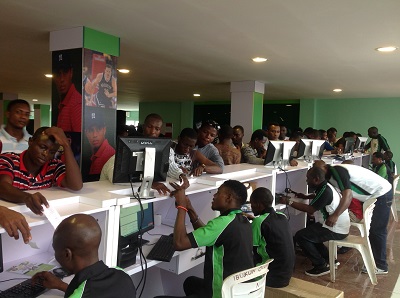
Image result for SPORT BETTING NIGERIA

Generally, sport betting involves punters predicting the outcome of matches and getting their bets to correspond with the stakes. If the predictions are correct, the bets are rewarded with stipulated winnings. In Nigeria, where there are millions of incredibly passionate football fans, sport betting has found its proverbial home.

Ultimately, fans began to explore the real possibility of not just watching football but also making money from these games played thousands of miles away. For fans who watch football as a leisurely pastime, the ability to make money out of it has presented an opportunity too good to pass up.

Image result for SPORT BETTING NIGERIA

Money is the name of the game

Typically, fans are used to hosting heated discussions on the monstrous weekly wages of their favourite footballers but sport betting has turned that conversation on its head. Football fans now discuss their earnings from bets as the sport has become a viable source of income. Every other weekend, betting companies announce big winnings from bets placed with amounts as low as N100.

The possibility of raking in millions from meagre amounts is enough motivation for punters across the country to bet on a daily basis and as a result, betting companies record hugely impressive numbers. Ademola Adebajo, CEO of Stakersden, a leading betting company in Lagos, projects that daily stakes run into billions of Naira.

Image result for baba ijebu

“Currently, we believe daily bets have reached five billion naira cumulatively across all the betting companies. Punters in the country are currently seeing this as a source of daily bread and it is not uncommon to see people appropriating a certain amount for betting daily,” Adebajo said.

Despite Nigeria’s high levels of poverty and unemployment, punters cut across various demographics regardless of earning powers. According to Adebajo, low income earning punters spend between N200  and N1000 on bets while high income earners, tagged ‘big ticket customers’ spend thousands more, although these big ticket customers are firmly in the minority.

A pot of gold

In recent years, as Nigeria has become a thriving market, sports betting firms have sought to latch on and capture market share to various degrees of success.

The default business model sees the companies set up shop in a central working office while seeking to establish a wide network of affiliate agents who open brick and mortar shops where customers can come in to place bets. For their part in the business chain, affiliate shop owners, or agents as they are formally known, earn commissions on the bets placed in their shops. While the offline component thrives, sports betting companies also operate an online business model exploiting Nigeria’s internet penetration.

Last month, the Nigerian Communications Commission announced that internet users in the country had reached 97 million. With more than half of the country online, betting companies recognize the need to establish viable online operations. For this purpose, websites are set up for punters to open personal accounts from which they conduct transactions ranging from depositing funds into an online wallet, placing bets and transferring winnings earned from bets to their bank accounts. While some companies explore both models aggressively, others like NairaBet simply choose to remain predominantly online models thus sidestepping the financial and logistical implications of setting up and running a large-scale offline model.

The first step however, is purchasing a betting license at an annual cost of N10 million from regulators. Even though the cost of kick-starting operations is high, betting firms still require deep pockets to pay out winnings from punters which can sometimes run into hundreds of millions in a single weekend, cumulatively.

In fact, the inability to pay up promptly after big wins has been known to cause major embarrassment for betting companies and on some occasions, eventual closure. Last May, on a weekend that saw few upsets and most predicted results clicking, punters on Bet9ja, the market leader in the sport betting space were said to have garnered up to N700 million in winning bets. To its credit, Bet9ja paid promptly- a feat that cannot be matched by some other firms. However, weekends like those are few and far between and more often than not, the betting companies make healthy profits and record enviable numbers.

Clearly, the business landscape is changing rapidly as betting firms compete aggressively for market share. According to Adebajo of Stakersden, betting companies with real goals of domination can no longer play small. “We started with a few local companies but right now, the business is moving from a low budget enterprise to one where scale is of the essence. Companies like Bet9ja have come into the market to redefine how sport betting should be done and every operator is reacting to the developments,” he said. “The business landscape has moved from trying to open a corner shop somewhere and offer betting services to people. The big companies are constantly innovating and upping the ante in the industry. New entrants will need significant start-up capital to measure up.”

The need for innovation has seen companies seek ways to make betting easier and less restrictive for punters as live phone betting services have been launched. Stakersden has also recently launched a new service in collaboration with leading telecoms firms.

While some think the Nigerian market is already saturated and can no longer evolve, Adebajo says the next stage of evolution will be fuelled by foreign investment. “Foreign companies have been licensed to operate here and more are expecting to secure licenses or to partner with local operators. So in the next 5 years, we expect to see foreign companies taking a chunk of the shareholding of some of these companies to compete.”

An unlikely solution

Given Nigeria’s high unemployment figures, the creation of jobs by the private sector is critical and in this regard, the impact of sport betting has been profound. With some big companies running nationwide operations, while other focus on maximizing their reach regionally, the industry has created thousands of jobs directly and indirectly. Big companies have staff strength running into hundreds but through their associate networks, they offer agents a source of livelihood through affiliate partnerships as they earn money through commissions. Joseph Chukwu, a graduate and shop owner in Ikorodu, says sport betting has been a lifesaver. “There are no jobs in the country even for qualified graduates,” he said. “Rather than sit on my thumbs, I decided to set up my shop as an agent and earn money through commissions. Initially I thought of it as something to do while something bigger came along but now I’m focusing on building a chain of shops and being a mogul of sorts. It may sound crazy but I’ve gone from looking for a job to actually building a business.”

Adebajo thinks the employment issues and high rate of poverty means that the chance to earn a living from sports betting can hardly be ignored. “Majority of Nigerians live below the poverty line and any activity that can legitimately turn a small amount of money into large sums will always be appealing.” Adebajo’s sentiments are backed by the many instances when Nigerians have fallen victim to fraudulent multi-level marketing and pyramid schemes. Given the legitimacy of sport betting, its appeal is ostensible.

In less than a decade, the sport betting industry has grown vastly and become not just a source of income for many Nigerian punters but also large job creation vehicle. Ordinarily, Nigerians are happy to watch football and celebrate the goals and other magical moments but these days, they do so knowing that every goal counts for something and win, lose or draw the outcome of the game could matter for more than bragging rights. Watching and following football games are no longer just a simple recreational pastime, a late winning goal scored in the English Premier League or in the German Bundesliga is no longer worth just three points – for a football fan, it can pay for the next meal.

(venturesafrica)

Understanding the FGN savings bonds

The Debt Management Office of Nigeria launched a new retail investment programme called the FGN Savings Bonds. In this article, Nairametrics will explain what the FGN Savings Bond means and how you can subscribe to it. We will also explain the difference between this product and other similar ones such as treasury bills. You can call this article the A-Z of the FGN Savings Bonds.

What is a bond?

A bond is a confirmation from a borrower that it borrowed money (cash) from a lender at a given interest rate and repayable over a period. Bonds also include how payment of the principal and interest will be made. They also include the minimum amount that can be subscribed by a lender and in what multiples. Bonds are evidenced by an instrument typically issued by a company or country in exchange for cash.

What are FGN bonds?

FGN Bond is a bond issued by the Nigerian government in exchange for cash at a given interest rate and a repayment period. It also states how payments of the principal and interest will be made. Nigeria has more than one FGN Bond, with each differentiated by their tenor (duration) and interest rates.

What is FGN savings bond?

An FGN savings bond is a bond issued by the Debt Management Office on behalf of the Nigerian government. The bond is tailored and targeted at retail investors and includes a guaranteed interest payment and repayment of the principal.

Why is the government issuing a retail bond?

The government is issuing savings bonds targeted at ordinary Nigerians of all income groups, giving them the opportunity to earn an income through saving and investing. The bond is also expected to help promote the savings culture of Nigerians. Most Nigerians are thought not to save in banks because of very low-interest rates.

What are the benefits?

The bond earns you an interest that will be paid quarterly directly into your bank account.
The bond is safe and is backed by the full faith and credit of the FG. Government bonds hardly default, so you are nearly 100 per cent sure that you will get your money back in full along with the interest.
You need not be rich to invest as anyone with as little as N5,000 can invest in the bond.
FGN savings bond is a good way to save towards your marriage, an occasion, school, project, retirement etc.
You can also use the bond as a collateral to get a loan from a bank.

What are the risks?

FGN Bonds are often said to be risk-free because the Federal Government hardly defaults on debt repayments especially if it is a naira denominated debt. However, being a bond, there are a few risks, should you decide to sell before maturity. Just like a stock, you can invest N1m in a bond and get only N900k in principal. We’ll explain this later. You also face the risk of losing the value of your investment to inflation. If the interest rate on the FGN savings bond is lower than the inflation rate, then your returns are lower than in real terms. In a high inflationary environment like Nigeria, investing in bonds can lead to a loss of value if the rates are lower than inflation.

How much can I invest?

Retail investors looking to invest in the FGN savings bond only need a minimum of N5,000 to invest. Subsequent investment over N5,000 will be in multiples of N1,000. Meaning that you cannot invest N5,500 or N12,700. It’s either N6,000 or N13,000 or N30,000. The maximum amount a single retail investor can invest in the FGN Bond is N50m.

Where can I buy it from?

You can buy it from any of the approved registered stockbrokers. Just ask your stockbroker if they are authorised to sell. It is that simple.

What is the tenor of the loans and what is the interest rate?

The bonds have a tenor of two and three years respectively. Meaning that you can either invest in an FGN savings bond with a duration of two years or one with a duration of three years. The interest rates are determined by the Debt Management Office. They decide what rates they are willing to pay.

How will the interest and principal be paid?

The interest will be paid quarterly into your bank accounts while the principal will be paid at maturity (the end of the tenor, two or three years) depending on what duration you subscribed to.

When did the government start selling FGN savings bonds?

The Federal Government through the Debt Management Office will start selling FGN bonds on the 13th of March 2017.

Will it be issued monthly?

Yes, the FGN savings bond will be issued monthly.

What if I decide to sell before maturity?

You need not hold on to the bond until maturity. If you need cash anytime during the duration of the bond, you can sell your bond in exchange for cash. However, the portion of the interest that you are not entitled to earn because you have sold will not accrue to you any longer. For example, if you buy March 13 and sell August 13, 2017, because you cannot wait until March 2019 (after two years) to get your principal, you will only be entitled to the interest earned between March 13 and August 13, 2017.

However, note that should you wish to sell before maturity, you might pay a transaction fee. Also, because it is a bond, the price you get might be more or higher depending on the market value of the bond.

What is a market value?

A bond has certain characteristics similar to a stock. Being an instrument, bond prices can often be higher or lower than their face value. A face value of a Nigerian bond is typically N1,000. Let’s assume you bought FGN Savings bond at N1m and at an interest rate of 13 per cent per annum. It means that for every N1,000 of your investment, you will earn N130 (also known as the coupon rate). So, if you decide to hold your N1m to maturity, you will earn N130,000 annually.

In the secondary market, bond prices behave like stock and react to the forces of demand and supply. Supposing lending rates in the country suddenly rise to 16 per cent. It means that the bond you bought that earns you 13 per cent is no longer attractive as the FG will only continue to pay the N130 for every N1,000 in Face value.

To therefore earn a return of 16 per cent at the coupon of N130, the bond will need to sell for a face value of N814.11. So, should you wish to sell your bond when the price is going for N814.11, either because you are in need of cash or just as part of your trading activities, you will only get N814.1k (still subject to charges) and lose N185.8. This explains the risks we talked about earlier.

Can I buy even more within a tenor?

Yes, you can subscribe for more provided it is in multiples of N1,000 and not exceeding a total cumulative amount of N50m.

What is the difference between FGN savings bonds and treasury bills?

Unlike treasury bills, FGN savings bonds have a duration of between two and three years. Treasury bills are not more than one year with shorter tenors of 91 days and 182 days.
Treasury bills rates are determined by the forces of demand and supply. The DMO says the FGN saving bonds rates will be determined by them.
Treasury bills interest rates are paid up front. For example, if you invest in treasury bills today, they will pay you all your interest today. For the FGN savings bonds, it will be at the end of the first quarter.
Unlike FGN savings bonds, treasury bills are not sold in the stock market
The DMO has also now said that treasury bills can no longer be sold to retail investors.

(PUNCH)

VConnect, Nolands Tax task SMEs on online tools

For better performance at a time the economy is struggling, the small and medium scale enterprises (SMEs) in Nigeria have been urged to leverage the many online tools to grow their businesses.

This advice came from VConnect and Nolands Tax, when they both collaborated to host SMEs in the country on the advantages online presence can add to their businesses.

Image result for VConnect techpoint

Due to structural challenges mostly related to their size, small businesses have a hard time competing in the marketplace. But with online marketing, which helps to drive much of professional services marketing strategy more small business owners are better able to compete and make even higher profits than they would with physical marketing.

Already, the Small and Medium Enterprises Development Agency of Nigeria (SMEDAN) said Nigeria is home to about 17, 000 SMEs. The event, which was themed: ‘Leveraging Online Tools to Grow Your Business,’ had in attendance entrepreneurs and SMEs to address challenges hindering the growth of Nigerian businesses, and to educate owners on how to leverage the new ‘Vconnect for Business’ platform to grow their business.

Speaking at the event, the Head of SME Sales, VConnect, Vishal Tulsiani, reiterated the importance of effective communication. Vishal struck a chord when he said: “Many businesses just want to be online, they know it’s good to have an online presence, but don’t know exactly what they want to achieve by being online or how to go about it. Some years back, people did business based on referrals from friends and family but that is not the case now. Today, when in need of a product or service the first thing people do is go online.”

He said the business forum was organised to teach small and medium scale enterprise owners how to leverage and effectively use available online tools to grow their businesses in order to yield greater returns on investments (ROI).

VConnect also used the forum to unveil its newly released website services, where businesses can create their own website with three simple clicks by creating their profile to get a free one month trial.

(guardian.ng)

Indomie institutes “Cash-for-Scholarship” promo to reward consumers

0
Nigeria’s leading noodles brand, Indomie Instant noodles has announced the kick-off of yet another exciting consumer enabling promotion tagged “Indomie Cash for Scholarship Promo” which is expected to run till the month of April, 2017.

Consumers of Indomie Instant Noodles are expected to participate by collecting and cutting all 18 letters from Indomie Noodles packs to complete the phrase “INDOMIE LIKE NO OTHER”. After presenting the 18 letters that form the phrase at designated redemption centres consumers stand the chance of being rewarded with prizes such as: premium brand bicycles, 150,000 Naira worth of scholarships to support their education.

Speaking about the Promo, Brand Manager, Indomie Instant Noodles, Mr. Amber Yadav, said: “the cash for scholarship promo is borne out of Indomie’s desire to enable consumers achieve their dreams of a better life for tomorrow. Wole Soyinka, Chinue Achebe and Tafawa Balewa might not have achieved greatness without education and Indomie believes an educated person is better equipped to make better choices relating to quality of life and even brands they consume, such as Indomie.”

The Group Public Relations and Events Manager, Dufil Prima Foods Plc, Mr. Tope Ashiwaju also explained that the Cash for Scholarship promo is another opportunity for consumers to be appreciated by Indomie.

According to Tope “the modality for winning in this promo is effortless. All that is required if for the consumer to collect different letters contained in each promo pack till they complete the 18 letters that make up the sentence ‘INDOMIE LIKE NO OTHER’. Once these 18 letters are complete, they win instant prizes of bicycles and scholarship worth 150, 000 Naira at any of our redemption centres” stated Ashiwaju.

Ashiwaju therefore urged all consumers of the brand to participate in the promo by continuously cutting and collecting the required 18 Letters till they eventually become winners, as the promo was specifically designed with the aim of supporting consumer to achieve their dreams of a better and quality life.

Indomie is, however, not new to providing scholarships to its teeming consumers as the brand recently offered twelve Postgraduate students from different Universities across the country scholarship worth N450, 000 each in the Indomie MSc Nutrition Scholarship Awards 2016.

The brand has continued to focus on its greatest assets which are an informed consumer and provision of unmatched quality products; these brand priorities have seen the Indomie retain its leadership position in the marketplace and endear the brand jealously into the hearts of informed consumers who always go for the best.

Global perceptions of gender equality – Poll

0
In the interest of International Women’s Day, new data from Ipsos Global @dvisor shows that although the clear majority in 24 countries around the world say they believe men and women should be treated equally (88% on average), most still think the current situation is one of inequality in terms of social, political and/or economic rights (72% on average).
Women though are more positive when it comes to their own lives – six in ten on average agree they have “full equality with men in their country and the freedom to reach their full dreams and aspirations” – although this still means that in several countries many women disagree.

The survey, among online adults aged under 65 in Argentina, Australia, Belgium, Brazil, Canada, China, France, Britain, Germany, Hungary, India, Italy, Japan, Mexico, Peru, Poland, Russia, Serbia, South Africa, South Korea, Spain, Sweden, Turkey and the United States (including both men and women) also finds a majority of both women and men on average define themselves as feminist (58% on average), even though a quarter (24%) say they are scared to speak up for equal rights – especially in India.

Around one in five on average say they believe women are inferior to men or that women should just stay at home, although it is higher in India and Russia. Key findings – including the main differences between countries and between men and women, are outlined below.

Because the survey is conducted online, this reflects the opinion of those South Africans who have online access and not that of the total adult population.

Does equality exist?

  • Nine in ten around the world (88% on average) say they believe in equal opportunities for men and women, and the figure is high among both men and women (86% and 89% respectively). A clear majority in each of the 24 countries believes in this (lowest in Japan at 71%).
  • In South Africa, a huge majority (91%) believe in equal opportunities.Global perceptions of gender equality - Poll
  • However, 72% on average say that inequality currently exists in terms of social, political, and/or economic rights, especially women (by 76% to 68% of men). South Africa is close to the average at 77%. Again, a majority in every country believes inequality exists, except for Russia at only 42%.
  • Women are more positive personally though. On average, 60% agree that they have full equality with men in their country and the freedom to achieve their full dreams and aspirations – but 40% disagree. However, in seven of the 24 countries most women disagree, especially in Spain, Japan, South Korea and Turkey. 82% of South African women and 73% of SA men agree that women have equality with men in our country.

Gender roles

  • On average, one in five believes that women are inferior to men, or that women should not aspire to do anything outside of the household (18% and 17% respectively). Across the 24 countries as a whole, men are slightly more likely to believe that women should just stay at home (by 19% to 14%), although both genders are equally likely to believe that women are inferior.
  • 18% of online South Africans believe that women are inferior to men, in keeping with the international average.Global perceptions of gender equality - Poll
  • Attitudes in Russia and India stand out – almost half of those asked in those countries believe that women are inferior to men (46% each), as do one in three (33%) in Serbia.
  • A similar proportion, 25% on average, believe men are more capable of doing things in society such as working, earning money, being educated and teaching than women. Again, men are more likely to agree with this than women (by 29% to 21%), and belief is particularly high in China (56%), Russia (54%) and India (25%).
  • Just over a fifth (22%) of online South Africans agree with this statement.

Standing up for equal rights

  • On average, six in ten (58%) across the 24 countries say they would define themselves as feminist, with women more likely to do so than men (by 62% to 55%). Less than half though in Germany, Russia, Japan and Hungary would call themselves feminist.Global perceptions of gender equality - Poll


  • Most (68%) also claim to actively support women’s rights by speaking up to change things rather than just thinking about them (although this falls to just 28% in Japan). 77% of online South Africans claim to speak up for women’s’ rights. Men are just as likely as women to say they actively speak up for women’s rights, and in some countries (Argentina, Canada, and the US) are even more likely than women to do so.
  • However, one in four of both women and men say they are scared to speak up for equal rights for women (26% and 23% respectively). Fear of speaking out among women is especially high in India (54%), Turkey (47%) and Brazil (41%), while in the US more men say they are scared to speak up than women (by 28% to 15%).Commenting on the findings, Mari Harris, Head of Ipsos Public Affairs said:
      “Ipsos’ latest international study suggests that the principle of gender equality is making more progress around the world than the reality. It’s encouraging that the clear majority of both men and women around the world believe in equal opportunity, and that ‘feminism’ doesn’t seem to be a minority pursuit – but at the same time most still believe that true equality of rights is not here yet. There also remains a minority of both sexes who believe in male superiority – but perhaps most concerning is the one in four who are scared to speak up for equal rights, especially in some pockets of the world. When it comes to online South Africans, we tend to have more liberal views than the international average, but even so, more than seven in ten (77%)of us think women and men don’t have full equal rights at the moment.”


NIGERIAN BREWERIES COMMISSIONS MULTI-BILLION NAIRA OTA BREWERY UPGRADE (Photos)

Nigerian Breweries Plc on Wednesday commissioned its upgraded brewery in Ota, Ogun State as part of its strategic plan to consolidate its leadership position in the industry. Part of the brewery infrastructure commissioned at the well-attended ceremony included a new PET line, a Water Treatment Plant and a Waste Water Treatment Plant, among twenty one others.

FROM LEFT TO RIGHT: Governor Ibikunle Amosun of Ogun State receiving a bouquet of flowers as he arrived for the commissioning of the upgraded  Ota Brewery on Wednesday. With him are the Chairman, Nigerian Breweries Plc, Chief Kola Jamodu (second left); Corporate Affairs Adviser, Nigerian Breweries Plc, Mr. Kufre Ekanem, (first from left) and Otunba Bimbo Ashiru, Ogun State Commissioner for Commerce and Industry.

While welcoming guests who included the governor of Ogun State, His Excellency, Senator Ibikunle Amosun, and former president, Chief Olusegun Obasanjo, Chief Kola Jamodu, Chairman, Nigerian Breweries Plc, explained that the multi-billion Naira PET line which currently boasts the best technology in the HEINEKEN world was installed to deepen availability of the non-alcoholic product portfolio of the company. He added that the modern Water Treatment Plant was constructed to ensure the continued excellent quality of the company’s brands while the Waste Water Treatment Plant further contributes to the success of its sustainability agenda of “Brewing a Better World”.

FROM LEFT TO RIGHT – Senator Ibikunle Amosun, Executive Governor, Ogun State and Chief Kola Jamodu, Chairman, Nigerian Breweries at the commissioning of  the upgraded  Ota brewery on Wednesday.

According to the chairman, “These investments, totaling over N11b stand out as a testimony to our corporate philosophy of Winning with Nigeria and they reflect our company’s bold confidence in Ogun State and Nigeria as an investment destination.” Chief Kola Jamodu also emphasized that the projects signpost the contribution of the company to the economic development of Ogun State which also play to another of its brewery in Ijebu Ode and many of the ancillary industries that the company supports.

FROM LEFT TO RIGHT:  Senator Ibikunle Amosun, Executive Governor, Ogun State; Chief Kola Jamodu, Chairman, Nigerian Breweries and  Chief Abraham Akanle, representative of former president Olusegun Obasanjo at the commissioning of  the upgraded  Ota brewery on Wednesday.

On his part, the Ogun State governor, Senator Ibikunle Amosun congratulated the company on the successful upgrade of the brewery which he described as an enviable step capable of facilitating a self-dependent economy. Governor Amosun commended Nigerian Breweries for its backward integration and local sourcing of over 50% of its raw materials and 95% of its packaging material. According to the governor, “It will be in our collective interest for companies in Ogun state and even the entire country to source their materials locally. Backward integration and import substitution is the master key to a self-sustaining economy”. He promised that the state will continue to provide necessary conditions for business to operate smoothly in the state.

FROM LEFT TO RIGHT: Chief Kola Jamodu, Chairman, Nigerian Breweries; Senator Ibikunle Amosun, Executive Governor, Ogun State and Chief Abraham Akanle, representative of former President Olusegun Obasanjo at the commissioning of the upgraded Ota brewery on Wednesday.

Former President Olusegun Obasanjo, represented by Chief Abraham Idowu Akanle congratulated Nigerian Breweries on the upgrade of the brewery. He described the private sector as the engine room of economic growth and called on other corporate organisations to follow the fruitful example of the company.

Nigerian Breweries Plc acquired Ota brewery in 2011 and since that time, the company has invested significantly to upgrade the facilities at the brewery to the world class standards befitting a brewery in the HEINEKEN group.

Pepsodent and Federal Ministry of Health to boost oral hygiene of 10 million children by 2020

0

Leading toothpaste brand, Pepsodent in partnership with the Nigerian Dental Association (NDA) has revealed plans to help millions of Nigerian families adopt the best oral health practices as it officially announced the kick off of its World Oral Health Day (WOHD) celebration ‎on Monday March 6, 2017 in Lagos.


World Oral Health Day is set aside globally to celebrate the benefits and impact of having good oral hygiene.

“We are proud of our partnership with Unilever Nig. Plc, who have made the success of the previous World Oral Health celebrations possible with their immense support towards oral health in Nigeria,” said Dr. Bode IjarogbePresident of the Nigerian Dental Association ‎while speaking about the continuous partnership between Unilever and the National Dental Association.  “It is imperative to prevent oral diseases in Nigeria by ensuring people brush twice a day, every day. In addition to the fact that many people cannot afford dental care, statistics also shows that there are only about 4,125 registered dentists i.e. about 40,000 people to 1 dentist.”

Oral diseases are amongst the most common diseases worldwide. They can be easily prevented by brushing twice a day with fluoride toothpaste.

Pepsodent is set to help Nigerians eradicate oral diseases with lined-up dental activities including, school programmes, health walk, community outreach and several other activities that will be used to create awareness and educate Nigerians on the many benefits and importance of brushing twice daily.

Speaking to the statistics that shows that 59% of Nigerians do not brush day and night, Nigeria Oral Care Category Lead- Ibironke Ugbaja Unilever Nigeria plc, said: “We have through our efforts in the past seen the transformative impact that brushing twice daily has on the oral health of Nigerians.”

“Our goal at Pepsodent is to continue driving improved oral health care practices for a cavity free smile Nigeria. We are also aware that healthy dental habits start during childhood, which is why it’s vital that the Pepsodent Brush Day and Night campaign reaches more children than ever before. We have reached over 2.5 million children in about 3,500 schools since the inception of the programme. Our goal is to reach 10 million children by 2020.”

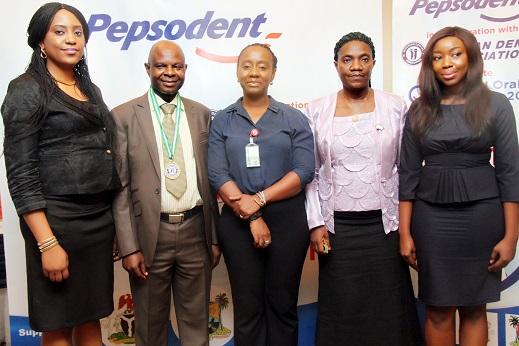
L-R Nigeria Oral Care Category lead, Unilever, Ibironke Ugbaja; Nigerian Dental Association President, Dr. Bode Ijarogbe; Coordinator, School Health Programme, Department of Family & Nutrition, Lagos State Ministry of Health Dr. Mrs Bunmi Okunnu; Head of Dentistry Division, Federal Ministry of Health, Dr. Bola Alonge; and Brand Manager, Pepsodent, Akon Imoh.

The Corporate Affairs Director for Unilever, Soramidayo George also stated that recent research shows that establishing the twice a day brushing habit in children has benefits into adulthood. She said, “the effects of practicing good oral health from young have lasting effects. Nearly 20 years later, these children have experienced almost 20% fewer dental treatments than their peers, proving that these interventions make an impact for life.”

The Federal Ministry of Health, represented by Dr. Bola Alonge Head of Dentistry also mentioned the fact that Unilever signed an MOU with the Federal Ministry of Health to sustain the momentum of the Unilever Oral health school’s programme initiative. Dr. Bola Alonge commended the initiative, “less than 20% of Nigerians have access to oral care services which focuses on the curative care. Many oral health diseases can easily be prevented through simply brushing twice a day. This is why the Federal Ministry of Health and Unilever have taken on the task to teach children to brush day and night. Children are the change agent of the nation and hence we need to catch them young.”

This year’s World Oral Health Day celebration presents another opportunity for Pepsodent to educate millions of Nigerians about the overriding need of adopting good oral practices.

The media parley ended with a Smiles Pledge by pupils in attendance.

The World Oral Health Day is set to hold on Monday March 20, 2017 at the Teslim Balogun Stadium in Lagos.

(Bellanaija)

Red Star Commences Food Delivery Services

Red Star Express Plc, on March 1st, 2017 commenced a food delivery service through its subsidiary, Red Star Support Services.  Aptly known as the “Express Food Delivery Services”, the product has been designed to create a seamless process for people with time constraints and limited opportunity to order for breakfast, lunch or even dinner at the comfort of their offices or homes with guaranteed delivery within the shortest period.

At the click of a button, you can make orders for any food of your choice (from various eateries and Restaurants) without initial payment and then wait for just 10 minutes of ordering, you get your order right at your door step, then you can make payment once the food is delivered.

Already, some of the prominent eateries and fast food companies in Lagos are on board as they have the EFDS delivery men stationed around their delivery-request hubs on the Island and on the Mainland.

The EFDS, as a product, is divided into two forms; the Corporate account and Individual orders. The Corporate accounts include requests from fast food outlets, restaurants and hotels, while the individual orders include requests from private persons who simply call the EFDS office and make order from participating restaurants of their choice.

For requests, simply call 0703 176 3610.

Red Star Express Group is a premium logistics solution provider in Nigeria with an unrivalled local network coverage and a large market share in the domestic and international market. It enjoys a domestic strength of over 240 offices in Nigeria, delivers to additional 1,800 communities, with over 2,400 highly trained personnel and over 600 delivery vehicles in its fleet. The company has four business units including The Red Star Express which is a licensee of FedEx, the world’s largest express transportation company with over 650 aircrafts and more than 250 delivery destinations globally. FedEx has consistently been rated among the top 10 most admired companies in the world over the past 10 years. Red Star Express has four subsidiaries – Red StarFreight, Red Star Logistics and Red Star Support Services.