Twinpine Partners Afmobi to Offer Brands In Africa Premium Mobile Audiences

Twinpine, a Terragon Group Company, Africa’s pioneer and premium mobile marketing company, has recently partnered with Afmobi, a mobile internet business with one of the largest portfolio of products in Africa, to offer brands and agencies access to premium local inventory on the Tecno Mobile phones browser, Palm Play content store and the PalmChat Social.

This browser is pre-installed on 27 million devices that have over 700,000 unique users daily and 50,000,000 impressions monthly. Palmchat is a social channel that reaches core marketing demographics {80% of its users aged 16-30} anywhere in Nigeria. Ad campaigns that run on the PalmPlay store are able to reach a wide audience of over 400,000 daily active users. These channels are accessible on both Smart and Feature phones.

“Afmobi is pleased to partner with one of Africa’s leading Mobile advertising company in delivering value to brands and agencies through its multiple-channel touch points. With access to over 50 million unique users in Africa with over 30% of those users in Nigeria, we know that our channels would offer tremendous engagement opportunities for brands” said Philicia Lai, AGM, Afmobi Africa.

Also commenting on the partnership, Oduntan Odubanjo, Chief Operation Officer, Twinpine said the collaboration is another step to create more value for our customers by ensuring access to premium yet local inventory that helps brands target the right audience.

“For brands and advertisers, buying media across these platforms which are local yet premium ensures that issues like fluctuations in foreign exchange rates will not affect their campaign. At Twinpine, we will continue to present premium opportunities for brands to get value for money spent when running marketing campaigns on our platform. It’s important to note that the consumers’ experience with our ad formats will be as engaging as possible” he said.

Twinpine recently unveiled its new ad formats (Native Ads, 3D Ads, Brand Cast, Call-to-Action Ads) as well as its Mobile Intelligence Portal, Programmatic Platform and Adrenaline product at an event tagged “An Evening of Innovation with Twinpine” which brought together a number of digital marketing agencies, brand owners, IT experts and media practitioners.

About Twinpine
Twinpine, a Terragon Group Company, is Africa’s premium mobile advertising network reaching millions of Africans on mobile devices via the mobile web. Twinpine helps brands and publishers run and manage tailored mobile advertising campaigns, enabling them to connect with the right audience, increase conversion rates and ultimately, make the most of Mobile.
Twinpine works with several leading advertising agencies, brands and publishers locally and internationally connecting them with their African audience delivering exceptional results for them. Twinpine has delivered campaigns in several African countries including Nigeria, Kenya, South Africa, Ghana, Uganda, Zimbabwe, Zambia, among others.

FG splits NIPOST into 7 zones, 6 business units

The federal government has split the Nigerian Postal Service (NIPOST) into seven zones and six commercial business units.

A statement on Monday by NIPOST spokesperson, Frank Alao, said that Bisi Adegbuyi, the postmaster-general, had approved the unbundling of its offices across the 36 states of the federation and the federal capital territory (FCT).

Alao said the aim of the unbundling was to attain competitiveness and value for service, increase operational efficiency and enhance the agency’s revenue-generating capacity.

The directive will see the states captured into zones and manned by zonal managers who will report directly to the PMG.

According to the statement, the zonal arrangement is aimed at entrenching the principle of delegation and devolution of powers.

The reform will also quicken decision-making process particularly in key operations areas like mail routes delineation, deliveries and postal enquiries, added the statement.

“The new CBUs are significantly existing ventures/services either merged and or strengthened for the purposes of enhancing their service delivery capacities/ competitiveness in consistent with industry global best practices as well as improving on their revenue profiles,” it said.

(Thecableng)

Nigeria Households: Rapid Urbanisation Drives Single – Person Homes

Nigerian households are experiencing some of the fastest urbanisation rates in the world, as workers are flocking to expanding first- and second-tier cities across the country. This is creating a large and growing number of single-person households, largely inhabited by males. However, many Nigerian homes are also extremely crowded, as large families squeeze into small housing units. Room sizes per household are typically low in number, while persons per household are usually six or more.

Average Household size in Nigeria in 2015 was 4.8 overall, 4.6 urban and 4.9 rural. By 2030, urban households will overtake rural households. In 2030, the majority of homes in Nigeria will by 2 rooms and the majority of households will consist of 6 or more people.

Have a question or a thought to add? Leave us a comment below…

(Euromonitor)

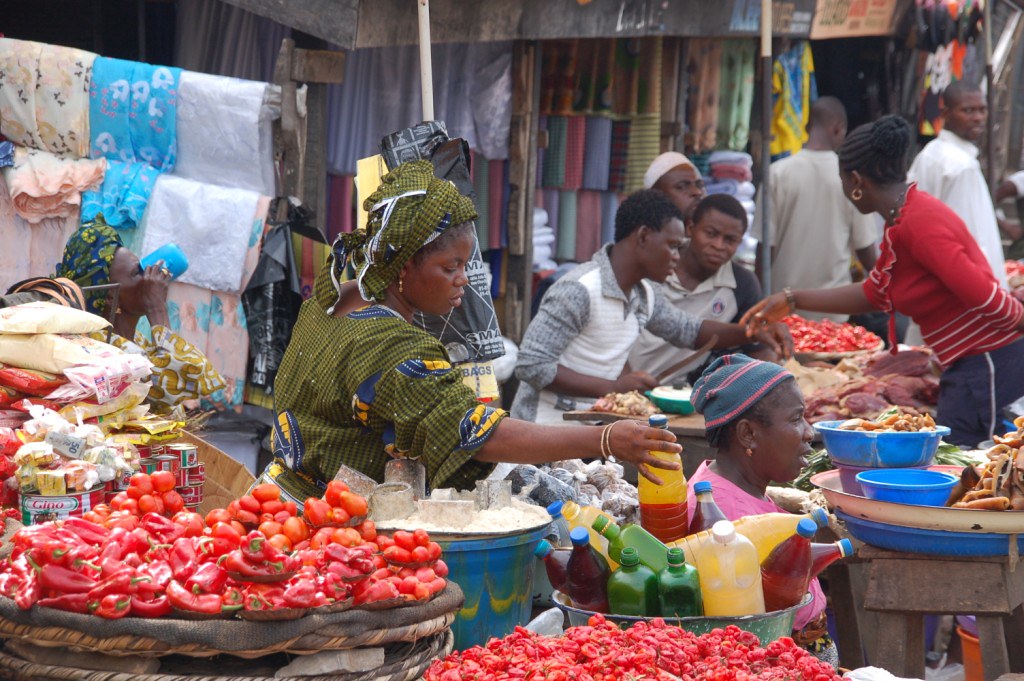
Food prices still up as inflation rate falls for the first time in 15 months

For the first time since 2015, consumer price index (CPI), which measures inflation in the economy, fell, signalling a recovery in the Nigerian economy.

According to the National Bureau of Statistics (NBS), the inflation rate dropped from 18.72 percent in January 2017, to 17.78 percent in February 2017.

“On a Headline basis, the Consumer Price Index (CPI) which measures inflation increased by 17.78 percent (year-on-year) albeit at a slower pace in February 2017, 0.94 percent points lower from the rate recorded in January (18.72) percent,” NBS said on Tuesday.

Image result for nigeria market

“This represents the first time in 15 months that the headline CPI has declined on year on year basis representing the effects of slower rises in already high food and non food prices and favourable base effects over 2016 prices.”

The country however recorded price increases in “housing, water, electricity, gas and other fuel, education, food and alcoholic beverages, clothing and frontware and transportation services”.

Image result for nigeria market

Despite the signs of recovery seen in the core inflation rate, food prices remain on the rise, with a surge in the food index, from 17.82 percent in January to 18.53 percent (year-on-year) in February.

The increase was driven by “increases in the prices of bread, cereals, meat, fish, potatoes, yams and other tubers and wine, while the slowest increase in food prices year-on-year were recorded by Soft Drinks, Coffee, Tea and Cocoa”.

Despite the fall, inflation rate remains at one of the highest points since Olusegun Obasanjo’s era as the Nigerian President.

(TheCable)

FG rolls-out Economic Recovery plan to raise VAT on Champagne, alcoholic beverages, others

The Federal Government on Tuesday unveiled its Economic Recovery and Growth Plan after consultations with stakeholders from both the public and private sectors of the economy.

The plan includes raising the Value Added TAX (VAT) rate on luxury items from current 5% to 15%. The Government is projecting raising N350bn through the increase in VAT rate on luxury items and improvement in company’s income tax, which would commence in 2018.

The former administration of President Goodluck Jonathan had in 2014, while mulling austerity measures meant to generate additional funds for the Federal Government identified some items that were to be taxed as luxury goods to include champagne, alcoholic beverages, private jets, luxury cars based on engine capacity, and yachts.

The current Government of Muhammadu Buhari said it would increase non-oil tax revenues by improving tax compliance and expanding the tax base by using appropriate technology, tightening the tax code, as well as taxing luxury items and other indirect taxes with the aim of capturing a wider share of the non-formal economy.

According to the released document, the Government is targeting real Gross Domestic Product (GDP) of N81.38tn by 2020.

The content of the document which was released by the Ministry of Budget and National Planning contains the economic blueprint of the government for the three-year period, 2017 to 2020 and is meant to get the country out of recession.

(Beverageindustrynews)

Seven-Up Bottling Company appoints Ziad Maalouf Managing Director

Seven-Up Bottling Company Plc has appointed Mr. Ziad Maalouf as the new Managing Director of the 57 year old company. Up until his recent appointment, he was the company’s Chief Operating Officer and had joined the company in 2008 as it’s National Sales and Distribution Manager.

Image result for Ziad Maalouf  seven up

Mr. Maalouf has over 20 years work experience in corporate finance, organizational leadership and strategic management, among others. He holds a Bachelor’s Degree and a Master’s Degree in Business Administration from the American University of Beirut.

The company also elevated the current Managing Director, Mr. Sunil Sawhney to the position of Vice Chairman of Seven-Up Botting Co.

Mr. Sawhney has served as the Managing Director of the firm from 2009 up until his current appointment.

He holds a Bachelor’s Degree and an Advanced Diploma in Business Administration and his work experience cuts across Manufacturing, Sales and Administration.

According to the announcement released by the company, both appointments take effect from 1st April, 2017.

FrieslandCampina WAMCO receives National Productivity Merit Award

Nigeria’s foremost dairy nutrition company, FrieslandCampina WAMCO Nigeria PLC, has been conferred with the illustrious National Productivity Merit Award.

This recognition by the Federal Ministry of Labour was made during the National Productivity Order of Merit (NPOM) awards, which held at the conference hall, NICON Luxury Hotels, Abuja on 21st February, 2017.

The National Productivity Order of Merit (NPOM) is an award of honour, excellence and dignity instituted for the most productive organizations or individuals drawn from all sectors of the Nigerian economy.

Upon receiving the award on behalf of his company, the Human Resources Director of FrieslandCampina WAMCO Nigeria, Mr. Tomi Oni said that the award of excellence is a motivation for the company to strive even harder in upholding its mission of nourishing Nigerians with quality dairy nutrition.

“In times as this when the economy is sensitive and industries are struggling to stay up and break even, it is a lot of effort to keep staff motivated and more so earning a national recognition. It’s a great honour to be awarded with the National Productivity Order of Merit.”, said Oni.


Acting President, Prof Yemi Osinbajo SAN GCON, Human Resource Director FrieslandCampina WAMCO Nigeria PLC, Tominiyi Oni, and Minister for Labour and Productivity, Dr. Chris Ngige At the 16th National Productivity Day (NPD)/ and Conferment of National Productivity Order of Merit (NPOM) Award Tues. 21Feb2017 at Conference Hall, Nicon Luxury Hotel Abuja

Dangote Tomato resumes production March 19

The Managing Director, Dangote Tomato Processing Company, Alhaji Abdulkarim Kaita, on Monday said the factory would resume production on Sunday, March 19.

Kaita said the company, located in Kadawa, Kano State, was expecting a team of engineers from Italy on Friday as part of the preparation to resume production.

Related image

“As part of preparations to resume production on Sunday, we are expecting a team of engineers from Italy on Friday.

“The machines are under guarantee and we are not able to operate last year due to the scarcity of fresh tomato in Kano and other neighbouring states,” he said.

Kaita said the engineers would assess the quality parameters as well as the installed capacity of the machines before they could finally hand them over to the company.

“Our engineers are ready to begin work and as soon as the other team of engineers arrive, we hope to resume operation on Sunday.”

He said the company had decided to resume production following the availability of the commodity and the recent crash of its prices in the market.

“The price of the commodity has come down as a big basket, which was selling at N4,000, now cost between N1,200 and N1,400,” Kaita said.

The company had last year stopped production due to the scarcity of fresh tomato as a result of pest that ravaged farms in Kano and other tomato-producing states.

However, to ensure sufficient supply of the commodity, the company recently signed an agreement with farmers in Gombe and Sokoto State on how to boost production of tomato for use in the factory.

(NAN)

Consuming Fanta, Sprite With Vitamin C Is Poisonous, Court Orders NAFDAC To Compel NBC To Warn Consumers

A Lagos High Court at Igbosere has ordered the National Agency For Food and Drug Administration and Control (NAFDAC) to order the Nigerian Bottling Company (NBC) Plc to put a written warning on Fanta and Sprite bottles stating that both soft drinks are poisonous when consumed along with Vitamin C.

The court also held that NAFDAC failed Nigerians by declaring, as fit for human consumption, products discovered by tests in the United Kingdom as turning poisonous when mixed with ascorbic acid (popularly known as Vitamin C).

In the judgment given by Justice Adedayo Oyebanji, the court awarded a cost of N2 million against NAFDAC. The judgment was the outcome of a suit filed by a Lagos-based businessman, Dr. Emmanuel Fijabi Adebo, and his company, Fijabi Adebo Holdings Limited, against NBC Plc and NAFDAC.

Mr. Adebo, in the suit, urged the court to declare that NBC was negligent to its consumers by bottling Fanta and Sprite with excessive levels of benzoic acid and sunset additives.

The businessman also urged the court to order NAFDAC to carry out routine laboratory tests on all the soft drinks and related products NBC bottles to ensure their safety for consumption.

In the amended statement of claims filed before the court by Mr. Abiodun Onidare on behalf of Mr. Adebo and his company,  it was alleged that in March 2007, Fijabi Adebo Holdings Company bought large quantities of Coca-Cola, Fanta Orange, Sprite, Fanta Lemon, Fanta Pineapple and soda water from NBC for export to and subsequent retail in the United Kingdom.

But when the consignment arrived in the United Kingdom, health authorities in that country, precisely the Stockport Metropolitan Borough Council’s Trading Standard, Department of Environment and Economy Directorate, raised fundamental health issues on the contents and composition of Fanta and Sprite.

Findings by the United Kingdom health authorities were also corroborated by other agencies in European Union countries, which found the products to contain excessive levels of sunset yellow and benzoic acid, which are known to be carcinogenic.

On account of the irregularities and carcinogenic substances present in the drinks, Mr. Adebo and his company could not sell the Fanta and Sprite. This caused huge losses for the company, as the products were seized and destroyed by the United Kingdom health authorities.

The claimants equally alleged that NAFDAC did not carry out requisite tests to determine the safety of the drinks for human consumption. They averred that being registered as exporters with the Nigerian Export Promotion Council, they could legally export NBC products to any part of the world and that the bottling company was aware that the products purchased were meant for export.

In addition to other reliefs, Mr. Adebo and his company sought the sum of N15,119,619.37 as special damages and N1,622,000 being the money NBC admitted receiving from the claimants.

In its amended statement of defense, filed before the court by Mr. T. O. Busari, NBC admitted supplying the products, but contended that they are meant for local distribution and consumption, as it does not produce for export. It argued that Coca-Cola is manufactured and bottled by various Coca-Cola franchise holders in most countries of the world, including the United Kingdom.

The company denied that it was negligent, as it has stringent quality control procedures to ensure that its products are safe for end-user consumption.

NBC also rejected the allegation that the damages claimed by the businessman and his firm were caused by negligence or any fault on its part.  It argued that the levels of the chemical components in its soft drinks are safe for consumption in Nigeria and that the claimants are not entitled to the recovery of damages arising from their illegal exportation of products meant for local distribution.

NBC further contended that the  claims made by Mr. Adebo and his company were speculative, frivolous and vexatious and should be dismissed with substantial cost. NAFDAC did not file any defense.

To prove his case, Mr. Adebo personally testified. While being led in evidence by Mr. Onidare, he tendered 12 exhibits. NBC’s Sales Operation Manager, Mr. Micheal Nwosu China, and its Head of Central Laboratory, Mr. Abiodun Adeola Falana, both testified on the bottling company’s behalf and also tendered 12 exhibits.

In her judgment, Justice Oyebanji said: “It is imperative to state that the knowledge of the Nigeria Bottling Company that the products were to be exported is immaterial to its being fit for human consumption. The court is in absolute agreement with the learned counsel for the claimants that soft drinks manufactured by Nigeria bottling company ought to be fit for human consumption irrespective of color or creed.

“It is manifest that NAFDAC has been grossly irresponsible in its regulatory duties to the consumers of Fanta and Sprite manufactured by Nigeria Bottling Company. In my respective view, NAFDAC has failed the citizens of this great nation by its certification as satisfactory for human consumption products, which in the United Kingdom failed sample test for human consumption, and which become poisonous in the presence of Ascorbic Acid ordinarily known as Vitamin C, which can be freely taken by the unsuspecting public with the company’s Fanta or Sprite.

“As earlier stated, the court is in absolute agreement with the learned counsel for the claimants that consumable products ought to be fit for human consumption irrespective of race, colour or creed.”

Justice Oyebanji also held that by its certification as satisfactory, Fanta and Sprite, without any written warning on the products that it cannot be taken with Vitamin C, NAFDAC would have caused great harm to the health of unsuspecting Nigerians.

“The court, in the light of the damning evidence before it showing that NAFDAC has failed to live up to expectation, cannot close its eyes to the grievous implication of allowing the status quo to continue as it is.

“For the reasons herein adumbrated in this judgment, the court hereby orders as follows :

“That NAFDAC shall forthwith mandate Nigeria bottling company to, within 90 days hereof, include on all the bottles of Fanta and Sprite soft drinks manufactured by the company, a written warning that the content of the said bottles of Fanta and Sprite soft drinks cannot be taken with Vitamin C as same becomes poisonous if taken with Vitamin C.

“In consideration of the fact that this case was filed in 2008 and that it has been in court for nine years, costs of N2 million is awarded against NAFDAC. Interest shall be paid on the costs awarded at the rate of 10% per annum until liquidation of the said sum,” ruled Justice Oyebanji.

(Newsheadlines)

Aiteo Emerges Nigeria’s Leading Oil & Gas Firm With Record 90kpod Output In A Year

0

Integrated energy group Aiteo  has announced a peak production of 90kpod just one year after its acquisition of sub-Saharan Africa’s reputedly largest onshore oil bloc OML 29.

Aiteo acquired OML 29 in September, 2015 when oil major Shell Petroleum Development Company (SPDC) fully exited the facility. At the time of the divestment, average production was 23Kbpod. But Aiteo, one of the frontline sponsors of the justconcluded 16th Oil and Gas (NOG) Conference held in the country’s capital Abuja, says it has tripled this figure leveraging the diversity and skills of its work force and bona fides as a dynamic international energy conglomerate.

Its CEO and Vice Chairman Benedict Peters said the company grew production from 23kbbl/d upon takeover of operations to a peak of 90Kbbl/d in one year. He also highlighted several existing and developing projects that could potentially grow Aiteo’s asset production to over 150 kbopd and 200mmscf/d. He said: “Our outlook is bright with 3 producing oil fields and viable crude exports via Bonny terminal. We also have contingent resources to appraise and prospective ones to explore in the medium-to-long term, including full 3D coverage and 2P NNS reserves at 1.6bn bbl. Put simply, we have a clear vision for the future with the experience and assets crucial to providing oil and gas consistently on a regional and global scale.”

Aiteo’s ambitious five-year objectives include tackling the power challenges in Nigeria head-on through its legacy investments in the gas-to-power value chain. “This is a testament to our commitment to the transformation of the entire oil & gas value chain into a world-class landscape,” Peters added.

The company’s main subsidiary Aiteo Eastern E&P is also a major infrastructure provider for Nigeria’s oil industry as the operator of the 97km Nembe Creek Trunk Line, an industry-wide evacuation pipeline for produced fluids covering much of the country’s Eastern Delta region.

Aiteo’s Group Managing Director Mr. Chike Onyejekwe said: “Our growth drivers remain strong leadership, high commitment and motivation, technical and commercial excellence and superior asset base. In the next five years, our operations will continue to be guided by these qualities as we leverage our capabilities comparable to oil majors elsewhere in the world. Indeed, the future is Aiteo.”

In the interim, Aiteo says it is developing a pipeline of power generation projects across Nigeria. The company is confident that its significant gas resources at OML 29 will transform the country’s oil rich Niger Delta region into a power generation hub of repute before long.

(Proshareng)