




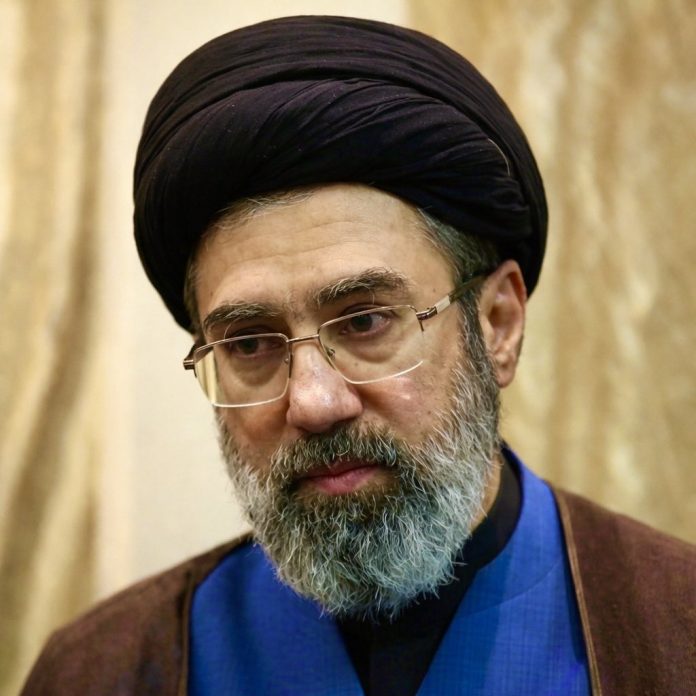
TEHRAN, Iran — Iran has officially appointed Mojtaba Khamenei, son of the late Ayatollah Ali Khamenei, as the country’s new Supreme Leader, according to reports from Iranian state media.
The decision follows the death of Ali Khamenei, who had led the Islamic Republic since 1989 and reportedly died during recent U.S.–Israeli strikes amid escalating Middle East tensions. Mojtaba Khamenei, 56, a cleric with longstanding influence in Iran’s political and security circles, was named successor by the Assembly of Experts, the clerical body responsible for selecting the nation’s supreme leader.
Brandspur Politics reports that Mojtaba Khamenei’s appointment marks the first father-to-son succession in Iran since the Islamic Republic’s establishment in 1979, sparking concerns over the potential emergence of a dynastic leadership model. Despite never holding an elected office, Mojtaba has exercised substantial behind-the-scenes influence, advising his father and maintaining close ties with conservative clerics and the Islamic Revolutionary Guard Corps (IRGC).
The leadership transition comes amid intense regional instability. Recent U.S.–Israeli military operations in Iran have intensified geopolitical tensions, triggering missile attacks, disruptions to energy infrastructure, and heightened risks to shipping in the Strait of Hormuz. Global markets have reacted swiftly, with crude oil prices rising sharply due to fears of supply disruptions from the region, a major source of the world’s oil exports.
Analysts suggest Mojtaba Khamenei’s rise signals continuity in Iran’s hardline domestic and foreign policies, particularly toward the United States and Israel, while reinforcing the IRGC’s role in the country’s political power structure. Experts warn that the new leadership could further entrench Iran’s strategic posture in ongoing Middle East conflicts, potentially affecting regional stability and global energy markets.
With Mojtaba Khamenei now leading the Islamic Republic, Iran enters a critical phase of governance amid one of the most volatile geopolitical environments in recent history. Observers say the Assembly of Experts acted swiftly to ensure leadership continuity, a move aimed at maintaining political stability despite the ongoing crisis in the region.
