



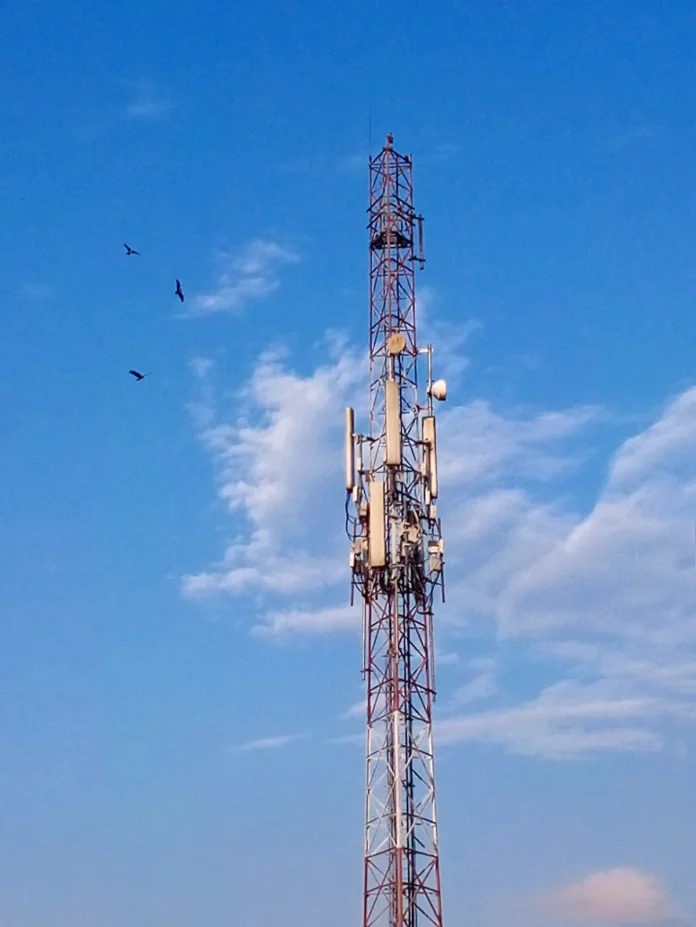
Nigeria’s 5G market share has climbed to 5.05 per cent, up from 3.77 per cent in December 2025, but the modest expansion over nine months highlights the challenges slowing the adoption of next-generation mobile connectivity across the country.
Data from the Nigerian Communications Commission (NCC), cited in recent industry reports, showed that the technology gained 1.28 percentage points between December 2025 and September 2026.
Although the increase pushed Nigeria’s 5G penetration beyond the 5 per cent mark, the pace of growth suggests that access to faster mobile internet remains limited for a large proportion of telecommunications consumers. The expansion translates to an average monthly increase of approximately 0.14 percentage points, raising questions about how quickly Nigeria can transition towards wider 5G adoption.
Read also: 5G Usage Rises To 48% In Lagos, Abuja As Network Satisfaction Falls
Brandspur Banking News Desk gathered that affordability, infrastructure investment and the concentration of network availability in major urban centres remain significant obstacles to the technology’s wider adoption.
Device Costs Keep 5G Out Of Reach
For ordinary Nigerians, the cost of acquiring a compatible smartphone is among the most immediate barriers. While 5G promises faster internet speeds and improved network performance, accessing those benefits requires devices equipped with the necessary technology.
Industry reports indicate that even the cheapest second-hand 5G-enabled smartphones cost approximately ₦200,000, almost three times Nigeria’s ₦70,000 national minimum wage. The price difference places an upgrade beyond the immediate reach of many low-income earners, particularly consumers who already contend with limited purchasing power and the rising cost of essential goods and services.
Consequently, the availability of 5G networks does not automatically translate into widespread adoption. Consumers must also be able to afford compatible devices before they can benefit from the technology.
The affordability problem matters because 5G market share is measured by active connections, not network coverage. Even where operators have switched on 5G sites, subscribers using older 4G handsets continue to be counted on 4G, holding back the headline figure.
Infrastructure Gaps Slow Rollout
Infrastructure investment presents another challenge for telecommunications operators. Expanding 5G coverage requires substantial capital expenditure, while the financial returns from deploying the technology may not be immediate. These considerations have affected the pace at which operators extend their networks beyond major commercial centres.
The result is an uneven adoption pattern, with access and usage concentrated in locations where network infrastructure is more established. Data highlighted by technology publication Technext, citing the NCC, indicates that 48 per cent of 5G-capable devices in Lagos and Abuja actively connect to 5G networks.
The figures point to stronger utilisation in the two major urban markets, where network availability gives compatible-device owners greater opportunities to access the technology. However, the concentration of usage in these locations also illustrates the difficulty of extending the benefits of advanced mobile connectivity to consumers outside major economic centres.
For businesses, particularly those whose operations depend on reliable internet access, wider 5G availability could support improved connectivity and access to more advanced digital services. However, the limited pace of expansion means that the benefits remain unevenly distributed.
4G Still Dominates Nigeria’s 5G Market Share Story
Meanwhile, Nigeria’s telecommunications market continues to depend heavily on fourth-generation (4G) networks for mobile broadband connectivity. Despite the gradual increase in 5G adoption, 4G remains the dominant technology supporting mobile internet access, while legacy second-generation (2G) and third-generation (3G) connections continue to decline.
The latest figures therefore present a mixed picture for Nigeria’s telecommunications industry. Crossing the 5 per cent threshold represents progress, but the limited increase over nine months underscores the distance between the country’s next-generation connectivity ambitions and the realities facing consumers.
Without more affordable compatible devices and sustained investment in network infrastructure, the expansion of 5G could remain concentrated in commercially attractive locations, leaving many Nigerians dependent on existing mobile broadband technologies.
