


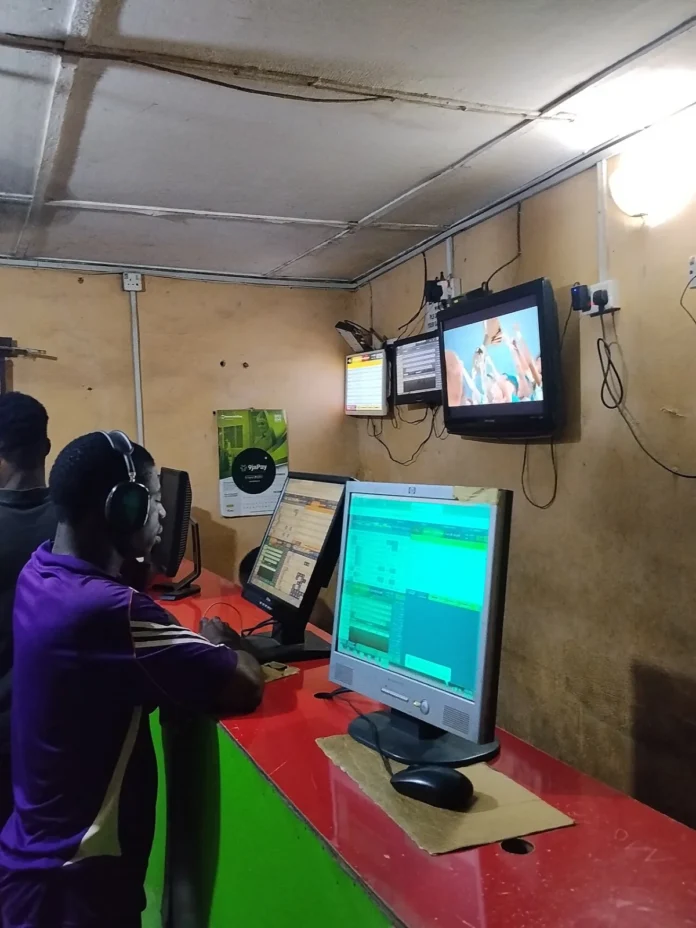
Nigeria’s sports betting industry is undergoing significant changes as state governments tighten regulatory control, tax authorities introduce deductions on players’ winnings and betting companies deepen their involvement in domestic football. The developments are changing how operators conduct business and how much customers receive when they win.
The market has expanded considerably, with industry estimates putting its value at about $3.6bn in 2026 and the number of active bettors at approximately 60 million. The growth has attracted established operators such as Bet9ja, SportyBet, BetKing, Nairabet and betPawa, while creating new commercial opportunities for payment providers, sports organisations and technology companies.
One of the biggest changes has come from the legal battle over who has the authority to regulate gaming in Nigeria. For years, operators faced overlapping requirements from the federal National Lottery Regulatory Commission and state gaming authorities, resulting in disputes over licensing fees, levies and regulatory responsibilities.
Read also: Sports Betting Worries Grow As Wagers Skyrocket
Supreme Court Hands Sports Betting Industry Regulation To The States
The November 2024 Supreme Court decision in the dispute involving the Attorneys-General of Lagos State and the Federation shifted the balance towards state governments. The ruling established that lotteries and gaming fall within matters reserved for states under the Constitution, limiting the federal commission’s regulatory authority outside the Federal Capital Territory.
According to Brandspur Brand News, the decision has made state-level compliance a central consideration for betting companies seeking to maintain their operations across Nigeria. Operators must pay closer attention to the licensing requirements and rules in the jurisdictions where they offer their services, rather than relying solely on federal approval.
The regulatory shift has also increased attention on consumer protection, particularly as betting moves further towards mobile applications and instant games. Platforms now compete through features such as quick deposits, withdrawals, virtual football, accumulator offers and live betting. While these services make betting more accessible, they also raise questions about responsible gambling and the protection of customers.
A 5% Tax On Sports Betting Winnings In Lagos
Tax deductions have become another direct concern for players. In Lagos, licensed gaming operators began implementing a five per cent withholding tax on qualifying net winnings in February 2026. The deduction is made before winnings are paid to customers, with operators responsible for remitting the money to the Lagos State Internal Revenue Service.
For residents, the deduction is treated as a tax credit rather than an additional final charge. Non-residents are subject to a different rate under the applicable tax rules. The Lagos revenue authority has also directed operators to maintain records of winnings and deductions to support compliance and verification.
Betting Money Moves Into Nigerian Football
The changes come as companies in the sports betting industry continue to expand their commercial presence beyond online platforms and retail outlets. Their involvement in football sponsorship has become particularly visible, with operators and gaming businesses supporting clubs, competitions and individual players.
A notable development came in August 2026, when the Nigeria Premier Football League announced a three-year title sponsorship agreement with EuroMatch worth $7.5m. The deal is valued at $2.5m per season, with 60 per cent of the annual proceeds allocated to the league’s 20 participating clubs.
NPFL chairman Gbenga Elegbeleye said the arrangement was intended to improve players’ wages and welfare. The agreement ended a decade-long wait for the top-flight competition to secure a conventional title sponsor, giving the league a new commercial partner ahead of the 2026/27 season.
Other betting-related sponsorship initiatives have focused on lower divisions and grassroots football. BetPawa’s Locker Room Bonus programme, for instance, has been associated with payments to players and technical staff in the Nigeria National League.
How The Big Sports Betting Industry Operators Compete
The business models of the major operators also show how competition has evolved. Nairabet, founded by Akin Alabi in 2009, was among the early companies to establish online sports betting in Nigeria. Bet9ja built a strong presence through retail agents and virtual football, while BetKing combined physical distribution with digital entertainment. SportyBet has concentrated on mobile users, and betPawa has promoted low minimum stakes and player reward schemes.
However, the potential for large payouts should not be confused with a reliable way to make money. Sportsbooks build margins into their odds, giving operators a mathematical advantage over time. Accumulator bets, which require several selections to succeed, can produce substantial advertised returns but also increase the likelihood of losing a stake when one selection fails.
As the market grows, the sports betting industry faces a more demanding environment. Operators must balance competition and expansion with state licensing obligations, tax compliance and responsible gambling measures. For customers, the changes mean that advertised winnings, platform convenience and promotional offers are no longer the only considerations when choosing where to place a bet.
