Inside Nigeria’s first smartphone assembly plant (Pictures)- Techpoint

The fact that AfriOne range of smartphones are said to be the “first Nigerian-made smartphones”, is true to a certain extent. The assembly plant located along the Oshodi Expressway of Lagos state assembles smartphones and other devices from imported components.

The AfriOne assembly plant was launched with the Champion and Gravity range of smartphones but will produce more consumer devices and accessories. AfriOne co-founder and CTO Hemang Kapur said;

“We [will] offer a wide range of feature-rich and technologically loaded product lines from dual sim mobile phones to educational tablet PCs and even android smart watches”

The assembly plant currently employs a staff strength of 150 — 200 one the lines, administrative and non-administrative staff.

A pictorial look inside the assembly plant

We were taken on a tour of the facility by Sandeep Natu the Divisional Head of AfriOne

Sandeep Natu, Divisional Head;AfriOne

Sandeep Natu, Divisional Head;AfriOne

We went through the reception area into the factory proper.

Reception area of the AfriOne Limited Assembly plant

Reception area of the AfriOne Limited Assembly plant

There is an Automatic Shoe Cover Dispenser machine

AfriOne Automatic Shoe Cover Dispenser machine

Automatic Shoe Cover Dispenser machine

The shoe cover machine provides protective nylon automatically over the shoes to protect the factory from contamination

Inside the factory itself, there are four assembly lines with conveyor belts and workers manning each unit.

AfriOne smartphone assembly plant

AfriOne smartphone assembly plant

The red and blue bins are used to take finished products out and bring in components for the workers.

Blue and red colored bins

Workers at the AfriOne smartphone assembly plant

Workers at the AfriOne smartphone assembly plant

There is an Automatic Screw Feeder that standardizes the fixing of screws on smartphones. This machine calibrates the process of screwing the phones shut to perfection.

We also saw the quality control department, but before reaching there, we took a detour to the large storage facility for finished smartphones.

AfriOne storage for finished smartphones

Storage for finished smartphones

In the quality control department, there were different machines to test the integrity of finished smartphones.

Hydration Chamber

Microcomputer Insertion Force Testing Machine

Drop Test Machine

This machine puts the mobile device through extreme conditions; heats it, freezes it and puts the smartphone through every extreme temperature imaginable.

Condenser Test Machine

Then a multi battery charger for new batteries to be inserted into smartphones.

AfriOne is primarily assembling smartphones at the moment. But according to Sahir Berry the founder and CEO of the company, assembling is just the first step in a long term run that will involve eventually producing the components in Nigeria. According to Sahir;

“For now, we import components to assemble the mobile devices, but that is going to change in the nearest future, even closer than anybody anticipated. For instance, the plastic battery cover of the phones can be produced right now in  Nigeria, and we will start there”.


The AfriOne assembly plant is definitely the first of its kind — in that it is primed to assemble smartphones.

However, in January 2014, the Osun State government commissioned Ghanaian-based RLG to set up an assembly plant in Ilesha, Osun state. With a claimed capacity to produce 5,000 mobile phones and 2,500 laptops per day, 50,000 feature phones were reportedly delivered by the plant in May, 2015.

There are however conflicting reports that claim the phones were ‘repackaged‘, rather than assembled. 

StarTimes Enhances Pay TV with New Igbo Channel

Pay TV network, StarTimes has further enriched digital TV viewing and family entertainment in Nigeria with the launch of a new lifestyle Igbo channel called Isi Mbido.

The new channel, which came live on StarTimes pay TV platform channel 172 (on DTT/antenna model) on Monday, was introduced to provide rich entertainment for Igbos and Igbo speaking people in and outside Nigeria following the successful launches of ST Dadin Kowa and ST Yoruba for Hausa and Yoruba people and viewers respectively.

Announcing the new channel, StarTimes Chief Operating Officer, Tunde Aina, said: “the new channel called Isi Mbido which means The Source was a niche channel designed to entertain and propagate the rich Igbo culture, targeting the youth, the young at heart and the older generation, and in fact, the entire family primarily with movies, music, lifestyle and general entertainment content.”

“The new channel seeks to fully explore the depths of culture and traditions of Ndi Igbo, their history, lineage, religious inclinations, business prowess, and so many other factors that make them unique in their own way. Some interesting Igbo movies, soaps and series are from time to time added to the mix, to give the viewer a well-rounded viewing experience,” Aina said.

“This is the true and authentic source of Igbo culture, tradition and lifestyle. It tells the true, unadulterated Igbo story, but from a modern perspective. It also serves as an effective bridge between the old and the new brigade, so that the language, culture and tradition of an entire tribe will not be drowned by modern and contemporary cultures and traditions and the proud heritage of Ndi Igbo will not diminish or be lost in translation,” added Aina.

He noted that they  hope to entertain viewers with over 1,000 hours of fresh content in the next one year.

“We hope to excite both Igbo people and lovers of Igbo culture within and outside Nigeria. We have series of events lined up and every form of collaboration will be utilised to make it one of the best channels. The channel is strictly Igbo with all the contents in Igbo but the movies will be subtitled in English for better understanding by non-Igbo people who want to enjoy quality entertainment.”

Some of the key programmes and shows lined up on the channel are: Ututu Oma Nu, Oge Anuli, Umunwayin Agbara Ohuru, Omumu Asusu Igbo, Oge Ekene, and Ihe N’eme Na Obodo.

“Ututu Oma Nu is an exciting, entertaining and culturally rich daily morning show. It is our day starter and therefore packed with information, education, mass enlightenment and more. It is targeted more at the intellectually sound audience; therefore, it aims at delivering on knowledge as well as entertainment while Oge Anuli is a high energy, daily lunch time entertainment package. Lunchtime is generally fun time, a time of relaxation and rebooting after putting in a lot of work all morning. There is therefore the need for a show that is loaded with lots of exciting and entertaining content. These and many more are programmes that will glue viewers to stay tuned always,” he said.


( THISDAYLIVE)

Naira drops to 390/dollar, CBN sells fresh $246m

The naira reversed some of the gains it recorded last week, closing at 390 against the United States dollar on the parallel market on Monday.

The local currency had closed at 380/dollar on Friday.

The naira has been hovering between 380/dollar and 410/dollar in the past two weeks as the Central Bank of Nigeria continues to intervene in the foreign exchange market to stabilise the exchange rate.

The interventions are aimed at narrowing the spread between the official and black market rates of the naira against the dollar.

The CBN has sold around $4bn since intervention began in February, according to analysts.

After touching an all-time-low of 520/dollar in February, the CBN had increased forex supply into the market to enhance the naira.

As a result, the naira appreciated to 375/dollar in March. However, following some speculative activities and other market dynamics, the local currency fell to 410/dollar two weeks ago.

Last week, the naira reversed the loss and rose to 380/dollar after the CBN increased forex supply.

Meanwhile, the CBN offered the sum of $246.2m to authorised dealers at the forex auction in the interbank wholesale window, the Small and Medium-scale Enterprises and invisibles’ segments on Monday.

A breakdown of the total offer indicates that the sum of $150m was auctioned at the wholesale window while the SMEs and invisibles got $52m and $44.2m, respectively.

The bank’s spokesman, Mr. Isaac Okorafor, confirmed the offer and sales, stating that the forwards sales would be concluded in the days to come.

He, however, added that the CBN would continue its weekly sale to dealers in the Bureau de Change segment this week in order to guarantee onward sale to end users.

He said, “The SME operators no longer have to patronise or source foreign through unofficial windows and no more pressure on either the BDCs or any other unofficial source with the opening of the special window.”


(PunchNg)

FG cuts business registration period to two days

0

The number of days required for registration of new businesses in Nigeria has been reduced from 10 to two days as a result of some reforms being carried out by the present administration.

This was contained in a statement on Monday by the Senior Special Assistant to the Vice President on Media and Publicity, Mr. Laolu Akande.

Akande stated that there was also now a 24-hour timeline for company registration from when the application form was completed and all required documents made available.

He added that prospective business owners could now search on the Corporate Affairs Commission’s portal to avoid duplication of names and prevent selection of prohibited names.

He said company registration no longer required the services of lawyers as it was now optional for Small and Medium-sized Enterprises to hire lawyers to prepare registration documents.

These, Akande added, were some of the highlights of a report presented at a meeting of the Presidential Enabling Business Environment Council at the Presidential Villa, marking the end of the 60-day Action Plan on Ease of Doing Business in Nigeria.

The council, established by President Muhammadu Buhari, is chaired by Vice President Yemi Osinbajo.

Monday’s meeting was, however, presided over by the Minister of Transportation, Rotimi Amaechi, who stood in for Osinbajo, who was chairing a sitting of a presidential investigative panel at the time.

Akande said the CAC had introduced single incorporation form (CAC1.1) to save time and reduce costs, while the agency also introduced a document upload interface on its website to enable e-submission of registration documents.

He said, “Other aspects of the reforms now actualised in the last 60 days include the integrated FIRS e-payment solution into the CAC portal to enable e-stamping, while the reform empowers CAC internal lawyers to certify company incorporation forms and conduct statutory declaration of compliance for a fixed fee of N500.

“According to the report, the PEBEC listed dealing with construction permits, getting electricity, registering property, getting credit and paying taxes as some of the areas where the council has recorded progress in the past 60 days.

“The report also highlighted the completed reforms on the entry and exit of people indicator, which includes simplified visa-on-arrival process, infrastructural improvements at the Abuja airport, and the new Immigration Regulation, 2017.”

Akande added, “It also indicated that the completed reforms are being closely monitored to ensure diligent implementation with minimal disruption, while pending reforms are being escalated to ensure completion in the coming weeks.

“On trading across borders, some of the completed reforms include palletisation of imports, advanced cargo manifests, reduction in documentation requirements and scheduling of joint physical examination by the Customs service.”


(PunchNg)

REDTV Launches New Crimes Series, Inspector K

On April 1st 2017, the online lifestyle network powered by the United Bank for Africa, REDTV, held an exclusive screening for the soon-to-be launched web series – Inspector K , at 355 lounge in Victoria Island, Lagos.

The event was well attended by the GMD of UBA, Kennedy Uzoka, as well as the Group Director for Marketing and Corporate Communications at UBA, Bola Atta.  Also at the launch were some of the very best entertainers in the industry: Actress Joke Silva, Inspector K Producer, Shayo Oke, Kaline Akinkugbe, Denola Grey, Taje Prest, Seyitan, Amiola, Ajifa, Chef Tolu Erogbogbo and several media influencers.

Image result for REDTV Launches New Crimes Series, Inspector K

Inspector K is a crime comedy about a wacky inspector who through unconventional ways solves crimes in the city of Lagos. He is supported by two clueless but surprisingly sometimes intelligent police officers

Inspector K has put his division on the map through the immense success he has in solving unsolvable cases. A new murder case is been handled in his division and Inspector K will be taking the lead

The series, which is set to launch on REDTV on April 14, stars Koye “K 10” Kekere-Ekun, Demilade Olubanwo, Ani Iyoho, Ade Laoye, A’rese , Makida Moka, Bollylomo, Maurice Effiong, Martin Ayeni, Sonia Irabor, Patrick Oke, Ijeoma Aniebo, Joseph Momodu, Odunlami Ayodeji and more.

SunTrust Bank Stands Tall With Impressive 2016 Performance

SunTrust Bank Nigeria Limited has released its financial performance for the year ended December 31, 2016 and the results have sent a clear message of determination to succeed and deliver value to all stakeholders.

SunTrust Bank began commercial banking activities last year with the vision to “offer high quality retail and commercial banking services in a modern and innovative manner.”

“We will use technology and a new way of thinking to provide banking services to many people and businesses in Nigeria for whom access to a bank account has previously been impossible.

“We will offer telephone, mobile and Internet banking underpinned by the traditional banking ethics of probity and integrity,” the Managing Director/Chief Executive Officer of the bank, Mr Muhammed Jubrin declared.

And going by the results of the bank for 2016, the future is very bright for all stakeholders. The bank grew its bottom-line by 160.2 per cent as profit before tax (PBT) rose from N131.9 million to N343.34 million in 2016.

In all, the bank recorded net interest income of N935.892 million in 2016, up from N220 million in 2015, while net fee and commission income improved from N65.389 million to N92.378 million in 2016.

SunTrust Bank ended the year with a profit after tax (PAT) growth to 74.57 per cent from N121.844 million in 2015 to N212.707 million in 2016.


(Businesspost.ng)

Review: How UBA Emerged Best Performing Banking Stock

United Bank for Africa (UBA) Plc is on the top list of companies with well-rounded performance. UBA’s top-of-the-chart performance at the stock market combines with considerable growth in all key fundamental indicators to make the bank the best performing banking stock in recent period. Capital Market Editor, Taofik Salako, in this report, reviews the interplay of fundamental earnings and share price appreciation

United Bank for Africa (UBA) Plc outperformed all banking stocks in the first quarter of 2017 with a share price appreciation of 28.22 percent. It had recorded the second highest price gain of 33.1 percent in 2016, just slightly under three points behind Guaranty Trust Bank (GTB), which led the sector with 35.9 percent.

Altogether, UBA’s share price had grown by more than 60 percent in the past 15 months, the highest by any bank and one of the few bright spots in the long-running depression at the stock market. Average return at the Nigerian Stock Exchange (NSE) in the first quarter of 2017 was negative at -5.05 percent.

The NSE Banking Index was down by 0.03 percent while the NSE 30 Index, which tracks large-cap stocks, was almost on the average with a three-month return of -4.93 percent.

In 2016, the stock market had recorded a full-year average return of -6.17 percent, equivalent to net capital loss of N604 billion.

Only 19 companies, including three banks, recorded a capital gain of 20 percent and above in 2016, underlining the general downtrend that marked price changes during the period. A long-running depression had seen quoted equities losing N4 trillion in the past three years, including N1.75 trillion and N1.63 trillion in 2014 and 2015 respectively.

UBA’s share price appears to be riding on the crest of positive analysts’ reviews. There is almost analysts’ consensus on the attractiveness of the UBA.

Investment research and rating firms such as Renaissance Capital, CSL Stockbrokers, Fitch and Augusto among others had maintained that UBA has strong fundamentals to support substantial price appreciation. UBA Group’s audited report and accounts for the year ended December 31, 2016 supported the positive view of its earnings potential, in spite of the Nigerian economic recession.

Improving earnings

Key extracts of the Group’s audited report showed impressive growths in the top-line and the bottom-line as it continued to expand its assets base. Group’s gross earnings rose by 21.9 percent from N314.84 billion in 2015 to N383.65 billion in 2016. Interest income had grown by 15 percent from N229.63 billion in 2015 to N263.97 billion.

With 2.9 percent increase in interest expense from N96.03 billion to N98.77 billion, net interest income rose by 23.7 percent to N165.2 billion in 2016 compared with N133.6 billion in 2015. This underlined the profitability of the group’s core banking business.

Group profit before tax grew by 32.4 percent to N90.64 billion in 2016 as against N68.45 billion in 2015. After taxes, net profit rose by 21.1 percent from N59.65 billion to N72.26 billion. With these, earnings per share increased from N1.79 in 2015 to N2.04 in 2016.


(BussinesPostNg)


CBN Extends BVN To Microfinance Banks, Gives July 31 Deadline

Heeding several calls by the Federal Government, Nigerians and experts in the financial institutions in the country, the Central Bank of Nigeria (CBN) has extended the Bank Verification Number (BVN) exercise to microfinance banks.

This was disclosed in a circular dated April 21 with reference number OFI/DIR/CIR/GEN/17/139 and signed by the CBN Director in charge of Other Financial Institutions Supervision Department, Mrs Tokunbo Martins.

The apex bank gave July 31, 2017 as deadline for this exercise, warning that any account not linked with the BVN would be “shall not be allowed to make withdrawals.”

In the circular titled ‘Letter to all Other Financial Institution (OFIs): Bank Verification Number (BVN) enrolment for customers,’ the CBN explained that the move became necessary because of the “absence of a unique identifier in the Nigerian banking industry,” describing this as a “major challenge inhibiting the effectiveness of the Know Your Customer (KYC) principle.”

“To address this challenge and complement the existing means of identification of customers, which include: the Driver’s License; the International Passport; the National Identity Card; and the Permanent Voter’s Card; the CBN, in collaboration with the Bankers’ Committee, launched the Bank Verification Number (BVN) Project in February 2014.

“The BVN is expected to also minimize the incidence of fraud and money laundering in the financial system, as well as enhance financial inclusion.

“The implementation of the BVN initiative, which started with the customers of Deposit Money Banks (DMBs), has been very successful.

“However, to avoid a broken identification link in the banking system, it has become necessary to extend the BVN enrolment to the customers of Other Financial Institutions (OFIs) especially as some OFIs are located in the rural areas of the country, and have customers that may not have enrolled with the DMBs.”

OFIs include microfinance banks, Primary Mortgage Institutions (PMI) and others.

CBN pointed out that the “BVN enrolment will support the achievement of the zero default credit targets set for the Participating Financial Institutions (PFIs) in the Micro Small and Medium Enterprises Development Fund (MSMEDF).”

It added that this exercise will “open opportunities for credit to millions of Nigerians without a standard means of identification.”

In the circular, the banking industry watchdog said OFIs are required to enrol their customers on or before July 31, 2017; conspicuously display notices sensitizing customers on BVN in the banking hall; ensure that all new customers have BVN; and forward to the Director, Other Financial Institutions Supervision Department schedule of customer accounts with BVN on August 7, 2017.

“Effective August 1, 2017, all customers without BVN linked to their account shall not be allowed to make withdrawals from those accounts,” Mrs Martins said.

She emphasised that the CBN “will monitor compliance with the requirements of this circular, and defaulters will be appropriately sanctioned,” warning them to be “guided accordingly.”

You would recall that recently, the Minister of Finance, Mrs Kemi Adeosun, had in a correspondence to the CBN Governor, Mr Godwin Emefiele, noted that the introduction of the BVN has immensely improved the integrity of the Federal Government payroll, from which more than 50,000 ghost workers had been detected.

However, the Minister lamented that operating bank accounts in MFBs without requirement for BVN had left a huge loophole for those who hide and launder proceeds of crime to escape detection by law enforcement agencies.

According to her, “Our ongoing efforts to verify the integrity of Federal Government personnel costs and purge the system of fraud and error has made extensive use of the BVN as a means of identifying recipients of multiple salaries, and salaries paid into accounts with names that differ from those held on our payroll records.

“The success of this effort has to date yielded the removal of over 50,000 payroll entries.”


(BusinesspostNg)

2Baba Excites Football Fans With Campari Senator… Watches Real Madrid vs Barcelona Match in Lagos Beer Parlour

0

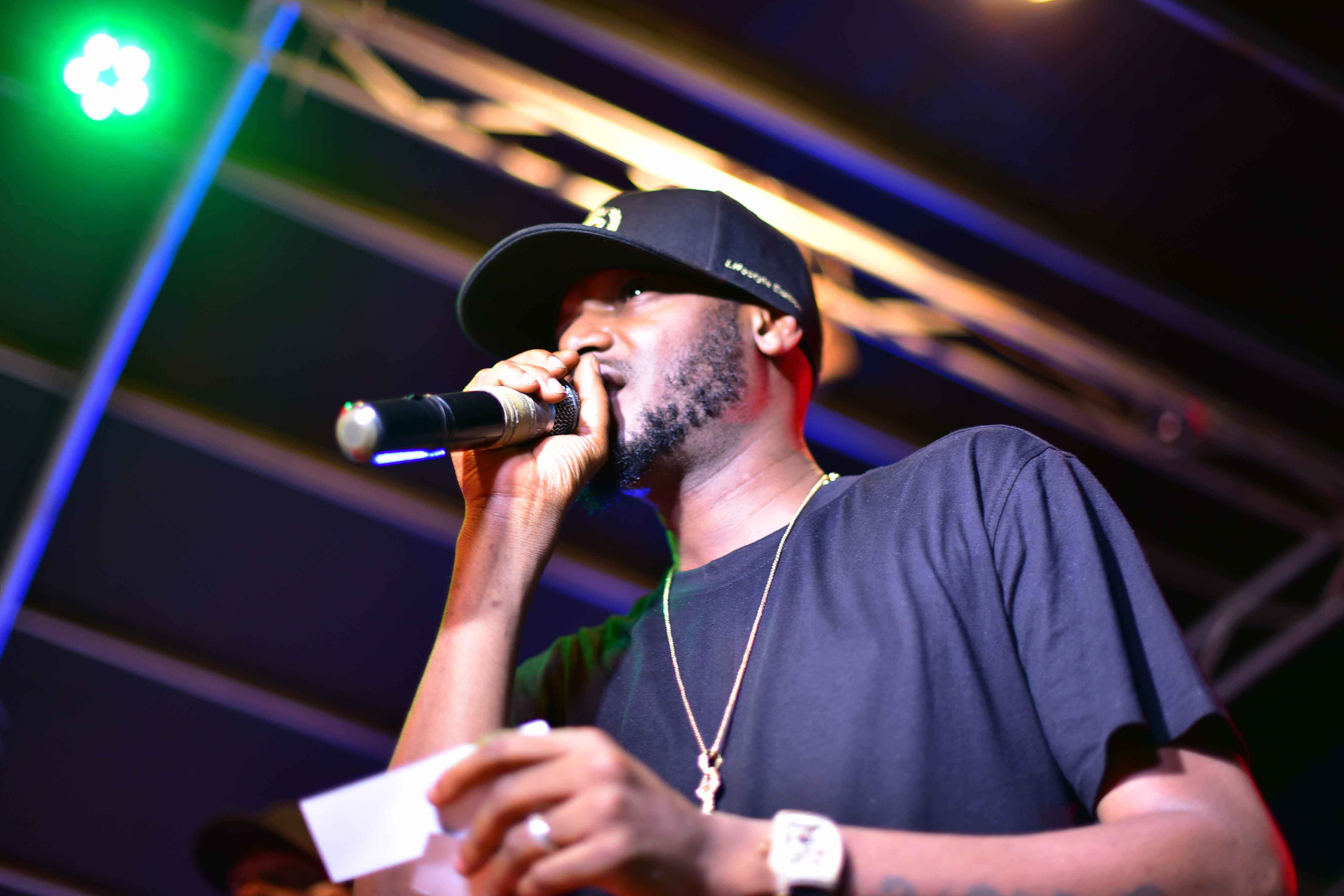
Pop sensation 2Baba on Sunday April 23rd gave football fans their biggest surprise yet while watching their favourite match at Stalad Gardens in New Oko Oba Agege, Lagos. 2Baba joined fans to watch the 7:45 pm El-classico match between Real Madrid and Barcelona courtesy of the Campari Beer parlour activation, currently in progress.

Fans were left star-struck when he made a quiet entrance 30 minutes into the match, 2Baba shook hands and greeted fans with high fives before taking a seat to enjoy the match while drinking his favourite Campari Senator, a signature mixture of Campari and Beer. Not forgetting the bartenders and waiters who he referred to as his special people, 2 Baba showered accolades on everyone present.

After the match, 2Baba celebrated with the *Barcelona fans/ Real Madrid* as he cheered them on with selfies, photos and celebratory hugs. He also presented gifts to some of the lucky winners at the bar.

A major highlight of the evening was when the superstar made a toast to bigger games, bigger fans, bigger Campari and a greater Nigeria. He also shocked fans with surprise performances before taking a bow for the night.

Speaking about the Campari Dare to mix activation, Campari Brand manager, Rilwan Shofunde said:

“We are using this activation to take our signature mix, Campari Senator to football lovers. We want them to enjoy Campari while watching their favourite game at their favourite spot, Tonight’s meet and greet with 2Baba is an example of How far Campari will go to celebrate our consumers.”

2Baba, MD Abels lounge, Olajide Ayodeji with Campari Brand Ambassador, Rilwan Shofunde

Nigeria is one of over 190 countries across the globe where Campari is distributed, with the distinctive, vibrant red alcoholic liqueur renowned for being the base of some of the world’s most famous cocktails. Football fans at the Campari Dare to Mix activation were no different, as the Campari Senator cocktail—a mix of Beer and Campari—proved a perennial favourite.


(brandessencenigeria)

UNCTAD global survey reveals declining trust in online shopping

0

A new global survey reveals that Internet users are increasingly concerned about their online privacy, and that 49 percent of users polled say lack of trust is their main reason for not shopping online.

The survey, conducted by Ipsos and the Centre for International Governance Innovation (CIGI), in collaboration with the United Nations Conference on Trade and Development (UNCTAD) and the Internet Society, comes as data breaches and the reported hacking of elections in several European countries continues to capture international headlines. The survey results suggest that the resulting impact on trust is hindering further development of the digital economy.

Released today at the UNCTAD E-Commerce Week in Geneva, the 2017 CIGI-Ipsos Global Survey on Internet Security & Trust shows that among those worried about their privacy, the top sources of concern were cybercriminals (82%), Internet companies (74%) and governments (65%).

“The lifeblood of the Internet is trust, and when that is damaged, the consequences for the digital economy are nearly irreparable,” said Director of CIGI’s Global Security & Politics program Fen Osler Hampson. “The results of this global survey offer a glimpse into why policymakers should be concerned, and why there is a strong link between user trust and the health of e-commerce,” he said.

Lack of trust is most likely to keep people off e-commerce platforms in the Middle East, Africa and Latin America, suggesting that the potential gains of e-commerce are not spread evenly around the globe.

The survey also revealed great differences in e-commerce behavior when it came to how users are purchasing goods online. For example, in China, India and Indonesia, more than 86 percent of respondents expect to make mobile payments on their smartphone in the next year, compared with less than 30 percent in France, Germany and Japan.
Even in the digital world, location still matters. Fifty-five percent of global respondents indicated that they prefer purchasing online goods and services made in their own country.

“The survey confirms the importance of having adequate consumer protection and data protection in place, areas where many developing countries are lagging behind,” said Shamika N. Sirimanne, Director of UNCTAD’s Division on Technology and Logistics. “More capacity-building is therefore urgently needed,” she added.The survey of 24,225 Internet users was conducted by global research company Ipsos, on behalf of the Centre for International Governance Innovation (CIGI) between December 23, 2016, and March 21, 2017. The survey was conducted in 24 countries—Australia, Brazil, Canada, China, Egypt, France, Germany, Hong Kong (China), India, Indonesia, Italy, Japan, Kenya, Mexico, Nigeria, Pakistan, Poland, Republic of Korea, South Africa, Sweden, Tunisia, Turkey, United Kingdom and the United States.

“Nearly 50 percent of Internet users surveyed do not trust the Internet and this lack of trust is affecting the way they use it. The findings of this year’s CIGI-Ipsos survey underscore the importance of taking action now to build stronger online trust by addressing users’ concerns and using technologies such as encryption to secure communications,” said Sally Wentworth, Vice President of Global Policy for the Internet Society.

(fineextra.com)