2017 Nigerian Drivers Conference And Exhibitions Is Here

NIGERIAN Drivers Conference & Exhibitions is an event organized to educate and enhance driving experience, reduce risks, crashes and casualties on Nigerian Roads.

The conference is a multi-disciplinary event targeting Corporate Drivers, Private Drivers, Commercial Drivers, Individual Drivers and all road users from all over Nigeria.

The event is organized by Technology AVENUE in Collaboration with Federal Ministry of Transport, Ministry of Transport (Lagos State), Federal Road Safety Corps (FRSC), Vehicle Inspection Service (VIS) and supported by INSIGHT Driving School.

Lagos Edition: 29th of April, 2017 


Ace-Olivia Hall, 2nd floor,

City Mall, Onikan,

Lagos, Nigeria.

Abuja Edition: 20th of May, 2017

Social Development Secretariat.

Cyprian Ekwensi Centre of Arts and Culture,

Area 10, Garki, Abuja, Nigeria.

Register now: http://www.nigeriandriversconference.com/registration/?utm_source=GENERAL+CONTACTS&utm_campaign=703c48dbc6-EMAIL_CAMPAIGN_2017_03_14&utm_medium=email&utm_term=0_2051ca2240-703c48dbc6-100108785

(AutoJosh)


Ibadan set for GOtv Boxing Night 11: Joe Boy Ready for Ghanaian Opponent

Ghanaian boxer vows to avenge defeat of countrymen…

National lightweight boxing champion, Oto “Joe Boy” Joseph, has declared himself ready to make Nigeria proud when he fights Ghana’s Anma Dotse for the West African Boxing Union title at GOtv Boxing Night 11, holding at the Obafemi Awolowo Stadium, Ibadan, on March 26.

Image result for GOtv Boxing Night 11

Joe Boy, three-time winner of the GOtv Boxing Night best boxer award, said he is certain that he is top dog in his category in West Africa. He advised his opponent to consult his fellow Ghanaian, Richard Amefu, whom he defeated at GOtv Boxing 9.

“Dotse is in trouble. I am the best in West Africa. He will regret ever coming to fight me. I have trained hard and I will explode like dynamite,” he said.

In the other fights, fast rising boxer, Rilwan  Babatunde will exchange punches with Waliu Arogundade in the light welterweight category, while Adewale Masebinu will be in action against Kabiru Towolawi in a lightweight challenge duel.

Image result for GOtv Boxing Night 11

The best boxer on the night will win N1million cash prize and the Mojisola Ogunsanya Memorial Trophy. 

The event is sponsored by GOtv and supported by Federal Inland Revenue Service, MultiChoice, SuperSport, KSquare Security, Paragonis Multimedia Limited, Complete Sports, Bond FM, Brila FM and Newsbreak.ng.

Meanwhile, Ghanaian boxer, Anma Dotse, has vowed to shorten the reign of West African lightweight boxing king, Joseph when they both clash on March 26. Dotse, highly rated in Ghana, said the title is not only for grab but would also avenge the defeat of numerous Ghanaian boxers in Nigeria.

According to Dotse, Ghana is still Africa’s boxing powerhouse. “I feel embarrassed that Nigerian boxers will wake up from nowhere and want to claim dominance. Joe Boy’s time is up and I am coming to end his premature reign,” he boasts.

(thisdaylive)

Pepsodent, Nigerian Dental Association Walk for Oral Hygiene

0

Members of the Nigeria Dental Association, employees of Unilever Nigeria Plc, dental practitioners, and stakeholders took to the street of Lagos for their annual Oral Health Walk yesterday. The walk is to sensitise Nigerians on the need to brush their teeth twice daily with a fluoride toothpaste like Pepsodent.

The Pepsodent Oral Health Walk which kicked-off from Lagos University Teaching Hospital (LUTH), Idi Araba through to Ojuelegba  is in line with the activities leading up to celebrate this year’s World Oral


Health Day Celebration themed “Live Mouth Smart”.

“The oral health walk is part of Unilever’s vision to help millions of Nigerian families adopt the best oral health practices,” said Ibironke Ugbaja, Oral Care Category Lead, Unilever Nigeria.

“Since the launch of the Pepsodent Oral Health Schools program in 2014, Unilever Nigeria has so far reached 2.5 million Nigerian children directly in over 3,500 public primary schools with products (toothpaste and toothbrushes) educational materials and a 21-days oral hygiene program, teaching them to imbibe the culture of brushing twice-daily using a fluoride containing toothpaste such as Pepsodent.

Our goal is to reach 10 million children by 2020,” she concluded. Sensitisation materials, Pepsodent toothpaste and toothbrushes were handed over to commuters and residents within the neighbourhood of the areas covered by the health walk.

Addressing journalists during the walk, the President, Nigerian Dental Association, Dr. Olabode Ijarogbe said: “The health work is part of efforts to prevent and check the spread of oral diseases.”

He further emphasized that “it is imperative that Nigerians brush twice a day and the annual health walk is one of the ways we create awareness about oral hygiene and its importance.”

The 2017 celebration of World Oral Health Day is set to take place on Monday March 20, 2017 at the Teslim Balogun Stadium, Surulere, Lagos.

(thisdaylive.)

Again, the Coca Cola Brand Undergoes Integrity Test

As controversy continues to trail a court judgment that Nigeria Bottling Company should put a written warning on Fanta and Sprite bottles, Raheem Akingbolu writes on implication for the brand and consumers

Whether negative or positive, any story associated with Coca Cola is always an interesting one. For decades, the brand has commanded huge followership globally but surprisingly, its soaring profile sometime turns out to be its burden.

Last week, Coca Cola became a major news item, albeit for wrong reason. Two of its products -Sprite and Fanta were indicted in a court of competent jurisdiction. It was not the first time the brand would be enmeshed in crisis but the advent of social media worsens the situation this time around.

 A Lagos High Court sitting at Igbosere faulted National Agency for Food and Drug Administration and Control (NAFDAC) for failing Nigerians by allowing the mass consumption of Fanta and Sprite, which were proven to contain cancer-causing chemicals. The products were said to have been banned from the UK.

The court also ordered that NBC, manufacturers of the drink should put a written warning on Fanta and Sprite bottles stating that both soft drinks are poisonous when consumed along with Vitamin C.

In the judgment given by Justice Adedayo Oyebanji, the court awarded a cost of N2 million against NAFDAC. The judgment was the outcome of a 10-year old suit filed by Dr. Emmanuel Fijabi Adebo, and his company, Fijabi Adebo Holdings Limited, against NBC Plc and NAFDAC.

In the amended statement of claims, it was alleged that in March 2007, Fijabi Adebo Holdings Company bought large quantities of Coca-Cola, Fanta Orange, Sprite, Fanta Lemon, Fanta Pineapple and soda water from NBC for export and retail in the United Kingdom. But when the consignment arrived the United Kingdom, health authorities in that country, raised fundamental health issues especially on the excessive amounts of sunset yellow and benzoic acid, which are confirmed to be carcinogenic. The products were said to have been seized and destroyed.

It was a moment when the spin doctors working on the brand in Nigeria would have wished social media dead because the news became a global item within seconds. Since then, it has remained in the space with commentators either supporting the judgment or against it. There are also some analysts who criticise regulators like NAFDAC, Standard Organisation of Nigeria and Consumer Protection Council.

However, supporters of Coca Cola on and off the social media have described the issue as another well-orchestrated script put together by enemies of the brand to frustrate its legendary growth. For instance, a Facebook user, Olabisi Ajayi, called on Nigerian consumers to rely on what they hear from regulators and not a statement from the court. According to her, issues related to quality are a technical issue that can only be solved in the lab, not in court.

Meanwhile, NBC has issued an official statement, stating that some of the media reports on the issue contain misleading information on the safety of benzoic and ascorbic acids as ingredients in soft drinks, citing a Lagos High Court order.

In the statement, the NBC said there were different approved levels of benzoic acid between Nigeria and UK, but both were within the internationally accepted standards.

“The UK standards limit benzoic acid in soft drinks to a maximum of 150 mg/kg. Both Fanta and Sprite have benzoic levels of 200 mg/kg which is lower than the Nigerian regulatory limit of 250 mg/kg when combined with ascorbic acid and 300 mg/kg without ascorbic acid and also lower than the 600 mg/kg international limit set by CODEX.”

CODEX is the joint intergovernmental body responsible for harmonizing food standards globally.

Among other clarifications, NBC stated that, ‘’In the subject case, which dates back to 2007, the UK authorities confiscated a consignment of our products shipped to that country by the plaintiff because their benzoic acid levels were not within the UK national level, although well within the levels approved by both the national regulators for Nigeria and the international levels set by CODEX, the joint intergovernmental body responsible for harmonizing food standards globally.

While the debate generated by the judgment continued, the Minister of Health, Isaac Adewole, weighed in on the controversy on Thursday and directed the National Agency for Food Drugs Administration and Control, NAFDAC, to collaborate with the Standard Organisation of Nigeria (SON) in addressing Nigerians on the safety of Coca Cola products.

He also called for an urgent meeting with SON on Friday, saying the issue goes beyond the legal aspects of a court verdict. 

“It is about morality; Nigerians can trust us to put their safety first. God bless”, he said.

From anywhere one chooses to look at it, the issue has created panic in the market and it will take intervention of the regulatory bodies as directed by the minister, to calm the nerves. In the meantime, consumers may need not to rely on social media analysts to draw their conclusions. And for handlers of the Coca Cola brand, this is another opportunity to reconnect the two products with their patrons.

(thisdaylive)

DStv to introduce streaming-only option

Report emanating from South Africa has it that Multichoice is strongly considering the launch of a streaming-only version of DStv which will not be offered through satellite subscriptions but exclusively over broadband connections.

According to Multichoice CEO, Mark Rayner, the idea of launching a standalone streaming version of DStv is something MultiChoice spends considerable time discussing internally. But there are “no concrete plans to launch on a specific date,’’ he said.

Rayner stated that the idea is born out of the fact that broadcasters globally were launching online-only options with no guarantees that consumers wanted to subscribe to limited channel options or wanted a full bouquet of channels from one provider.

Multichoice’s offering already includes a streaming service through DStv Now with access to over 60 live standard definition channels and Catch Up video-on-demand content.

(Marketingedge Nigeria)

Reminisce’s the Street Concert introduces Galaxy Grand Prime + Limited Edition Pack

0
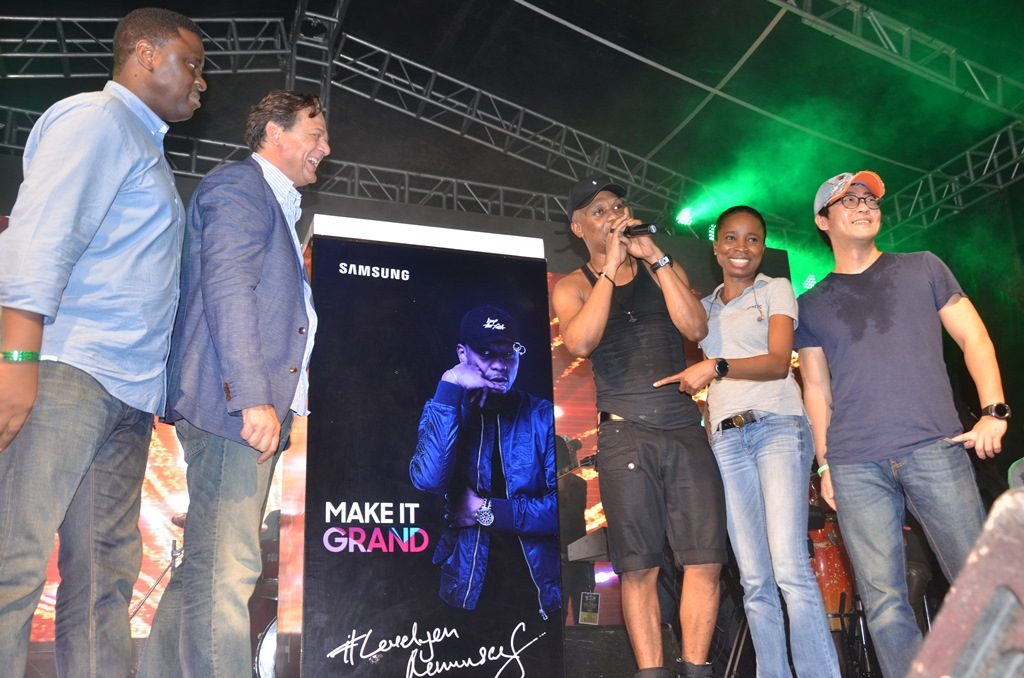
L-R: Director, Information Technology and Mobile, Mr. Olumide Ojo; Director & Business Leader, Information Technology and Mobile, Mr. Emmanouil Revmatas, both of Samsung Electronics West Africa ; Hip-Hop artiste and Samsung Brand Ambassador, Reminisce; Head, Product Marketing, Information Technology and Mobile, Ms. Jumoke Okikiolu and Business Manager, Mr. Hungbae Kim both of Samsung Electronics West Africa during the launch of Samsung Galaxy Grand Prime+ Limited Edition at Reminisce’s The Street Concert which held at Ikeja City Mall, 26/2/2017

Hip-hop artiste and Samsung brand ambassador, Remilekun Abdulkalid Safaru, popularly known as Reminisce, recently held the maiden edition of his brainchild, “The Street Concert.” The concert which held on the 25th of February at the Ikeja City Mall was in appreciation of his teeming fans that have stood by him since he caught the attention of Nigerian music lovers since 2008, when he featured on 9ice’s “Bachelor’s Life”.

At the concert, Reminisce, along with Mr. Emmanouil Revmatas, Director and Business Leader, Information Mobile and Technology, Samsung Electronics West Africa, and some executives of the company unveiled the Samsung Galaxy Grand Prime+, Limited Edition Pack. The device features a sturdy case design with a non-slip rear grip pattern, giving the smartphone a firm grip at all times. It also comes in a selection of stylish colours to suit customers various tastes.

The Galaxy Grand Prime+ runs on Android 6.0 Marshmallow with the OS refined to make it more user-friendly allowing users set app permissions, adjust settings, and more with ease. It also uses the latest version of TouchWiz, Samsung’s touchscreen interface.

Reminisce, speaking on the new product offering, said that the Galaxy Prime+ comes with really cool and exciting features that perfectly combines practicality and style.

‘‘It takes super bright selfies even in the dark thanks to the 5 MP front camera and the front LED flash. With the Smart Switch feature, people can easily transfer from existing devices to the Galaxy Grand Prime+. The smartphone is definitely packed with awesome features making it a must have for the Grand Life,” he added.

Featuring a 5-inch 540 x 960 quad high definition resolution display, the 8 mega-pixel on the back captures clear and sharp shots, in addition to the 5-megapixel front-facing camera. Videos are captured at 720p and played back smoothly, with focus adjusting as the scene changes. Users can easily trigger the front-facing camera with their palm or voice command. With the Multiple modes feature, consumers can also set up a wide selfie for a larger group, or create an animated GIF.

According to Revmatas, Samsung stands for quality, innovation, change, self-expression and excellence in performance.

“These same qualities are epitomised by Reminisce, whose depth of work as an artiste has made him much loved and respected among his fans and peers. It is no surprise that Samsung decided to introduce the Grand Prime+ at his concert. We are indeed very pleased to have him as the face of the smartphone”, Revmatas concluded.

With the upgraded RAM support and enhanced chipset performance and 4G/LTE, users can enjoy seamless webpage load times for a more responsive multimedia and gaming experience. Its optimal 5.0” display is just the right size to view what is on screen for maximum enjoyment.

The concert featured friends and close collaborators of Reminisce, which include Olamide, Ckay, Mz Kiss, BaseOne, Wale Turner, Falz, ReakadoBanks, Mayorkun, Ycee, HarrySong, Dremo, Niniola, Orezi and a host of others.

The Galaxy Prime+ comes with two SIM capabilities and available in black, gold, silver, and pink gold colours.

About Samsung Electronics Co., Ltd.

Samsung Electronics Co., Ltd. inspires the world and shapes the future with transformative ideas and technologies. The company is redefining the worlds of TVs, smartphones, wearable devices, tablets, cameras, digital appliances, printers, medical equipment, network systems, and semiconductor and LED solutions. For the latest news, please visit the Samsung Newsroom at news.samsung.com.

(Brandessencenigeria)

Luxury Tax: To be or not to be?

Introduction

Whether it seems timely or a little too late, Nigeria seems to be keen on measures to make the “rich” pay more and therefore address redistribution of wealth through taxation of luxury items.

Generally, luxury tax is a tax on luxury goods and services i.e. goods and services that are not essential and consumed by only a niche. It could be implemented through a sales tax system, value added tax system, or customs duty system of taxation. It typically affects the wealthy as opposed to the vast majority of the populace because the wealthy are the most likely to purchase luxury items.

In recent times, the Nigerian Government has been showing interest in this form of taxation as a response to the declining revenues from oil and to deal with social imbalance. In November 2014, the past administration announced plans to introduce luxury taxes in the form of surcharges on items such as private jets, luxury yachts, luxury cars, business class/first class tickets on airlines etc.

Image result for luxury tax nigeria

The plan at the time included the following:

  • 10% import surcharge on new private jets;
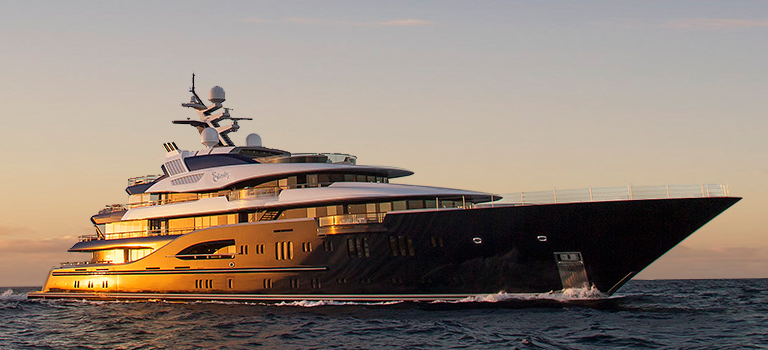
  • 39% import surcharge on luxury yachts;
  • 5% import surcharge on luxury cars;
  • undisclosed surcharge on business and first class plane tickets;
  • 3% luxury surcharge on champagnes; wines and spirits; and a
  • 1% Federal Capital Territory (FCT) mansion tax on residential properties valued at N300 million and above.

The goal of the new taxes was to raise up to N10.56 billion in 2015 as additional revenue for the government and N480 billion within the three years following its implementation. However, the goals were never achieved due to lack of implementation. The Federal Inland Revenue Service attempted to implement but their enforcement faced stiff resistance and eventually it was abandoned particularly due to lack of a legal instrument backing the implementation.

Now, the imposition of a luxury tax mechanism has been reactivated. The current administration has announced plans as part of economic recovery and growth to increase the VAT rate on some luxury items. Although affected items and rates were not stated, the minister of finance disclosed that the increase will not affect basic food items.

Image result for luxury tax nigeria

Some challenges of introducing luxury tax

The first question should be “What are the specific goods and services that will constitute luxury goods and services?” This question is especially important in a developing country like Nigeria, where even the most basic of amenities such as electricity, air transportation and certain clothing can be subjectively deemed as luxuries. If the luxury tax must absolutely be introduced, a clear and unambiguous definition and/or categorisation of items that constitute luxury goods should be established.

Variation and inconsistencies in the definition of “luxury” exists from country to country. For example, in the UK, chocolate covered biscuits are considered luxury yet somehow biscuits and cakes are considered necessities. Similarly, in Norway, cars and chocolates are considered luxury items and are liable to luxury taxes.

Image result for champagne nigeria

In developed countries like Ireland and Norway, the term “luxury” continues to evolve. The evolution continues in some instances to the extent that many of the goods associated with the luxury tax are no longer viewed as “luxuries” in the literal sense. Today, the term is sometimes mistaken with so-called “sinful items” such as sugary drinks, tobacco and alcohol amongst others. Hence the concept of “sin tax”. There is also the risk that over time, the term “luxury” might metamorphose, and goods formerly considered “ordinary” may incur the luxury tax, resulting in more people being affected.

Secondly, the introduction of luxury tax without careful studies and plugging leakages at the port could discourage the purchase of certain “luxury” items from local businesses and potentially impact negatively on the sales and profits generated by such businesses. This could have adverse effects on the affected businesses and by extension the economy. The idea behind introducing a luxury tax is to get the wealthy to contribute a bit more towards easing the pains of the current economic recession.

For example, in the early nineties in the United States, when a 10% luxury tax was levied on fur, expensive jewelries, airplanes and cars worth $30,000 and above, there was a sharp decline in sales of such items. This caused problems for producers of these items and their retailers, so much so that the law enacting the luxury tax had to be repealed.

The third issue to consider is the potential increase in black market patronage. Introducing luxury tax on certain items would increase the cost of those goods or services; therefore, more individuals may opt to make purchase at cheaper prices from the black market. An increased patronage of the black market is especially problematic because when taxable persons begin to operate in the informal market, the tax base is eroded. As a result, the desired results for which the luxury tax was instituted may not be achieved. In 1980 when Canada introduced a large luxury tax on cigarettes, an intense black market was formed. Legal sales and in turn tax revenues declined and as a result, more money had to be spent to curb the criminal activities.

Image result for yacht

Conclusion
The proposed increase in the VAT rate for luxury items comes as no surprise considering that Nigeria has one of the lowest VAT rates in the world. In Africa, Ghana has a VAT rate of 15%, Egypt 10%, Mauritius 15%, Morocco 20%, Namibia 15%, South Africa 14%, Tanzania 18% and Zimbabwe 15%. Across the continent, countries like France, the United Kingdom, Romania and Ukraine have VAT rates of 20%. Therefore, it would appear that the proposed increase in VAT is not out of place and should not have adverse effects on the poor since items like basic food items are excluded. However, in order to fully determine the effect of the proposed VAT increase on the populace, a clear definition and/or categorisation of the luxury items needs to be in place.

In addition to having one of the lowest VAT rates, Nigeria additionally has one of the lowest tax to gross domestic product (GDP) ratios at about 6%. This is clearly an indicator of the tax system’s inefficiency and generally Nigeria’s inability to harness the tax generating capacity of the economy. The introduction of a luxury tax regime is however not going to address the low tax to GDP ratio in the long run.

Alternative and more sustainable ways in which to improve the revenue generating profile of the country and at the same time reverse the current low tax to GDP ratio include: widening the tax base to capture business owners/entrepreneurs and small and medium enterprises; increasing transparency by judiciously accounting for monies collected from taxpayers, so as to motivate voluntary compliance; closure of gaps in tax administration by the tax authorities; and then focusing on tax policy after strengthening tax administration. The recent approval of the National Tax Policy which establishes fundamental principles to guide an orderly development of the Nigeria tax system and reinforces the need for tax laws and administrative practices to promote economic development is most certainly a step in the direction.

Bitrus is an Assistant Manager at PwC Nigeria. His experience cuts across tax compliance, inwards investment planning and strategic tax management.
Visit our tax blog for in-depth analyses, unique insight and superlative perspective on tax matters: www.pwc.com/nigeriataxblog.
Subscription is free!

Coca-Cola products manufactured in Nigeria safe – Health ministry

The Federal Government has reassured Nigerians that the Coca-Cola products manufactured in Nigeria were safe for consumption.

The explanation followed a stakeholders meeting summoned by the Minister of Health, Prof. Isaac Adewole, to address related issues on the recent court judgment on the case filed by Fijabi Holdings against the Nigeria Bottling Company and NAFDAC.

Adewole explained that both Benzoic acid and Ascorbic acid (Vitamin C) were ingredients approved by International Food Safety regulators and used in many food and beverage products around the world.

Image result for fanta sprite

Adewole, in a statement by the Director, Media and Public Relations, Federal Ministry of Health, Mrs Akinola Boade, on Friday said, “Codex Alimentarius Commission (CAC) is the organisation established by Food and Agriculture Organisation of the United Nations (FAO) and World Health Organisation (WHO) to set internationally recognised standards, codes of practice, guidelines relating to foods, food production and food safety.

“In the case of Benzoic acid, the standard set by Codex was 600mg/kg until recently reviewed to 250mg/kg and adopted in 2016.

“With reference to the Codex standard and other relevant documents, Standards Organisation of Nigeria (SON) in consultation with and relevant stakeholders elaborated the standard of benzoic acid in soft drinks to be at 250mg/kg based on the national climatic and storage conditions.

“This standard has been in existence since 1997 and revised in 2008, the levels of benzoic acid in Fanta (1 batch) and Sprite (2 batches) presented by the claimant in the court are 188.64mg/kg, 201.06mg/kg and 161.5mg/kg, respectively.”

The minister stressed that the levels were in compliance with both the Codex and Nigeria Industrial Standards, stressing that the Coca-Cola products manufactured in Nigeria were safe for consumption in view of the following reasons:

“Risk assessment was conducted to ascertain maximum limits of food additives acceptable in foods. This takes into consideration the environmental, storage and distribution conditions as well as the shelf life of food products.

“NAFDAC and SON regularly monitor the manufacturing practices of food industries and conduct laboratory analysis to ascertain continuous compliance with required national standards.

“There was a routine inspection conducted at Nigeria Bottling Company by NAFDAC officers in December 2016, which was satisfactory.

“With reference to the Codex standards, each country or region is permitted to adopt a standard and limit based on country-specific scientific evidence such as environmental, storage and distribution conditions,” he added.

Adewole noted that benzoic acid as a preservative prevents the growth of micro-organisms which thrive more at higher climatic temperatures like in Nigeria.

He said that due to the different environmental conditions obtainable in the UK, the standard for benzoic acid was set at a lower limit of 150mg/kg, while in Nigeria it was set at 250mg/kg even below that of Codex (as at time of production of that batch; Codex limit was 600mgkg).

Besides, the minister said that food products being imported into a country must comply with the relevant standards of the destination country.

“NAFDAC has processes in place to ensure products imported into the country are evaluated to ascertain compliance with required Nigeria Industrial Standards,” he said.

Adewole further said that the claimant did not obtain NAFDAC certification before export otherwise he would have been advised on the required standard of the destination country.

He, therefore, advised Nigerians to take medicines with potable water as this would help to prevent unexpected drug-food interactions.

He added that all bottling companies are encouraged to insert advisory warnings on all products as necessary.

(NAN)

Cozy Concept furniture introduces “Do-it-yourself”

0
While trying to cut down on excess expenses and accommodating the necessary lifestyle in a home, Cozy Concept, a lifestyle furniture store in Lekki Lagos has introduced the luxury of do-it-yourself (DIY) with furniture purchased from Cozy.
The idea of the DIY came up as a result of absence for such lucrative innovation in the country. DIY is not very common because it is comfortable, affordable and could be done at the user’s rate and comfort with an aid of a technical guide.
“For the ease of purchase, assembly and transportation, the furniture is packaged as flat-pack with a technical guide for users to fix it up themselves. Some are also convertible for the user’s comfort. A piece of furniture could have some packs added together, or dismantle or re-adjusted to get another piece”.
Cozy concept, a Lebanese Company prides itself with quality furniture, which comes from the best of locally supplied woods, affordable price and easy way to do it according to Samir Bader, Director of Cozy Concept.
“With stepped in as a solution provider to furniture challenges in Nigeria and West Africa”.
Bader also disclosed that Cozy Concept would officially unveil its flagship store in Lekki on the 25th of March, 2017.
(authorityngr)

Maersk Donates Books to Lagos Schools

0

Maersk Nigeria Limited has demonstrated its commitment to supporting the community through its corporate social responsibility (CSR) programmes as staff members of the company took turns to engage pupils of the State Nursery and Primary School, Arakan Barracks, Apapa in academic exercise.

The company also donated 1,000 exercise books to the school.
The staff members, mostly females, took the students from Primaries 4 to 6 in various subjects including English, Social Studies Mathematics and French.

Human Resources Manager of Maersk Nigeria, Ada Onyeri, who led the team to the school, said the teaching exercise was part of the company’s CSR in celebration of the 2017 International Women’s Day.

According to her, female staff of the company supported by their male counterparts, decided to use the occasion of the 2017 International Women’s Day to teach and inspire younger ones to grow to become productive future leaders.
“For us it is an opportunity to give back to the society. State Nursery and Primary School has been our adopted school, we have had a number of CSR activities here. We have built some school blocks and donated equipment among others.

“But today, it is very important for us because it is International Women’s day and so some of the female colleagues in our organisation supported by our men have come to use this occasion to teach the little ones and we hope by teaching, we inspire them to be like us in few years to come,” she said.
Head Teacher of the school, Dr. Louis Onukwufor, was full of appreciation to the company for its support towards the development of the school and wellbeing of its pupils.

“I appreciate your effort because this is not the first time you will be visiting the school and when I heard you were coming, I was very happy. In 2014 December, they gave us 10 computers and accessories and during our last school Inter-House Sports Competition, they gave us other gifts. They also built the four blocks of classroom in 2014 and they also refurbished our library.

“We want the staff to tell the company that we appreciate them so much. We love what they are doing for us and wish that they continue to do more for us,” she said.

Maersk Line is the world’s largest container shipping company having customs through 374 offices in 116 countries. The company was founded in 1928. Its Nigerian office was established in 1988,” Onukwufor said.
International Women’s Day is celebrated globally on March 8 every year. It commemorates the movement for women’s rights.

(thisdaylive)