




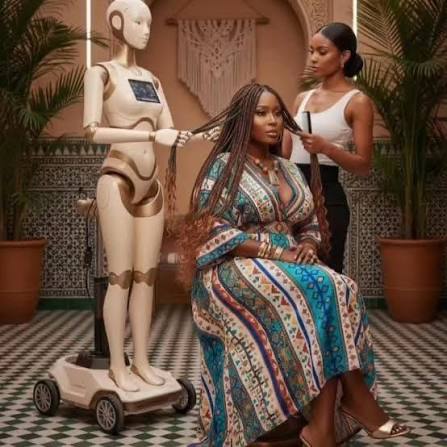
Nigerian-American biomechanical engineer Yinka Ogunbiyi has raised $7 million in seed funding to accelerate the commercial launch of HaloBraid, an artificial intelligence-powered robotic device designed to help professional stylists complete hair braiding significantly faster while reducing the physical strain associated with the process.
The funding round was led by Seven Seven Six, the venture capital firm founded by Reddit co-founder Alexis Ohanian, with participation from AlleyCorp and Bling Capital. The investment will be used to advance product development, expand manufacturing, complete professional testing and prepare for the technology’s commercial rollout later in 2026.
HaloBraid is designed to complement rather than replace professional hairstylists, Brandspur Brand News reports. Stylists begin each braid manually before the robotic device completes the repetitive section from the middle to the end, allowing the process to be carried out up to five times faster than conventional hand braiding. The technology currently supports box braids and knotless braids but does not perform scalp-based styles such as cornrows or determine braid patterns.
Ogunbiyi conceived the idea during the COVID-19 pandemic after experiencing the lengthy process of braiding her own hair. Her team subsequently developed more than 600 prototypes while refining a system capable of handling textured hair with minimal pulling and improved comfort. She holds bachelor’s, master’s and MBA degrees from Harvard University and previously co-founded consumer hardware startup Desora.
The company plans to introduce HaloBraid to selected salons from September 2026 through a revenue-sharing model that eliminates the need for salon owners to purchase the machine upfront. Instead, Halo will receive a portion of the revenue generated from appointments completed using the device, reducing the financial barrier to adoption.
The innovation targets a global salon services market valued at approximately $270 billion, where lengthy braiding sessions can limit customer capacity and contribute to repetitive strain injuries among stylists. By automating the most repetitive stage of the process while keeping creative control in the hands of professionals, Halo aims to improve salon productivity without replacing skilled braiders.
The success of the commercial rollout will depend on the technology’s reliability, maintenance costs, customer acceptance and its ability to deliver consistent results across different hair types, braid lengths and salon environments. If widely adopted, HaloBraid could become one of the first robotics solutions to achieve large-scale commercial use in the textured haircare industry.
