




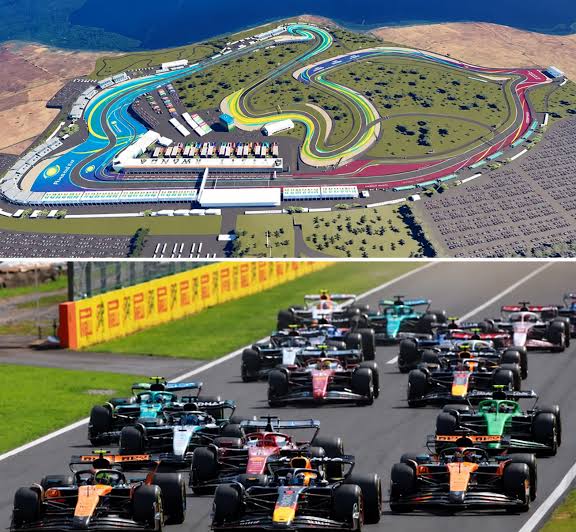
Rwanda is targeting a historic return of Formula 1 to Africa in 2030, with plans for a Grand Prix circuit near Kigali that could strengthen the country’s tourism industry, attract investment and raise its profile as a destination for major international sporting events.
If the plan materialises, it would end a 37-year absence of the championship from the continent. Africa last hosted a Formula 1 race at South Africa’s Kyalami circuit in 1993.
The proposed race represents a major addition to Rwanda’s efforts to use international sport to drive economic growth, develop infrastructure and attract visitors. Brandspur Brand News reports that the country’s ambitions build on years of investment in sporting facilities, international partnerships and tourism promotion.
Rwanda has pursued global visibility through its Visit Rwanda campaign, establishing partnerships across football and basketball. Its sporting portfolio has included Paris Saint-Germain, Atlético de Madrid, Aston Villa, the Basketball Africa League, the Los Angeles Clippers and the Los Angeles Rams.
The country has also expanded its capacity to stage major events at home. Kigali’s 10,000-seat BK Arena hosts basketball competitions, concerts and entertainment events, while the refurbished 45,000-seat Amahoro Stadium, inaugurated in 2024, has strengthened the capital’s ability to accommodate international football matches and large gatherings.
Rwanda’s experience hosting the Basketball Africa League and the 2025 UCI Road World Championships has further supported its ambition to become a recognised destination for global sport.
However, a Formula 1 Grand Prix would bring a different scale of international attention, with potential economic benefits extending beyond the race weekend.
Rwanda’s economic performance provides context for its strategy. The country’s economy grew by 9.4 per cent in 2025, while tourism generated $685 million from 1.49 million visitors. The meetings, incentives, conferences and exhibitions sector contributed another $94.7 million, and the country recorded $2.62 billion in investment across 799 projects during the year.
A Formula 1 event could create additional demand for hotels, restaurants, transport services, aviation, entertainment and corporate hospitality. International teams, sponsors, journalists, business executives and spectators would also bring spending opportunities for local companies and service providers.
For small businesses, the potential benefits could include more customers during major events, while hospitality operators and investors could find opportunities in accommodation, food services and visitor experiences. The extent of those gains, however, would depend on the event’s delivery, visitor numbers and how much spending reaches businesses within the local economy.
Current plans reportedly place the proposed permanent circuit outside Kigali, near Bugesera International Airport. The location could connect the racing venue with Rwanda’s broader ambitions for aviation, tourism and commercial development.
A permanent circuit could also serve purposes beyond the annual Grand Prix, with the potential to host other motorsport activities, corporate events, concerts and visitor experiences throughout the year. Such uses could help extend economic activity beyond the championship weekend, although the details of any wider development remain subject to the project’s eventual implementation.
Rwanda’s pursuit of Formula 1 dates back to its formal expression of interest in hosting a race in 2024. President Paul Kagame has presented the country’s wider sporting ambitions as an economic undertaking, pointing to the employment and commercial opportunities associated with hotels, restaurants and recreational facilities.
The proposed race also carries significance for African motorsport fans. Despite Formula 1’s expansion across international markets, the championship has not held a Grand Prix on the continent since 1993. A successful return would give African fans another opportunity to experience the sport in person while bringing a major global sporting property back to the region.
Rwanda is not the only African country associated with efforts to attract Formula 1, with South Africa, Nigeria and Morocco also linked to interest in hosting the championship. A race in Rwanda would nevertheless mark a significant development in the continent’s efforts to secure a place on the sport’s calendar.
For Kigali, the challenge will be to turn international attention into lasting economic value. Building a circuit and attracting a globally recognised championship would require substantial planning, infrastructure and investment, while the wider benefits would depend on the country’s ability to connect the event with local businesses and its existing tourism sector.
With 2030 identified as the target year, Rwanda’s Formula 1 ambitions could become one of its most prominent attempts yet to combine sport, tourism and international investment. The prospect of racing returning to Africa would be historic, but the longer-term test will be whether the event can deliver benefits that continue well after the final car crosses the finish line.
