Diageo, UNITAR partner to promote road safety, sustainable transport systems in Nigeria

The two-day workshop, which held at the University of Lagos, brought together various stakeholders who play a part in developing transport systems and promoting road safety in Nigeria.
????????????????????????????????????

Diageo, a global leader in the beverage alcohol industry and parent company of Guinness Nigeria Plc, has partnered the United Nations Institute for Training and Research to deliver a workshop that aims to promote road safety and sustainable transport systems in Nigeria.
The two-day workshop, which held at the University of Lagos, brought together various stakeholders who play a part in developing transport systems and promoting road safety in Nigeria.
Speaking at the event, the Corporate Relations Director, Guinness Nigeria Plc, Sesan Sobowale, noted that by partnering UNITAR, Guinness Nigeria/Diageo shows its continued commitment the responsible use of alcohol and the prevention of alcohol-related road traffic accidents.
Sobowale said: “We believe that a single death caused by drinking and driving is one too many and can and must be prevented.
“We are encouraged that over the last few years, the number of alcohol related fatalities has fallen significantly in many countries.

“However, there is more to do and we are committed to playing our role in eradicating harm caused by drink driving in Nigeria.
“This new partnership with UNITAR is important as it will allow us to work together to deliver the global goal of halving drink driving road traffic deaths.”
The event was attended by the Permanent Secretary of the Federal Ministry of Transportation, Mallam Sabiu Zakari, who represented the Minister for Transportation, Rotimi Amaechi; the Lagos State Commissioner for Transport, Prince Anofiu Elegushi; the Sector Commander, Federal Road Safety Corps, Ogun State command, Commander Clement Oladele; the Lagos Sector Commander of the Federal Road Safety Corps, Hyginus Omeje; sustainable transport experts from Kennesaw State University, Georgia USA; and officers of the Federal Road Safety Corps.
The conference was also attended by transportation and road safety resource persons from Benin Republic, Ghana, Cote d’Ivore and Togo.
In their submissions, speakers outlined strategies that will help Nigeria create a sustainable transportation system while ensuring the safety of road users.
The Country Head and Resident Representative of UNITAR in Nigeria, Dr. Larry Boms, noted that road safety is a top priority in the 2030 Agenda for Sustainable Development, which aims to reduce road traffic deaths and injuries by 50 per cent by 2020.
Boms said: “I am looking forward to bringing to fruition this new initiative between the United Nations and Guinness Nigeria/Diageo.
“Achieving the 2030 Development Agenda and its different goals will only be possible through innovative partnerships with the private sector such as this one, where different stakeholders join forces to reach specific beneficiaries and targets by sharing their respective expertise and resources.”
In his remarks, Oladele, who represented the FRSC Corps Marshal, Boboye Oyeyemi, observed that about three per cent of the country’s Gross Domestic Product is lost to road crashes every year and stressed the need to address the human factor element in road safety interventions.
The workshop was organized following a strategic global partnership that Diageo signed with UNITAR in May 2016, entitled: “Road Safety Initiative for Cities.”
Under the partnership, Diageo will partner UNITAR to build institutional and individual capacity needed to reduce traffic death and injuries, and improve road safety globally.
UNITAR entered into this partnership with Diageo due to the company’s strong track record in supporting programmes and policies to address drink driving.
Diageo has a long history of working to reduce alcohol-related fatalities and crashes and supports numerous drink drive prevention programmes around the world.

These range from supporting high visibility enforcement through random breath tests in countries such as Nigeria, Ghana, Mexico and China, to funding safe rides and free public transportation and supporting laws to establish maximum blood alcohol concentration levels in countries where none exist.

(theeagleonline)

Philip Morris International Looks Toward A Smoke-Free Future

Progress on potentially less harmful alternatives to smoking
Over one million adult smokers have converted to IQOS, PMI’s leading heated tobacco product

Philip Morris International Inc. (PMI) (NYSE/Euronext Paris: PM) today re-affirms its commitment to designing a smoke-free future. With more than one million adult smokers who have converted to IQOS, momentum continues to grow behind the company’s full-scale effort to market smoke-free products that can ultimately replace cigarettes. PMI’s new website offers a look into its vision for the future, and how its new products can have a significant impact on adult smokers and society.

“After more than ten years of research and development, today we have both the science and the technology to make these products a reality for the world’s 1.1 billion smokers.”   Tweet this

“Adult smokers are looking for product choices that offer the satisfying taste, ritual, and pleasure they get from cigarettes, but with far lower amounts of the harmful compounds found in smoke,” said Tony Snyder, PMI Vice President of Communications. “After more than ten years of research and development, today we have both the science and the technology to make these products a reality for the world’s 1.1 billion smokers.”

IQOS is one of four smoke-free products from PMI to address adult smoker demand and varying preferences. It is a heated tobacco product that was launched in late 2014 and is expected to be available in key cities in over 30 markets in 2017.

Since 2008, PMI has hired over 400 scientists and experts and invested over USD 3 billion in research, product development and scientific substantiation. Results of scientific research to assess the reduced-risk potential of IQOS are very promising, and the company openly shares its scientific methodologies and findings for independent third-party review and verification. In December 2016, PMI submitted a Modified Risk Tobacco Product Application (MRTPA) for IQOS to the U.S. Food and Drug Administration’s (FDA) Center for Tobacco Products.

Snyder continued, “We’re optimistic about the future as we work to progressively transition PMI’s existing cigarette business to potentially less harmful alternatives. There is tremendous opportunity to positively impact public health with the availability of better choices than continued smoking, and we can’t do it alone. Contributions from public-health experts, the scientific community and regulators will greatly accelerate switching from cigarettes to smoke-free products.”

To learn more about how PMI is designing a smoke-free future, please visit the new company website at www.pmi.com.

Philip Morris International Inc.

Philip Morris International Inc. (PMI) is the world’s leading international tobacco company, with six of the world’s top 15 international brands and products sold in more than 180 markets. In addition to the manufacture and sale of cigarettes, including Marlboro, the number one global cigarette brand, and other tobacco products, PMI is engaged in the development and commercialization of Reduced-Risk Products (RRPs). RRPs is the term PMI uses to refer to products that present, are likely to present, or have the potential to present less risk of harm to smokers who switch to these products versus continued smoking. Through multidisciplinary capabilities in product development, state-of-the-art facilities, and industry-leading scientific substantiation, PMI aims to provide an RRP portfolio that meets a broad spectrum of adult smoker preferences and rigorous regulatory requirements. For more information, see www.pmi.com and www.pmiscience.com

(businesswire)

‘Go Viral’ Is Not A Smart Marketing Strategy

Everyone wants to go viral. It’s the marketer’s dream. Only 15% of marketers go viral. The odds are already stacked against you. But still many marketers try to get that 15 minutes of fame. So why wouldn’t you aim for this level of success?

Image result for Go Viral

The truth is going viral isn’t an effective content marketing strategy at all. It can actually work against you. This guide is going to show you some of the reasons why you absolutely shouldn’t be trying to make viral happen. Of course, if it happens naturally then that’s fantastic, but don’t go out of your way to do it.

The Odds Are Against You

You can publish thousands of pieces of content and none of them will go viral. This is a very real possibility, but it’s something a lot of marketers don’t take into account. It makes little sense to chase after something so elusive when a solid content marketing strategy is likely to make you far more money and do far more for your business.

Image result for Go Viral

Can All Content Go Viral?

Not all content will go viral. Some pieces of content are inherently designed not to go viral. For example, a comprehensive guide on managing your taxes is unlikely to provide any appeal for the people of Facebook. On the other hand, it’s a hundred times more useful to your target audience than that cute cat video.

You may well be in an industry where viral content isn’t a possibility, so why would you chase something like this?
It Makes No Logical Sense

For a start, most viral content goes viral because it happens to catch a certain trend. Many viral content pieces go viral for seemingly no reason whatsoever. The content isn’t evergreen and it will often have an extremely short shelf life.

The type of content is not something that’s going to help your customers in the long-term. For the vast majority of businesses, viral content has little to no relevance to them whatsoever.

Furthermore, viral content doesn’t actually do anything for your business. First of all, those 15 minutes of fame is literal. It does only last for 15 minutes and then people forget about you. And all that traffic isn’t necessarily going to lead to any conversions. Most of the traffic coming in will be people who have no intention of buying anything.

(Forbes)

Myth-busting – “Shelf Space Should Equal Market Share”


“What is the relationship between value sales, volume sales and share of shelf?”

At the heart of the question is one of the biggest myths of retail marketing: that a brand’s share of the market should be reflected on shelf. Initially, this has a ring of logic to it. If i have 30% of the market, surely I should have 30% of the shelf?  But hang about,  should that value share or volume share? And share of what – total market? Channel? Retail sales? What about the share of the profit the category makes for the retailer? Shouldn’t sales velocity and refill rates be accounted for? What about GMROII? And oh,  and where is the retailer’s strategy in all this? So it’s a complicated issue right?

But to really test the myth that market share equals shelf space, I think there are two questions we as shopper marketers need to ask:

  1. If space share is a factor of value sales, volume sales, profit delivery or GMROII, what share of shelf should be given to a new product?
  2. Is there any empirical proof of a direct link between space and sales?

The logical answer to the first question is none. Which means that the myth of space equalling share disappears in a puff of logic! But it also serves to highlight that defining a shelf layout is not a simple task.

The answer to the second question, therefore, becomes useful. To date (20 years in the industry, 3 continents, too many categories!) I have never seen an empirical proof that shelf space and sales are directly proportional. What I do know is that both Mars UK and PepsiCo have both researched this and have concluded that incremental facings have a decaying utility. That is to say, the next facing always delivers fewer sales than the one before. So you will eventually reach a point where the inventory costs of more space outweigh the sales benefit of having it!

So how much space is the right amount of space for a brand? Well, this depends on the behaviour you want to create. To encourage shoppers into a new brand or to drive penetration of a category segment you must ensure your target shoppers can easily see your brand or segment. So it would be logical to give a disproportionally greater share of prime shelf space. The same is true if you want to drive trade up or increase purchase frequency. In this respect, it’s not the absolute share of space that matters but the quality of space and the response it provokes.

To establish how much shelf space is the right amount of space, you need to do three things:

  1.  Define your target shopper group
  2.  Define the behaviour you wish to create
  3.  Define the display which balances behavioural change with profitability.

Most retailers know this which is why they find it so tiresome when they are constantly barraged with complaints from manufacturers of space not equaling share.


(engageconsultants)

INTRODUCING THE FGN SAVINGS BOND

This is to bring to the notice of the public that the Debt Management Office (DMO), on behalf of the Federal Government of Nigeria (FGN), wishes to introduce a retail savings product that will be accessible to all income groups – the FGN Savings Bond.
 Commencement Date
  • Offer will be opened on Monday, March 13, 2017 and will run for 5 days.
. Purpose
  • To deepen the national savings culture.
  • To provide opportunity to all citizens irrespective of income level to contribute to National Development.
  • To enable all citizens participate in and benefit from the favorable returns available in the capital market.
  • To diversify funding sources for the Government.
 Benefits
  • Interest income is paid quarterly directly into bond holder’s account.
  • The Bond is acceptable as collateral for loans by banks and can be sold for cash in the secondary market before maturity.
  • Good for savings towards retirement, marriage, school fees, house projects, etc.
  • Safety: backed by the full faith and credit of the Federal Government of Nigeria.
Features
  • The product will be issued monthly in tenors of 2 and 3 years, with quarterly payment of interest to investors.
  • The product will be offered to the investing public through Offer for Subscription at an interest rate to be announced by the DMO.
  • The Offer for subscription will be open for 5 days from the date of announcement.
  • Minimum subscription amount is N5,000.00 with additions in multiples of N1,000.00, subject to a maximum of N50,000,000.00.
  • The Bond is backed by the full faith and credit of the Federal Government of Nigeria.
Subscription Mode
Investors are to subscribe through stockbroking firms trading on the floor of The Nigerian Stock Exchange (NSE) and accredited by the DMO to act as Distribution Agents. (Please visit www.dmo.gov.ng for the list of accredited Stockbroking Firms).
New Market Structure
In view of this addition to the FGN securities market, the new market structure for the FGN securities market will be as follows:
  • FGN Saving Bonds – minimum subscription N5,000.00, maximum N50,000,000.00.
  • Nigerian Treasury Bills – minimum subscription N50,001,000.00.
  • FGN Bonds – minimum subscription N50,001,000.00. Please note that the new market structure takes effect from March 6, 2017.

Please note that the new market structure takes effect from March 6, 2017.

Please download the Federal Government Savings Bond form by clicking here 

Also, see the list of accredited institutions/Distribution Agents of the Federal Government Savings Bond:

https://www.dmo.gov.ng/fgn-bonds/savings-bond/1950-list-of-stockbroking-firms-acredited-by-the-dmo-to-market-and-distribute-fgn-savings-bond/file

DEBT MANAGEMENT OFFICE
The Presidency
NDIC Building (First Floor)
Plot 447/448 Constitution Avenue
Central Business District
P.M.B. 532, Garki, Abuja
Website: http://www.dmo.gov.ng
Email: enquiries@dmo.gov.ng


‘Why Nigerians should patronise locally made drugs’

0
*Study shows home grown drugs are cheaper than imported versions
*FG pledges to buy indigenous brands, inaugurates committee on expedited medicines’ access programme

The Pharmaceutical Manufacturers Group of the Manufacturers Association of Nigeria (PMG-MAN) and a recent independent study have given more reasons why Nigerians should patronize locally made medicines.

Executive Secretary of PMG-MAN, Dr. Obi Adigwe, told The Guardian: “That the prices of most commodities in Nigeria have gone up is no longer news. Expectedly too, the prices of medicines needed to safeguard healthcare have also increased.”

Adigwe called on government and Nigerians at all levels to patronise made-in-Nigeria medicines, which have been certified by National Agency for Drug Administration and Control (NAFDAC) and proven to match international quality standards.

Healthcare professionals have also advised the government to ensure that the Ministry of Health directs all government hospitals and agencies to show preference for medicines manufactured in Nigeria, which are more affordable, and are of high quality. Policy analysts and experts have indicated that based on the evidence, the Federal Ministry of Health should execute a medicines’ supply programme that would further bring down the cost of medicines and ensure availability of essential medicines at affordable prices.Also, a recent independent study has however revealed that high quality medicines, which are made in Nigeria, are still more affordable when compared to imported brands of the same medicines. Comparative price analysis of local and imported brands showed that for anti-diabetic drug with Glibenclamide 5mg tablet 10 x 10 as active ingredient, the imported brand Daonil sells at N3, 000 while the local version Glibenclamide goes for N900.

Septrin, which is the imported brand of Co-trimoxazole 480mg tablet 10 x 10 used for respiratory tract infection sells for N6, 000 while the local brand, Primprex, goes for N2, 500.

Flagyl, imported brand of Metronidazole 400mg tablet 10 x 10, antiprotozoal drug, sells at N2, 400 while the local brand, Loxagyl, goes for N500. Also, Co-Artem, imported Artemisinin Combination Therapy (ACT), anti-malarial drug containing Arthemeter plus Lumefantrine tablet x 6 sells for N1, 600 while the local brand, Arthemed, goes for N500.

Adigwe said this independent study’s findings clearly invalidate the argument that the 20 per cent Import Adjustment Tax has any influence on the affordability of medicines for the average Nigerian.

He said emerging evidence has further revealed that while the scarcity of foreign exchange (FOREX) had been identified as the cause of increase in prices of medicines, local manufacturers were still able to absorb some costs, thereby ensuring that made in Nigeria products were still affordable for patients. Adigwe, however, said importers of pharmaceutical products on the other hand, simply passed on the costs of FOREX and importation to the patients who were at high risk of discontinuing treatment when they are no longer able to afford the high cost of drugs.

He recalled that in the 2016 Fiscal Policy, government placed a 20 per cent Import Adjustment Tax on four categories of medicines for which Nigerian manufacturers have more than enough capacity to satisfy local consumption. Adigwe said this laudable move by the Federal Government is not only aimed at ensuring sustainable access to high quality and affordable medicines, it will also protect the local industry, increase employment for Nigerians and attract Foreign Investment.

Already, he said, indications from industry experts suggest that based on the 2016 Fiscal Policy, there is a re-invigorated interest in the Nigerian pharmaceutical sector, as indicated by the number of foreign companies seeking to establish new factories, as well as buy into existing ones.

Health policy experts have confirmed that the measures highlighted in the 2016 Fiscal Policy will prevent dumping from foreign countries as well as improve sustainable access to medicines, since local capacity will be increased.

Evidence also suggests that since most fake and counterfeit medicines in Nigeria are imported, another major outcome of the 2016 Fiscal Policy is to further limit our exposure to fake drugs as well as safeguard Nigerians’ access to high quality medicines. It has been long established that drug-manufacturing plants in Nigeria are not only highly compliant to NAFDAC and Pharmacists’ Council of Nigeria (PCN) regulations, but also meet the highest international standards.

Meanwhile, Minister of Health, Prof. Isaac Adewole, has re-iterated the commitment of the Federal Ministry of Health (FMoH) to partner with local pharmaceutical manufacturing companies to ensure access to quality medicines by the Nigerian populace at affordable cost.

The Minister made this known in Abuja while meeting with members of PMG-MAN, in Abuja.

Adewole said that in line with the National Drug Policy that stipulates that Nigeria should aim at producing 70 per cent of its medicines need; the Health Ministry was ready to support willing and capable groups to expedite action towards the achievement of that goal.

In view of this, Adewole stressed that import duties on imported drugs would remain while waiver on tariffs would be sought on imported drugs yet to be manufactured in Nigeria. This, he added was one of the ways to encourage competiveness and create enabling environment for local drug manufacturers.

Adewole inaugurated a committee of experts, headed by the Director, Food and Drugs Services, Modupe Chukuma to come up with a list of drugs that Nigeria was yet to have the capacity to produce so that waiver on tariffs on importation could be sought from the Finance Ministry.

He advised the manufacturers to strive to reduce cost of locally manufactured drugs by as much as 30 per cent and create efficient systems to ensure that drugs get to the last person in need of them.Earlier in his presentation on the proposed Expedited Medicine’s Access Programme (E-MAP), the National President of PMG-MAN, Dr. S. Okechukwu Anpa, enumerated its benefits to include: improved access to medicine and affordability; assurance of quality drugs; sustainability of essential medicine needs and supply to Nigerians; employment of innovative techniques to absorb some local content cost and employment generation, amongst others.

Anpa noted that the fiscal policy of the government was not responsible for the recent hike in cost of medicines witnessed across the country. He sought for the support of the Federal government to assist the PMG-MAN by adopting the E-MAP and ensuring access to forex for basic raw materials required for production.

(guardian.ng)

The coming of Indian Garri and Chinese Amala

We have expressed sufficient disgust over the situation where Nigeria constantly finds itself in a serious paradox: While Nigeria is blessed with abundant land resources for cultivation and agriculture-friendly weather; she still spends fortunes in food imports. And contrary to expectation, we are engaged in the importation of finished products from crops cultivated in Nigeria.

We invariably end up importing our exports. Elsewhere, we have shown how we export timber and import furniture; we export crude oil and import fuel and petro-chemicals; we export cotton and import textiles; we export raw cocoa and import processed cocoa products; we export iron ore and import steel; we export alumina and import aluminum products… The list is seemingly endless.

This writer has narrated severally, how in 1981, members of the House of Representatives Committee on transport visited the Netherlands and were taken to a Company that refined oil that came only from Nigeria; and the refined products were also exported exclusively to Nigeria. This practice of doing business in the reverse gets nauseating sometimes. Worst still is the knowledge that some of the big brains behind these triangular fixtures may also be Nigerians in their search for blood money. Corruption in all forms and sizes has been with us for ages and the end is not in sight.

The latest entries in this theatre of the absurd are from China and India. There are indications that China might have kicked-off the process of buying up our yam tubers, usually at rock-bottom prices, take them to China for processing into powder form; and export them back to us at their own cut-throat prices. The penultimate week, packaged “Indian Garri” started showing up in Lagos Supermarkets, to the utter consternation of many Nigerians. This is happening in spite of what the entire world knows about Nigeria and garri production: Nigeria is the clear leader of the world in cassava production – producing well over 45 million metric tones per annum, thus accounting for over 80 percent of the total world output.

Going by the World Bank and Nigeria Bureau of Statistics reports, Nigeria is also the largest exporter of cassava. Again, for decades now, a number of cash crops – mainly cassava – have kept Nigeria on the world map of exports despite the country’s neglect of agriculture in the era of the oil boom. Cassava has long been identified as a critical foreign exchange earner for the country under the Agricultural Transformation Agenda, ATA. India cannot be under-rated when it comes to business acumen. Those who may be tempted to equate India’s exportation of garri to Nigeria with carrying coal to Newcastle are perhaps ignorant of the full working of the Conspiracy Theory that is preponderant in the market place. And this is one area where India may not be a total stranger.

While the Nigerian researchers may be yet asleep, Indian researchers may be working quietly with their farmers. By the time the conspiracy theory comes home to roost, before you know what is happening, the Indian garri could out-stage the Nigerian one in the world market. The world out there is one of dog-eat-dog. Everyone hates cancer. From the much we know, the best way to destroy or promote any product is to say it causes or cures cancer. Juxtapose this with the current trend: Garri produced in Togo, Cameroun and other West African countries have been adjudged better than the one produced in Nigeria, although the International Institute for Tropical Agriculture, IITA, has been working hard to dispel this apparently devious information. The Conspiracy Theory came sharply into focus in the USA during the summer of 1975 when a soft drink brand was making waves much to the chagrin of the handlers of another brand.

Suddenly, there was a research finding, which showed that the popular brand contained some cancer-causing agents – based on laboratory experiments. And so quickly, there was another research finding which showed that given the large dosage of the popular brand that was pumped into the experimental white rat, to produce a similar effect in man, that man must have taken five gallons of the product daily for five years continuously.

That was how our popular soft drink was saved. One lesson from this is that external vigilance remains the price of liberty. In the particular case of Nigeria, there is need to make research findings readily available to the populace as they are not meant to gather dust on the researcher’s table. Neither are they intended to be only for the purpose of securing academic promotions. Truly, when the going gets tough, only the tough get going.

The current challenge before us must serve as a wake-up call for everybody. In a situation where other countries are now venturing into areas where we traditionally had comparative advantage, it simply behoves us to push harder so as to stay ahead in those small areas we already occupy. If we are satisfied with what we are doing say in the area of agricultural production, what may now be left is for us to add little value to what we are producing by processing them locally instead of shifting them wholesale to foreign countries for processing.

In essence, the moral message to these foreign countries is: come and take these products to your place; give gainful employment to your people to process them; and we will come and buy them at any price as soon as they are processed. This does not make any economic sense. From whom much is expected, much must also be given. Government must learn to put its money where its month is. Our new emphasis on agriculture cannot continue to be in the abstraction – it must be real. This underscores the imperative for adequate budgetary outlays for agriculture. A situation where a paltry three percent of the national budget is devoted to agriculture is, to say the least, nothing but benign tokenism and totally unacceptable.

(vanguardngr)

UPS’s Autonomous Parcel-carrying Drone Takes Off From a Delivery Truck

Just as been predicted, drones are already making serious waves in 2017. having a package dropped at your front door by an autonomous octocopter is quickly becoming a probable reality, and UPS has just made a successful delivery using a drone launched from atop a parcel truck. the craft autonomously delivered its load before returning to the vehicle, which meanwhile continued to make a separate conveyance. the test demonstrates the potential of using drones for delivery on rural routes that are out of the way, and this is a possible change that the shipping company envisions for the future.

UPS conducted the test in Florida in tandem with workhorse group—an Ohio-based electric truck and drone developer which built both the craft and car in question. the drone used is the workhorse horsefly UAV delivery system— a high-efficiency octocopter that docks neatly onto the roof of a delivery truck. a cage suspended beneath the drone extends through a hatch into the truck to be loaded with a package by the driver.

The driver then simply presses a button on a touch screen, sending the drone off on its preset route to an address. the battery-powered horsefly drone has a 30 minute flight time, then recharges while it’s docked. the device is fully autonomous meaning there’s no need for a pilot, freeing up the car driver to make other deliveries whilst the drone is in action. UPS plans to experiment in determining routes with their ‘on-road integrated optimisation and navigation’ (ORION) system, which is the company’s proprietary routing software.

Mark Wallace—UPS senior vice president of global engineering and sustainability—explains that the test has big ‘implications for future deliveries, especially in rural locations where our package cars often have to travel miles to make a single delivery. sending a drone from a car can reduce costly miles driven, so this is a big step towards bolstering efficiency in our network and reducing emissions at the same time.’ although unlike previous tests carried out by UPS, this drone focuses on non-urgent residential deliveries, a reduction of just one mile per driver per day over one year can save UPS up to $50 million.

Watch the video below…

(autoreportng)

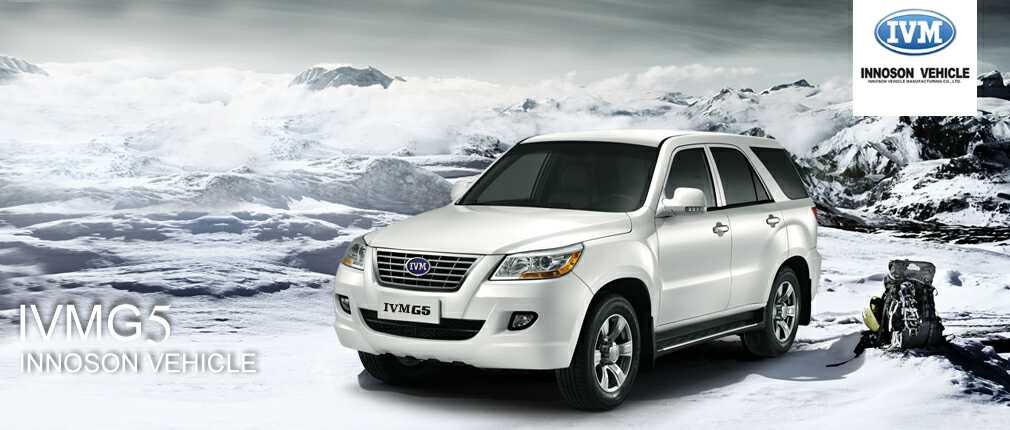
Why Nigerians are not buying Innoson cars – Investigation

When it comes to cars, luxury and showing off, Nigeria takes the lead in the world. It is only a Nigerian that will have 3 to 4 cars and still stay in a rented apartment, no wonder the likes of Kia, Toyota, and the likes take Nigeria as their second home. Lagos especially being the commercial city of Nigeria boasts of roughly 5 million cars.

When Goodluck Jonathan administration signed the automotive law last 2 years, it was greeted with mixed feelings as Innoson was on the lips of many Nigerians that it will help boost its local productivity, but this seems not to be the case as the only indigenous automobile company, Innoson Motors is struggling to catch up, it was reported last year that the company was considering closing its factory and sacking all its workers which the company later denied and released a statement.

Image result for innoson
We did a cross check, and a background analysis on why Nigerians are not patronizing their own despite Nigerians love for cars, luxury and showing off, these few findings are what we found disturbing, and we urged the management to quickly look into it.

1. Customer Care/Social MediaA Chinese proverb says, “If you don’t know how to smile, don’t think of opening a shop.” Nothing amounts to great customer service and relations, a cross check at Innoson Motors website is nothing to write about, the site was linked together with its parent company. Innoson is a brand itself and so should be made to stand out, the navigation, the contents there are just too boring to read or to assimilate. It is being expected that Innoson website ought to have a functional chat, email and social media that is up and running. A visit to their Twitter page shows that they last tweeted on 11th of Feb., 2017 and their facebook page 20th August 2016, where companies like Toyota, Peugeot, etc. tweets at least 5 times daily. Nothing amounts to having an excellent customer care, a responsive website, and a proactive social media personnel.

2. Show RoomsI smiled when I checked for Innoson showrooms, and I can only see four in the whole of Nigeria, I said to myself, these guys are not ready for business yet. Lagos is a cosmopolitan city. Therefore, this is where your marketing strategy has to come in full force. Innoson only has one showroom in Lagos and its not even in a high brow area like VI or Lekki area, they went and site their showroom in Oshodi-Apapa Expressway. A school of thought says you take your wares to where you know your clients will be able to see them. Even if you are trying to be relevant, you need to come up with the marketing strategy to attract the high-class men you made these cars for. How many people will find you in Oshodi? BMW has at least 15 showrooms in Lagos state alone and they are located in high brow areas like Lekki, VI, Ikoyi etc. Even if you can’t open a shop there, you can partner with likes of Lanre Shittu, Coscharis Motors etc. Innoson, time to wake up.

3. Spare Parts/AccessoriesOne of the worries of car owners is finding spare parts for their vehicles, a check at spare part dealers at Ladipo market, the largest in Africa shows that the parts are not available. I was talking to a friend who is a driver, I asked him if he has heard of Innoson Motors and he said he is just hearing the name for the first time, how can you expect someone of that caliber to introduce the brand to his company talkless of finding the spare parts in the market. I think the firm can collaborate with the spare part dealers and make these parts available to them in bulk.

4. Advert! Advert!! Advert!!!
Nothing sells in this world without an advertisement, Innoson has been behind in promotion and advertisement, I wonder if the firm is afraid to spend or partner with media houses. Last week when Mercedes-Benz wants to release its new models to the market, it invites newsmen, bloggers, and lots more. Advert can be in form sponsorship, beauty pageant etc5. Create a niche of your brandI see most of Innoson vehicles as a replica of some other cars I have seen before. Take for example the Innoson G-Wagon is a complete replica of Mercedes-Benz and some of their cars, it’s quite essential for them to produce something unique and relate with.
AUTOREG

Axe Falls On 54 Companies As NBC Withdraws Their Radio Licences

0

The regulatory body, the National Broadcasting Commission (NBC) has wielded its axe against 54 companies, revoking their radio licences with immediate effect, The Nigerian Expression can authoritatively report.

Sources at the NBC told the publication on the condition of anonymity, that the provisional FM radio licences that the commission offered to the companies in 2015 were revoked after they either failed to pay the licence fee or commence operations within the stipulated time frame.

”’The law guiding the award of provisional licences is very clear. Once granted the licence, you have 60 days to pay for it and a two-year period to come on air,” the source, a very senior official at the Commission, told the publication.

”It then means that if you fail to make payment within the stipulated time or could not come on air within two years, the licence offered to you is automatically revoked.”

The 54 affected companies constitute the first batch of licencees that will be affected as the Commission, under a new, vibrant leadership, commences a mass review of the award of licences, especially FM Radio licences.

The Nigerian Expression reports that cases involving another batch of 124 companies are being reviewed. In fact, it was learnt that the companies, most of which actually paid within 60 days of being awarded their licences, may have their licences revoked for failing to start operations within the stipulated time.

”These new set of 124 companies will be given a few weeks’ notice to commence operations or lose their licences,” the source said.

Another review being carried out by the NBC involves FM radio stations that are operating outside the set criteria, especially the capacity of their transmitters.

”’No FM station can operate with over 2-kW transmitter. However, the situation currently is such that a number of FM stations are operating far above the stipulated transmitter capacity.
”We are going to give all affected stations a deadline to revert to the stipulated 2-kW capacity or lose their licences,” the source said.

Below are the names and location of the 54 companies that have lost their licences:

COMPANY and LOCATION
1. Simonis Ventures Ltd. Enugu
2. Ryan Robinson Ltd. Aba.
3. Rui FM Ltd., Benin
4. New Ideas Communications Ltd, Abakaliki.
5. Kevin Ejiofor Associates Ltd. Enugu
6. Heros Security Services Ltd. Lagos/Port Harcourt
7. Crown Integrated Pull Ltd. Ondo.
8. Salama Radio Media Ltd. Kafanchan.
9. Wright & Daniels Ltd. Owerri.
10. BOB TV Ltd. Enugu.
11. World View Broadcasting Services Ltd. Owerri.
12. New Age Communications Ltd. Kaduna/Plateau.
13. Bliss Broadcasting Ltd. Kaduna.
14. Moore Entertainment and Production Ltd. Benin.
15. Omicof Dynamic Concept Ltd. Benin.
16. Heritage Broadcasting Ltd. Yenagoa /Ibadan/Warri/Enugu/Uyo/Calabar/Kaduna/Owerri/Makurdi/Kano/Ekiti/Yola/Abuja/PH
17. Yuma Consult & Associates Ltd. Abeokuta.
18. I’Moving Ltd. Abeokuta
19. Flamingo Press Ltd., Abeokuta
20. Arabo Telecom Nigeria Ltd., Kano
21. Ryan Robinson Ltd., Uyo
22. Dazzling Communications Ltd. Yenagoa/Onitsha
23. Sahel Merchants Nig. Ltd. Daura.
24. Greenhouse International Ventures Ltd., Abuja/Lokoja
25. Aman Media and Comm. Ltd. Asaba
26. D.O.M. Communication Ltd. Yenagoa.
27. Chocolate Media Ltd. Jos.
28. Mustasons Broadcasting and Communications Ltd., Minna
29. GOA Broadcasting Links Services Ltd., Omu Aran.
30. MPS Global Services Ltd., Abeokuta
31. Xeus Nigeria Ltd., Calabar
32. AMX Logistics Ltd, Otukpo.
33. Oscar Mamman Benjy Nig. Lttd., Kano/Katsina/Sokoto
34. DBL Prime Media Nig. Ltd., Abeokuta/Ibadan/Calabar
35. Global Falcons Nig. Ltd., Ibadan
36. Stella Constellation Group Ltd., Kano/Enugu
37. Cardinal Media Ltd., Warri
38. Vista Inter. Nigeria Ltd., Osogbo
39. Impactplus Comm. Ltd., Abeokuta
40. Rosenbek Nig. Ltd., Port Harcourt
41. Okisi Integrated Ltd, Owerri.
42. Corporateman International Ltd., Epe.
43. Riverdale MultiMedia Ltd., Ijebu Ode/Okene
44. Integrated Signalling and Telecoms Ltd., Owerri.
45. E-Tech Dev. System, Keffi.
46. Rhembel Holdings Ltd., Akure.
47. El-Shamah Ventures Ltd., Osogbo.
48. Echorok Nig. Ltd.,Ibadan.
49. Arc Broadcasting Services Ltd. Ngwo/Enugu
50. Eil Ephesians Investments Ltd., Lokoja.
51. Multimesh Communications Ltd., Calabar/Lafia/Yola/Ibadan/Ondo/Jos/Makurdi
52. Afrimedia Global Partners Ltd., Kaduna
53. Doja Radio, Jalingo
54. Cosmo-Built Nig. Ltd.,Owerri.

(TNE)